
- $4.6 million seed funding raised to digitize retiring experts' knowledge
- 2.5 experienced professionals retiring for every young worker entering the energy sector
- 24-hour value demonstration for specialized AI agents in the energy sector
Experts view Cloneable's AI solution as a critical tool to mitigate the loss of institutional knowledge in aging infrastructure industries, ensuring operational continuity and safety.
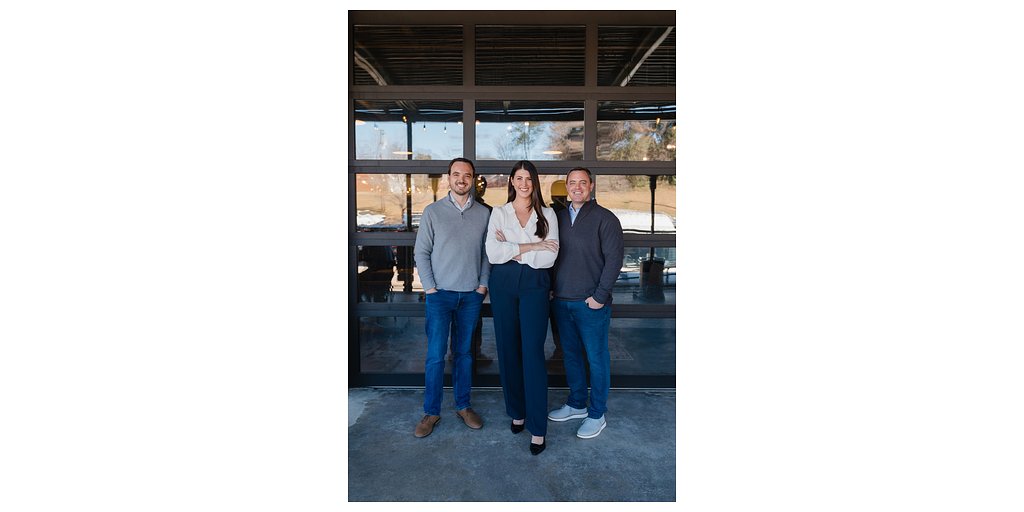
Cloneable Launches AI to Digitize Retiring Experts' Knowledge
RALEIGH, N.C. – April 23, 2026 – As America’s critical infrastructure faces a dual crisis of aging physical assets and a retiring workforce, a Raleigh-based startup has launched a novel solution aimed at digitizing the most valuable and vulnerable resource of all: human expertise. Cloneable, an AI automation company, today announced the launch of Cloneable Agent, a platform designed to capture decades of institutional knowledge and deploy it as specialized AI agents.
The launch is backed by a newly closed $4.6 million seed funding round led by Congruent Ventures, a prominent climate-focused venture firm. The investment signals significant confidence in Cloneable's approach to tackling the "brain drain" that threatens the stability of the nation's energy grids, telecommunication networks, and other foundational industries.
The Looming Knowledge Crisis
The challenge Cloneable addresses is not theoretical; it's a demographic reality playing out in control rooms and field operations across the country. The engineers and technicians who built and have maintained America's industrial backbone for the last 30 to 40 years are retiring in record numbers, taking with them a wealth of unwritten, experience-based knowledge. Industry data highlights the severity of this issue, particularly in the energy sector, where for every young worker entering the field, nearly 2.5 experienced professionals are retiring.
This "tribal knowledge"—the intuitive understanding of how to troubleshoot a complex electrical grid, navigate labyrinthine permitting processes, or manage a construction project under unexpected conditions—is rarely documented in manuals. Its loss creates a dangerous gap, leading to operational inefficiencies, project delays, and increased risks of service disruptions.
"Everyone's watching AI reshape office work. We're watching something quieter and more consequential," said Lia Reich, Co-Founder and CEO of Cloneable, in a statement. "The engineers who run America's grid, its telecom networks, its construction projects are retiring, and what they know is retiring with them. That knowledge was built over 30-year careers, living in the heads of the best people in the room. Cloneable exists because that expertise is too valuable to lose."
An Agentic Answer to a Human Problem
Cloneable's solution moves beyond traditional automation. Instead of relying on rigid, pre-programmed scripts characteristic of Robotic Process Automation (RPA), Cloneable Agent employs a more sophisticated "agentic AI" model. The platform works by "shadowing" a company's experts as they perform their daily tasks on their existing desktop or web-based software. By observing their clicks, data entry, and decision-making processes, the AI learns the complex, often nuanced workflows.
Once trained, this knowledge is deployed in the form of specialized AI agents that can replicate the expert's work at a virtually unlimited scale. The company states that its initial purpose-built templates for the energy sector—covering complex processes like make-ready engineering, permitting, and joint use management—can demonstrate value in as little as 24 hours. This allows organizations to augment their remaining experts, freeing them for higher-level strategic tasks while ensuring operational continuity.
This back-office intelligence builds upon Cloneable's established field platform, launched in 2025, which streamlined data collection for tasks like utility pole inspections. By now connecting high-fidelity field data directly to intelligent back-office automation, Cloneable aims to provide a seamless, end-to-end operational solution.
Investor Confidence and Market Strategy
The $4.6 million seed round, which brings Cloneable's total funding to $5.35 million, validates the market's urgent need for such a solution. The round was led by Congruent Ventures, with participation from First In, Overline, St. Elmo Venture Capital, and Bull City Venture Partners.
Investors see a unique value proposition in Cloneable's integrated approach. "The $30T US economy relies on infrastructure that's aging faster than we can maintain it. The real bottleneck isn't just dollars, it's decades of uncaptured industrial knowledge," commented Eliza Cushman, Partner at Congruent Ventures. She emphasized that Cloneable's ability to solve both field data capture and back-office agentic AI creates a powerful synergy that horizontal solutions lack.
This sentiment is echoed by customers. "We’re asking aging infrastructure to carry a modern economy, and we’re still managing it with fragmented tools and tribal knowledge," said Tate Stricklin, CEO of Texas Area Telecom, a Cloneable customer whose affiliated venture arm, St. Elmo Venture Capital, also participated in the funding round. "What Cloneable has built, from field capture through back-office execution, is the kind of operational continuity this industry has needed for a long time."
With the new capital, Cloneable plans to accelerate its expansion into a wide array of infrastructure-intensive industries, including public utilities, vegetation management, construction, rail, mining, agriculture, and manufacturing—sectors historically underserved by one-size-fits-all technology solutions.
Navigating a High-Stakes Digital Frontier
Deploying advanced AI into the operational core of critical infrastructure is not without its challenges. The high-stakes nature of these industries has attracted significant attention from regulatory bodies focused on ensuring the safety, security, and reliability of AI systems.
In the United States, both the National Institute of Standards and Technology (NIST) and the Department of Homeland Security (DHS) have recently released frameworks to guide the responsible deployment of AI in these sectors. NIST is developing a specific AI Risk Management Framework (AI RMF) Profile for "Trustworthy AI in Critical Infrastructure," aiming to provide operators with clear guidelines for managing risks. Similarly, the DHS framework outlines roles and responsibilities for ensuring AI is used safely and securely across the supply chain.
For companies like Cloneable, navigating this evolving regulatory landscape will be as crucial as perfecting their technology. Key considerations include ensuring data privacy and security, building safeguards against adversarial AI attacks, and establishing clear protocols for human oversight. The goal is to create systems where AI augments human expertise, rather than replacing it in high-consequence decisions, thereby maintaining a crucial layer of human accountability.
Cloneable's approach, born from what its founders call a "decade of lived experience in industrial data capture," positions it at the forefront of this new industrial revolution. By creating digital apprentices that learn from the masters, the company is not just building a software platform; it is building a bridge to preserve the essential human knowledge that powers the modern world.