
- $4.35 million performance payment authorized for exceeding 2025 goals
- 4,862 new household internet subscriptions added
- 10,105 residents received digital adoption services
Experts agree that Cleveland's collaborative model of public, private, and philanthropic partnerships has successfully bridged the digital divide, serving as a replicable blueprint for other cities.
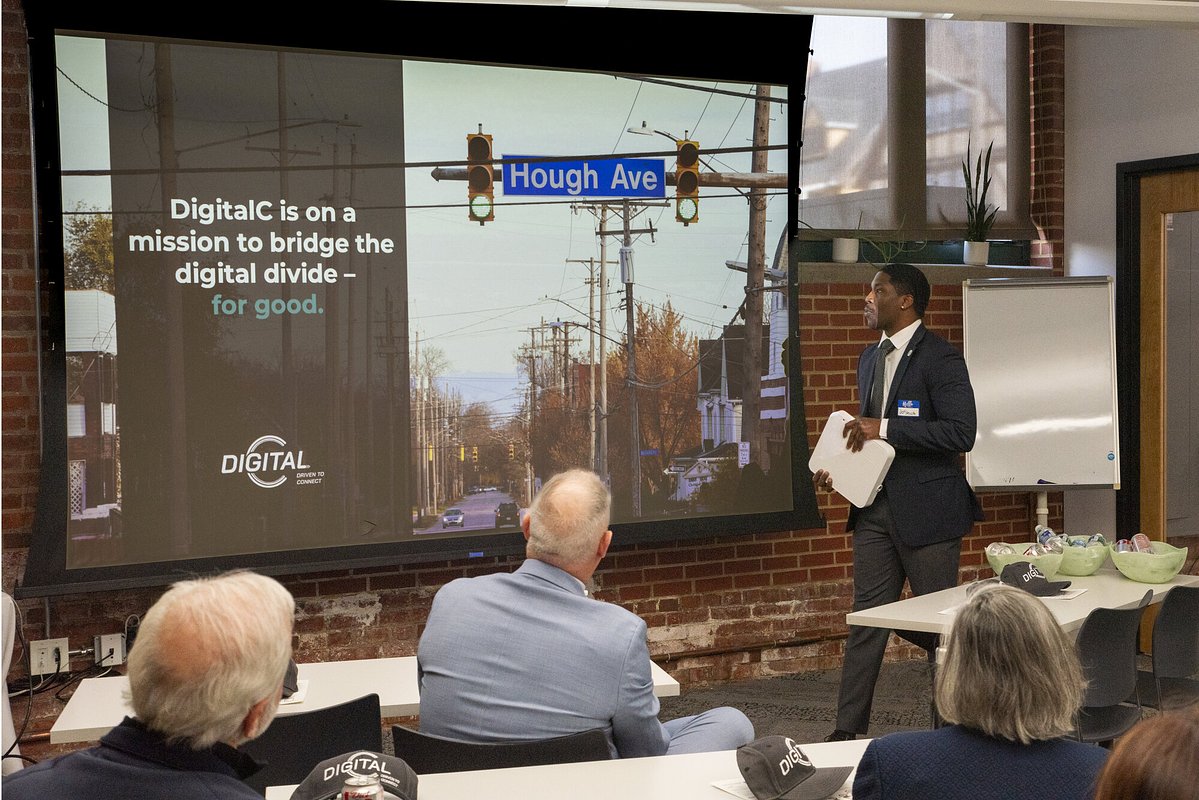
Cleveland's Digital Leap: A Model for America's Broadband Divide
CLEVELAND, OH – May 19, 2026 – In a landmark decision validating a citywide push for digital equity, the Cleveland City Council has authorized a $4.35 million performance payment to DigitalC. The nonprofit technology social enterprise not only met but exceeded its ambitious 2025 goals, a significant milestone for what is becoming nationally known as 'The Cleveland Model' for bridging the digital divide.
This achievement marks a pivotal moment in Cleveland's dramatic transformation. Once chronically ranked among the nation's worst-connected large cities, Cleveland is now emerging as a leader in creating accessible, affordable internet and providing the skills necessary to use it. The success is a testament to a unique collaborative strategy, proving that targeted investment and community-focused execution can yield tangible results.
The Cleveland Model Takes Hold
At the heart of the success is a performance-based contract funded by the American Rescue Plan Act (ARPA), a cornerstone of Mayor Justin M. Bibb's administration's strategy to tackle the digital divide. DigitalC was tasked with adding 4,700 new household internet subscriptions and providing digital adoption services to 10,000 residents in 2025.
Following a rigorous review by the City of Cleveland's Bureau of Internal Audit, the results surpassed expectations. The audit verified 4,862 eligible new household subscriptions through DigitalC's affordable 'Canopy' internet service and confirmed 10,105 eligible digital adoption service records via its 'Click' training program.
The authorization of the $4.35 million payment was not a simple rubber stamp. It followed public review by both the Utilities Committee and the Finance, Diversity, Equity and Inclusion Committee, where council members scrutinized the data. Councilman Kris Harsh, who personally visited DigitalC's MidTown Tech Hive to review the information, expressed his confidence. "The data was presented in a very clear, understandable way, and we were able to confirm that all the work is being done as expected and as stated in the contract," Harsh said. "I feel really good about this now and happy to vote in favor of this."
Council President Blaine Griffin commended the progress, noting the broad civic support for the initiative and its leader. He stated that DigitalC Chief Executive Officer Joshua Edmonds had shown why so many people have advocated for the organization.
"This is more than a contract milestone. This is validation of Cleveland's investment, DigitalC's execution and the public, private and philanthropic partnership powering this work," said Edmonds. "We are grateful for the leadership of Mayor Bibb's administration, Cleveland City Council, the Jack, Joseph and Morton Mandel Foundation, the Ohio Department of Development and a growing group of catalytic partners who understand that digital equity is essential civic infrastructure."
From 'Worst-Connected' to National Blueprint
Cleveland's journey has been a steep climb. As recently as 2023, an analysis of U.S. Census Bureau data by Connect Your Community found Cleveland and Detroit leading the list of worst-connected large cities, with nearly 15% of Cleveland households—approximately 25,000 homes—lacking any broadband subscription. This digital disparity has deep roots, reflecting historical patterns of 'digital redlining' where broadband adoption rates in the city's majority-white neighborhoods significantly outpaced those in Black-majority neighborhoods.
Instead of just talking about the problem, the city acted. The Cleveland Model combines public investment, nonprofit innovation, and philanthropic partnership to dismantle these barriers. Since launching its citywide initiative in January 2024, DigitalC has connected over 9,200 homes, bringing high-speed internet to more than 23,000 residents. In parallel, its skills programs have trained over 20,000 residents, delivering more than 26,000 training sessions on everything from device use to telehealth and job applications.
"DigitalC is proud to be America's fastest-growing community-based network," Edmonds stated. "But this story is bigger than DigitalC. This is about what Cleveland chose to do differently. While many cities talked about the digital divide, Cleveland invested in solving it and becoming a fully digitally empowered city."
This proactive approach has earned national recognition. The National Digital Inclusion Alliance (NDIA) has named Cleveland a 'Digital Inclusion Trailblazer,' and other cities are now looking to its model as a replicable framework for tackling their own connectivity challenges.
A Blueprint Built on Collaborative Funding
The rapid progress is fueled by a robust and diverse funding structure. The city's $20 million ARPA allocation was a critical catalyst, but it was matched by a powerful philanthropic commitment. In 2021, the Jack, Joseph and Morton Mandel Foundation and the David and Inez Myers Foundation announced a combined $20 million investment to expand DigitalC's capacity.
Further bolstering the effort, BroadbandOhio, the state's connectivity office, contributed a $10 million grant in early 2024. This layered, multi-source funding strategy, totaling over $50 million, is a key feature of The Cleveland Model's success, demonstrating how public dollars can be leveraged to attract private and philanthropic capital for a common civic goal.
This model stands in contrast to approaches in other cities. While Philadelphia and Baltimore are also making strides with digital equity plans, Cleveland's rapid, citywide network buildout by a nonprofit partner, completed in less than 18 months, sets it apart. The focus on creating a community-based network that directly competes on affordability and service is a bold strategy that is now paying dividends.
Building a Sustainable Digital Future
With the initial buildout complete and performance milestones being met, the focus now shifts to long-term sustainability and universal access. DigitalC's 'Canopy' service, priced at an affordable $18 per month, is designed to create a stable revenue stream that can support operations long after the initial grant funding is spent.
The organization's ambitions continue to grow, with a stated goal of connecting 23,500 households by 2028. To support this growth and ensure financial viability, DigitalC is also piloting services for small businesses, generating new revenue to support its core social mission.
The model's two-pronged approach—'Canopy' for access and 'Click' for skills—ensures that residents are not just connected but are also empowered. This holistic view of digital equity as both a utility and a learned skill is crucial for participation in a modern, digital-first economy, from education and healthcare to employment.
As civic and industry leaders from across the country watch Cleveland's progress, the message is clear: closing the digital divide is not an insurmountable challenge. With strategic investment, strong partnerships, and a deep-rooted commitment to community, it is an achievable goal, and Cleveland is writing the playbook.