
- 3 provinces (BC, Alberta, Nova Scotia) offer government certification for service dogs, leaving others with no standardized process.
- Air Canada's "Cabin-Ready Canines" program introduces private certification for owner-trained service dogs, valid for domestic and most international travel.
- The program is initially available in Ontario and Quebec, creating a geographic access disparity.
Experts would likely conclude that while Air Canada's private certification program offers a practical short-term solution, it underscores the urgent need for a national standardized system to ensure equitable access for all Canadians with service dogs.
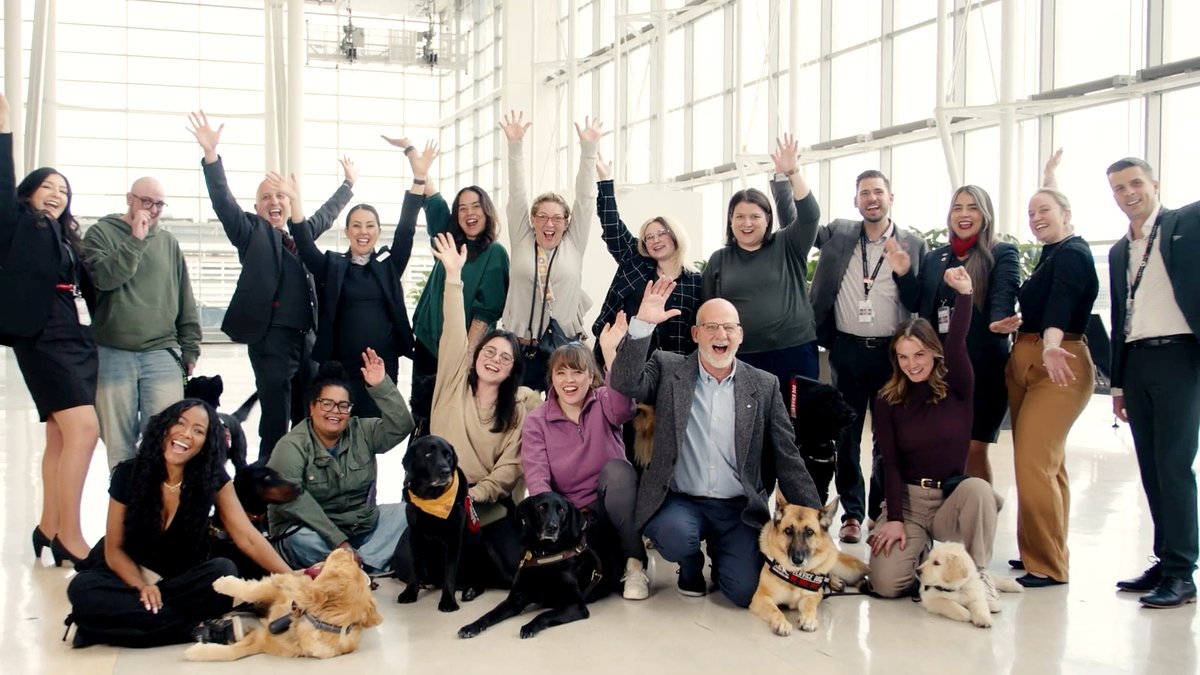
Clearing the Air: Can a Private Fix Solve Canada's Service Dog Puzzle?
MONTREAL, QC – June 02, 2026
For years, Canadians with disabilities who rely on owner-trained service dogs have navigated a frustrating and ambiguous landscape. Traveling by air, a function essential for work, family, and personal freedom, often becomes an exercise in anxiety. With no single national standard for service dog certification, travelers are left to contend with a patchwork of provincial laws and airline policies, armed with binders of documentation and the persistent fear of being denied boarding. It’s a systemic failure that has long simmered just below the surface of public discourse. Now, a private entity is stepping in to fill the void.
Air Canada, in a move it calls an industry first, has launched its “Cabin-Ready Canines” program. In partnership with the non-profit K-9 Country Inn, the airline has created a formal certification path for owner-trained service dogs, aiming to provide the very certainty the government has not. It’s a bold, market-driven solution to a complex accessibility challenge, one that deconstructs the problem and rebuilds it with corporate architecture. But as we peel back the layers of this initiative, we must ask: Is this a sustainable blueprint for accessibility, or a convenient patch on a much deeper systemic issue?
A Patchwork System in Need of a Fix
To understand the significance of Air Canada’s move, one must first appreciate the regulatory maze that service dog handlers face. Canada lacks a federal law standardizing service dog certification. Instead, access and recognition are governed by a complex web of provincial human rights codes and accessibility acts. This has created a country where a dog’s legitimacy can effectively change at a provincial border.
Only three provinces—British Columbia, Alberta, and Nova Scotia—offer a voluntary government certification program, which involves a public access test and provides an official ID. In the rest of the country, including the populous provinces of Ontario and Quebec, the onus falls on the individual. Handlers must often rely on a doctor's note confirming their disability-related need for the animal, but proving the dog's specialized training is another matter entirely. This is particularly true for the significant number of dogs that are owner-trained, a valid and common practice that nonetheless lacks the formal paperwork of an accredited training school.
For air travel, the Canadian Transportation Agency’s (CTA) regulations mandate that carriers accommodate service dogs. However, the rules permit airlines to request proof that a dog has been “individually trained by an organization or person specializing in service dog training.” This clause creates a critical grey area. How does a handler with a self-trained dog, no matter how impeccably behaved and skilled, provide definitive proof that satisfies an airline’s liability concerns? This ambiguity is the source of countless gate-side disputes and emotional distress for travelers.
How 'Cabin-Ready Canines' Aims to Standardize the Skies
Air Canada’s program is designed to cut through this ambiguity with a clear, verifiable process. Eligible customers are referred by the airline’s accessibility team to K-9 Country Inn, a respected trainer with decades of experience. The dog then undergoes an independent assessment, for which the customer pays a fee directly to the training organization.
If the dog passes, the handler receives an official K-9 Country Inn certification and a photo ID card, valid for two years. This record is logged in a database that Air Canada agents can verify, transforming a moment of potential conflict into a simple administrative check. The certification is valid for domestic and most international travel, opening up a world of mobility.
“Guided by feedback from the disability community, we have worked closely with K-9 Country Inn and their expert trainers who are also people with disabilities, to take a leadership position by building a practical solution to a complex accessibility challenge,” said Kerianne Wilson, Director of Customer Accessibility at Air Canada. The airline’s hope is to “demonstrate that feasible solutions are possible, enabling more customers with service dogs to travel with dignity and confidence.”
Laura MacKenzie, founder and CEO of K-9 Country Inn, echoes this sentiment, noting that the program addresses a long-standing gap. “Our organization is deeply committed to ensuring safe, accessible and barrier-free travel for all teams,” she stated. This partnership, built on the expertise of trainers like Brit Williams who are also service dog handlers, aims to assess owner-trained dogs to the same standards used across the professional community, ensuring safety for all passengers while protecting the rights of legitimate teams.
Navigating the New Reality: Practicalities and Limitations
For travelers in Ontario and Quebec, where the program is initially launching, this initiative offers a tangible path forward. It replaces uncertainty with a clear set of steps. However, the solution is not without its own set of guardrails and limitations.
The most significant is its geography. For a handler in Manitoba or New Brunswick, this program remains an abstraction. Air Canada suggests it will monitor demand, but for now, it creates a two-tiered system of access based on location. Furthermore, the certification is not valid for travel to the United States, which operates under its own strict Department of Transportation rules. This exclusion is a stark reminder that even well-intentioned private solutions can be constrained by the unyielding realities of international regulations.
Then there is the question of cost. The press release confirms a fee for the assessment, managed by K-9 Country Inn. While the amount is not disclosed, the introduction of a cost, however reasonable, shifts the dynamic. Accessibility, which many view as a fundamental right to be provided for, now has a price tag attached. This could present a barrier for individuals on fixed incomes, for whom the cost of training and caring for a service animal is already substantial.
A Private Solution to a Public Problem?
This brings us to the core of the issue. Air Canada’s program is an elegant piece of corporate problem-solving, applying private-sector efficiency to a public policy vacuum. It offers immediate relief to a subset of the population and sets a new benchmark for the airline industry. But is it the right model for the future?
By outsourcing certification to a single partner, the system’s integrity becomes tied to one organization. While K-9 Country Inn’s expertise is well-regarded, the assessment standards themselves are not publicly detailed. This lack of transparency could become a point of contention. The program’s success hinges on the trust of both the public and the disability community, and that trust requires a clear understanding of the evaluation criteria.
Moreover, what happens if other airlines follow suit, but with different partners and different standards? Travelers could find themselves needing a wallet full of certifications, each one specific to a particular carrier. Instead of simplifying the landscape, such a scenario would create a new form of corporate-driven complexity, replacing a patchwork of provincial laws with a patchwork of airline policies.
Ultimately, the “Cabin-Ready Canines” program serves as a powerful catalyst. It highlights the urgent need for a coherent, national approach to service dog certification. By stepping in, Air Canada has thrown a spotlight on government inaction and proven that a standardized system is not only possible but practical. The question now is whether this private initiative will become the permanent solution, or whether it will serve as the necessary pressure to compel policymakers to finally build a truly unified and equitable system for all Canadians.