
- 30% surge in cargo volume on the New International Land-Sea Trade Corridor (ILSTC) from Chongqing in 2025, totaling $8.3 billion in goods. - 20-day reduction in transit time for cargo moving from Chongqing to Singapore via the ILSTC compared to traditional routes.
Experts agree that Chongqing's Yuzhong district is successfully leveraging its strategic infrastructure and government support to become a pivotal global trade hub, reshaping logistics and urban development in inland China.
China's Inland Gateway: How Chongqing Rewrote the Rules of Global Trade
CHONGQING, China – February 13, 2026 – Far from China’s bustling coastal megacities, a new global trade hub is rapidly ascending. In Chongqing, a sprawling metropolis nestled among mountains and rivers, the central Yuzhong district is defying its landlocked geography to become a critical two-way bridge between Western China and international markets. Leveraging ambitious infrastructure and a proactive strategy, Yuzhong is transforming from a remote endpoint into a vital nexus for global commerce, attracting multinational corporations and reshaping the very fabric of urban life.
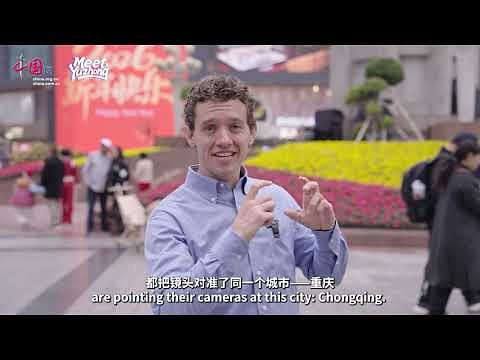
The district’s transformation was recently cast into the international spotlight through the “Meet Yuzhong” media series, which featured foreign vlogger Jason exploring the district’s evolution. But beyond the slick production, a tangible economic shift is underway, powered by a strategic artery of trade.
The Corridor That Changed Everything
At the heart of Yuzhong’s rise is the New International Land-Sea Trade Corridor (ILSTC), a multimodal transport network that has fundamentally altered the logistics of trade for China’s vast western region. Located at the confluence of the Yangtze and Jialing rivers, Yuzhong serves as a key terminus for this corridor, which links western provinces to global shipping lanes through Southeast Asia, Africa, and Europe.
The corridor's impact is staggering. By offering a direct rail-sea route, it slashes the transit time for cargo moving from Chongqing to Singapore by more than 20 days compared to traditional routes that snake east through China to coastal ports. This efficiency gain has proven irresistible for global logistics players. Danish shipping giant Maersk established its Greater China office in Yuzhong to tap into this network.
"Chongqing is the only city in China with national-class logistics hubs for water, land, and air transport," said Richard Liu, a representative for Maersk's Chongqing office. "This gives us multimodal connectivity that is operationally efficient and scalable." The numbers back this up: in 2025 alone, cargo volume on the ILSTC from Chongqing surged by 30%, representing over $8.3 billion in goods.
For companies like Uruguayan gemstone importer Dragon Vast Corporation, the corridor has been a game-changer. The company now brings its nation's signature amethysts directly to Chongqing. Its regional director, Ben Xiang, noted that the route "turned inland logistics from a bottleneck into a selling point."
A Magnet for Global Brands and Investment
The logistical advantages have been paired with a concerted government effort to create an attractive business environment. Yuzhong is actively cultivating an “International Headquarters Economy Zone,” anchored by a new International Business Center launched in 2025. The strategy is not just about tax breaks but about creating genuine partnerships.
This approach was a decisive factor for Aleia, a Michelin-starred Spanish restaurant that chose Yuzhong for its first-ever location in China in 2024. Deng Yi, the restaurant's general manager, emphasized the importance of the local government’s support. "Yuzhong's service team treated us not as an outsider but as a local partner," Deng stated. "That level of institutional openness matters more than rent subsidies."
This welcoming environment is drawing a host of international players. The iconic Raffles City Chongqing, a mixed-use development by CapitalLand at the historic Chaotianmen dock, has become a prime address for multinationals. Designed to resemble sailing vessels, the complex is a nod to the city’s maritime past. Today, its tenants—including insurance giant AIA, Standard Chartered bank, and Maersk—point to the city’s future.
Lu Kai, the project's general manager, described the development as part of the China-Singapore (Chongqing) Demonstration Initiative on Strategic Connectivity, reflecting "an intentional pivot toward global service industries."
A Global Flavor Reshapes Local Life
The influx of global trade and investment is not just an abstract economic trend; it is visibly and palpably changing daily life in Yuzhong. Supermarket shelves are a testament to the corridor’s reach, with local shoppers now able to purchase South American fresh fruit, European dairy products, and Southeast Asian snacks that arrive faster and fresher than ever before.
Summer Gao, general manager of the WFC Mall, observed that the corridor "changed Chongqing from an endpoint into a two-way bridge" for specialty goods. This two-way exchange is also creating a unique cultural and culinary fusion. It’s now common to find cafes serving traditional Chongqing cold noodles alongside specialty coffee, or hotpot restaurants offering high-end steak as a premium ingredient—a blend of local tastes and international trends.
The growing presence of expatriate residents, consular staff, and regional headquarters personnel has fueled demand for international schools, medical services, and new retail formats, accelerating the district’s cosmopolitan evolution.
Charting the Course Ahead
Yuzhong's ambition shows no signs of slowing. With ongoing upgrades to the Land-Sea Corridor, the district is pushing to further deepen its role as a service platform for cross-border trade. Authorities are currently piloting simplified customs clearance for perishable goods and expanding foreign currency settlement programs for regional enterprises—policies designed to remove friction and increase the velocity of commerce.
For the district's leaders, the ultimate measure of success goes beyond physical cargo. It lies in the seamless flow of ideas, products, and capital, cementing Yuzhong’s status as a true global crossroads in the heart of inland China.
A representative from the Yuzhong District Commerce Committee captured this forward-looking vision perfectly. "We measure connectivity not only in tons or containers, but in how quickly an idea or a product can move from overseas into this market," the official said. "That speed defines whether we are truly a gateway."