
- 4,400 business break-and-enters recorded by Alberta RCMP in 2024, including ram-raiding incidents.
- Average cost of legal settlements in auto insurance claims in Alberta surpassed $100,000 in 2023.
- No provincial or municipal laws in Alberta currently mandate vehicle barriers like bollards for commercial properties.
Experts recommend proactive physical barriers, such as bollards, to prevent vehicle-related incidents at commercial properties, as traditional security measures fail to stop initial impacts.
Alberta Businesses Turn to Steel Barriers Amid Rising Vehicle Threats
EDMONTON, AB – May 15, 2026 – A startling new report is sounding the alarm for commercial property owners across Alberta, highlighting a growing and often destructive trend: vehicles crashing into buildings. From accidental pedal errors in parking lots to deliberate ram-raids on storefronts, the frequency of these incidents is prompting a major rethink of business security, pushing owners to look beyond cameras and alarms toward steel and concrete for protection.
The "Comprehensive Alberta Vehicle Incident Report," released today by commercial safety provider Titan Barriers, details a concerning pattern of vehicle-related damage and safety risks at retail plazas, warehouses, daycares, and banks throughout the province. The findings suggest that what many may dismiss as isolated, freak accidents are becoming a predictable—and preventable—threat to both property and public safety.
"The data we've compiled demonstrates a clear pattern of preventable incidents occurring at commercial properties across Alberta," said Justin Ward of Titan Barriers in the press release accompanying the report. "From accidental storefront crashes to intentional ram-raid attempts, businesses need comprehensive protection strategies that go beyond traditional security measures."
An Underreported but Costly Problem
The report points to a wide range of vulnerable locations, including convenience stores, liquor stores, and healthcare facilities, particularly in urban centers like Edmonton and Calgary, but also in regional hubs such as Red Deer, Lethbridge, and Grande Prairie. While consolidated public statistics on storefront crashes are notoriously difficult to obtain, related data paints a grim picture of the broader risks.
According to the Insurance Bureau of Canada, the financial impact of vehicle collisions is escalating, with the average cost of legal settlements in auto insurance claims in Alberta surpassing $100,000 in 2023. While not all of these are storefront crashes, they underscore the immense liability involved when vehicles cause damage or injury. This financial pressure is compounded by law enforcement data; Alberta RCMP jurisdictions recorded over 4,400 business break-and-enters in 2024, a category that can include ram-raiding.
Furthermore, public safety data from the Edmonton Police Service's 2025 annual report noted a troubling increase in traffic fatalities driven by vehicle-pedestrian collisions. While these incidents occur on public roads, the report from Titan Barriers emphasizes the danger extends onto private commercial lots, where pedestrians walking from their cars to a store entrance are often separated from moving traffic by little more than a painted line on the pavement.
The Shift to Physical Fortification
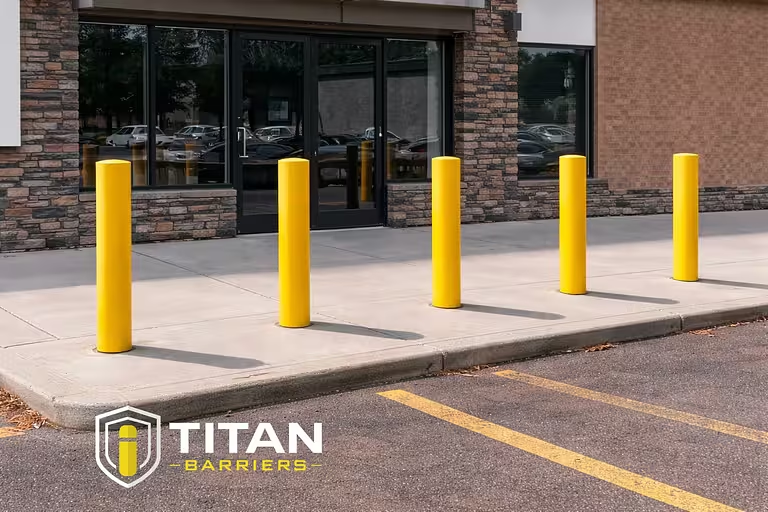
In response to this escalating threat, a growing number of property managers and business owners are turning to an age-old solution: physical barriers. The report’s primary recommendation is the strategic installation of commercial bollards—sturdy, vertical posts designed to stop a vehicle in its tracks.
These installations represent a significant shift in security philosophy. For decades, commercial security focused on detection and response through alarm systems and CCTV cameras. However, these technologies can only record a disaster as it happens; they do nothing to prevent the initial impact. Physical barriers, by contrast, offer proactive prevention.
The solutions vary widely based on need. Basic fixed steel bollards can protect sensitive utility boxes or building corners from low-speed accidental bumps. For storefronts, crash-rated bollards are engineered and installed to withstand specific impact forces, effectively creating a protective shield for glass-fronted buildings and the people inside. In areas requiring occasional vehicle access, removable or retractable bollards offer a flexible solution. For high-risk facilities like banks or government buildings, the conversation moves toward comprehensive "hostile vehicle mitigation," a multi-layered strategy involving barriers, strategic landscaping, and traffic-flow management to defend against deliberate, high-speed attacks.
A Burgeoning Industry of Protection
The growing demand for physical protection has fueled a competitive market across Alberta. A host of specialized companies now offer everything from initial site security assessments to the complex installation of deeply embedded, crash-rated systems. This burgeoning industry includes specialized bollard installers, concrete coring firms that ensure secure foundations, and even local manufacturers engineering high-performance steel barriers designed to withstand Canada’s harsh climate.
This ecosystem of providers indicates that what was once a niche security feature for embassies and critical infrastructure is now becoming a mainstream consideration for everyday commercial properties. From a new daycare wanting to secure its outdoor play area to a retail plaza aiming to protect patrons on a sidewalk patio, the demand for tangible safety measures is on the rise. Property managers are increasingly recognizing that the cost of a bollard installation can be far less than the cost of a single incident, which can include building repairs, lost inventory, business interruption, and skyrocketing insurance premiums.
Navigating a Patchwork of Regulations
Despite the clear and present danger, the push for physical barriers is being driven almost entirely by the private sector rather than government mandate. Research into the current regulatory landscape reveals that no specific provincial or municipal laws in Alberta compel commercial property owners to install vehicle barriers like bollards to prevent storefront crashes.
The Alberta Building Code, for instance, is heavily focused on "barrier-free design" to ensure accessibility for people with disabilities, with standards for things like parking stall design to prevent vehicles from encroaching on accessible walkways. Similarly, municipal bylaws in cities like Edmonton and Calgary regulate where commercial vehicles can park and how traffic should flow, but they stop short of dictating security measures on private property.
This regulatory gap leaves the responsibility—and liability—squarely on the shoulders of business and property owners. The decision to invest in protective barriers is therefore based on individual risk assessments, insurance company recommendations, and a proactive desire to safeguard assets, employees, and customers. As vehicle-related incidents continue to highlight the vulnerability of commercial spaces, this self-driven adoption of physical security measures is reshaping the look and feel of public-facing businesses across the province, turning safety into a visible and physical commitment.