
- 56.4 million registered users and 13.7 million monthly active users on Fangzhou’s platform.
- RMB 3.53 billion in revenue for Fangzhou in 2025, marking its first full-year profit.
- 91% of deaths in China attributed to chronic non-communicable diseases.
Experts would likely conclude that this alliance represents a strategic realignment of China’s digital health sector, leveraging AI, regulatory support, and scalable infrastructure to address a critical public health crisis.
China’s Healthcare Gambit: Fangzhou and Tencent Forge an AI Alliance
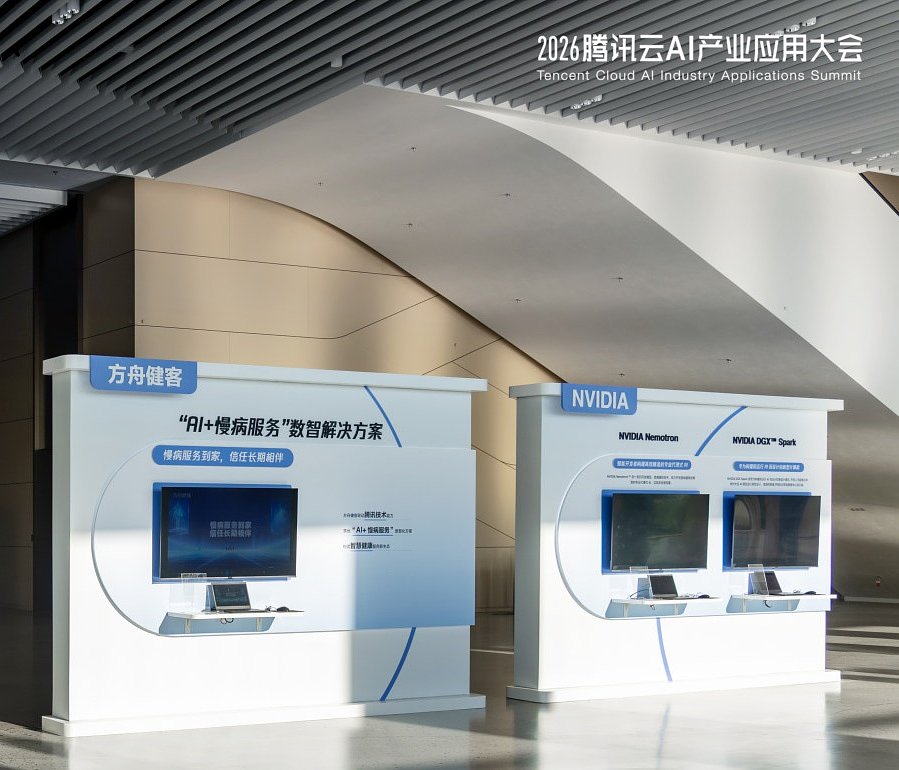
BEIJING, China – June 05, 2026 – At the Tencent Cloud AI Industry Applications Summit this week, what appeared to be a standard tech showcase was, in reality, a powerful declaration of intent. Fangzhou Inc., a leader in online chronic disease management, took the stage to demonstrate an “AI + Chronic Disease Services” solution developed with tech behemoth Tencent. But this was no mere product launch; it was the public unveiling of a strategic maneuver designed to capture the future of China’s multi-trillion-dollar healthcare market.
The collaboration signals the maturation of a partnership that is less about incremental innovation and more about industry-wide realignment. By marrying Fangzhou’s deep domain expertise and massive user base with Tencent’s formidable cloud and AI infrastructure, the two companies are building a defensible ecosystem that competitors will find nearly impossible to replicate. This is not just about technology; it’s a high-stakes play at the intersection of capital, national policy, and a looming public health crisis.
The Blueprint for Digital Health Dominance
To understand the significance of this alliance, one must look beyond the press release. Fangzhou is not a speculative tech startup. The Hong Kong-listed company recently posted its first full-year profit, turning around a previous loss with RMB 3.53 billion in revenue for 2025. This financial strength is built on a solid foundation: 56.4 million registered users, 13.7 million monthly active users, and a network of 251,000 physicians. With a customer repeat purchase rate exceeding 85%, Fangzhou has already proven its ability to build a sticky and profitable healthcare platform.
The expanded strategic partnership with Tencent, formalized in late 2025, is an accelerant on this already burning fire. Tencent Health is not merely a vendor; it is the strategic infrastructural backbone. It provides the scalable computing power, end-to-end model development tools via its TI platform, and, crucially, the vector database technology that allows Fangzhou’s AI to function with speed and precision. This technology enables the system to perform millisecond-level semantic searches across vast medical knowledge repositories, dramatically improving the accuracy of AI-generated content and mitigating the risk of dangerous “hallucinations”—a critical safeguard in a medical context.
This synergy creates a powerful competitive moat. While other companies may develop healthcare AI, few can pair it with a pre-existing, profitable platform serving tens of millions of users and the industrial-scale infrastructure of a company like Tencent. This is a classic platform play, where the fusion of specialized service and scaled technology creates a gravitational pull that attracts more users, more data, and more partners, reinforcing its market-leading position.
An AI Engine Built for a National Crisis
The strategic importance of this venture is magnified by the immense challenge it aims to solve. Chronic non-communicable diseases are the single greatest health burden in China, accounting for an estimated 91% of deaths. The nation’s rapidly aging population—with 267 million people aged 60 or over—is exacerbating the crisis, straining the healthcare system and driving projected costs into the hundreds of billions. Traditional, episodic healthcare is simply not equipped to handle this slow-motion disaster.
This is where Fangzhou’s “AI + H2H (Hospital-to-Home)” model becomes a game-changer. The solution, powered by its proprietary XingShi Large Language Model (XS LLM), is designed to shift care from the clinic to the home, transforming it into a continuous, data-driven process. For patients, the AI acts as a personalized health manager, providing tailored recommendations, monitoring risks, and delivering behavioral interventions to manage their conditions effectively. An early feature that interprets complex lab reports for patients has already seen strong adoption, demonstrating a clear demand for AI-driven patient empowerment.
For physicians, who are in critically short supply, the AI is a force multiplier. AI-powered assistants handle administrative drudgery and streamline routine follow-up tasks, freeing doctors to focus on complex diagnosis, treatment, and meaningful patient engagement. This isn't about replacing doctors; it's about augmenting them, allowing a strained system to deliver a higher quality of care more efficiently.
Navigating the Regulatory Superhighway
Perhaps the most potent catalyst for this alliance is its perfect alignment with Chinese national policy. Beijing is not a passive observer; it is an active proponent of this technological shift. The government’s “Healthy China 2030” initiative and the more recent “AI+Healthcare” plan explicitly call for the integration of AI to modernize the health sector. The goal is to make intelligent diagnosis and treatment assistance universally available in primary care institutions by 2030.
This top-down support creates a favorable regulatory environment that Western companies can only dream of. China’s National Medical Products Administration (NMPA) is actively working to streamline the approval process for AI-powered medical devices, particularly for software that optimizes performance without changing the core algorithm. This de-risks the innovation cycle and accelerates the path from development to deployment.
Furthermore, while data privacy is governed by laws like the PIPL, China's centralized structure and national push for AI development provide a distinct advantage in aggregating the vast datasets required to train effective medical AI. The ability to leverage large-scale, real-world data is a critical asset, and this partnership is uniquely positioned to capitalize on it in a way that is both commercially and politically astute. By building a solution that directly addresses a national priority, Fangzhou and Tencent are not just navigating the market—they are riding a powerful regulatory tailwind.
This carefully orchestrated convergence of a proven business model, scalable technology, and government backing is a powerful signal. It demonstrates a clear path toward establishing an unassailable leadership position in China’s burgeoning digital health market, offering a blueprint for how future industrial giants will be forged.