
- 17% of China's carbon footprint: The steel sector accounts for this share, making it critical for meeting the nation's climate goals. - 14.8 million metric tons of CO₂ reduction annually: Liyu Power's projected emissions cut by 2025, equivalent to removing 3 million gasoline cars for a year. - 10 billion kWh of green electricity: The company aims to supply this amount by 2025, aligning with China's renewable energy push.
Experts would likely conclude that Liyu Power's flexible, waste-to-energy solutions represent a pragmatic and scalable approach to decarbonizing heavy industry, particularly in China's emissions-heavy steel sector.
China's Green Steel Path: A Company's Blueprint for Cleaner Industry
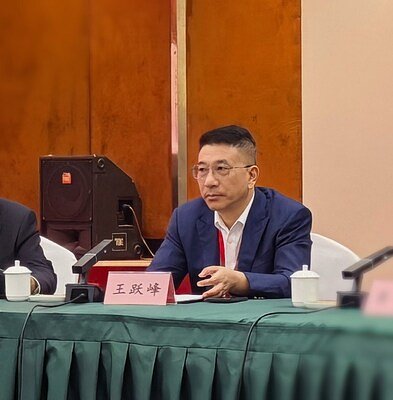
QIAN'AN, China – June 02, 2026 – On the surface, a corporate press release about a chairman attending a symposium is hardly the stuff of headlines. But when the symposium is called the "Steel Green Path," and it’s held in the heart of China's industrial belt, it’s worth looking closer. The attendance of Liyu Group's Chairman, Wang Yuefeng, at this forum is more than just a calendar entry; it’s a window into one of the most critical economic and environmental challenges of our time: cleaning up heavy industry.
As a market analyst turned mom, I’ve learned to spot the patterns behind the jargon. The real story here isn't just about one company, Liyu Power, but about the intricate dance between national policy, technological innovation, and global market forces. This is the story of how the unglamorous work of building better gas engines is becoming central to the world's climate ambitions.
The Weight of Steel
To understand the significance of a "Steel Green Path," one must first appreciate the weight of the industry itself. China's steel sector is a titan, producing more than half of the world's supply. It's also a colossal source of emissions, accounting for around 17% of the nation's entire carbon footprint. For China to meet its ambitious "Dual-Carbon Goals"—peaking emissions by 2030 and achieving neutrality by 2060—taming this industrial dragon is not optional.
The symposium was hosted by the China Council of the Sustainable Markets Initiative (SMI), an organization with a notable pedigree. Established in 2022 at the invitation of President Xi Jinping to then-Prince Charles, the council's mission is to weave sustainability into the fabric of Chinese business. Its involvement lends significant weight to the event, signaling that this is a top-down strategic priority, not just a corporate greenwashing exercise. The focus is on practical, innovation-driven solutions, which is precisely where a company like Liyu Power enters the picture. Its specialty lies in capturing and converting industrial waste gases—like the blast furnace and converter gas abundant in steelmaking—into usable power, a direct shot at both emissions and inefficiency.
A Global Playbook for Local Problems
While its participation in the steel forum plants it firmly in a domestic context, Liyu Power's strategy is distinctly global. The company reports over 600 MW of installed capacity across a diverse portfolio of projects that reads like a world tour of energy challenges. In Northern Europe, its engines are used to generate power from associated petroleum gas, turning a waste product from oil extraction into electricity and reducing methane emissions. In Indonesia, the company says it has pioneered coal-to-gas power units that achieve over 40% efficiency—a plausible figure for advanced gas engine technology that offers a transitional step away from more carbon-intensive coal power.
This adaptability is the core of the company's value proposition. The same fundamental gas engine technology is being deployed to solve different problems in different markets. This includes powering data centers, the modern-day factories that run our digital lives. Liyu Power notes its generators serve as the primary power source for some data centers, running for over 8,000 hours a year. This is a demanding application that requires extreme reliability and efficiency, showcasing the technology's robustness.
The company’s ability to work with a vast menu of fuels—from natural gas and biogas to a variety of industrial off-gases—is its key advantage. It’s a strategy that doesn’t bet on a single perfect solution but offers a suite of pragmatic ones, turning local waste streams into local energy sources. It’s a powerful example of the circular economy in action, embedded within a flexible, distributed generation model.
Decoding the Projections
Liyu Power has put some formidable numbers on the table, projecting that by 2025 its projects will supply nearly 10 billion kWh of green electricity, cut CO₂ emissions by over 14.8 million metric tons annually, and generate 7.7 billion yuan (over $1 billion) in energy savings. In a world of ambitious corporate pledges, these figures demand scrutiny.
While verifying these forward-looking statements independently is difficult, they align with the sheer scale of China's energy transition. The country's renewable capacity has been growing at a breakneck pace, with wind and solar capacity hitting its 2030 target six years early. Policy is now aggressively pushing this green power into the industrial sector. Recent directives mandate increased renewable consumption for energy-intensive industries and promote direct green power connections for factories. In this context, Liyu Power’s projections don't seem like a fantasy, but rather the calculated result of aligning its business model with a powerful national tailwind. The 14.8 million metric ton reduction is a significant figure, roughly equivalent to taking over 3 million gasoline-powered cars off the road for a year. The projected financial savings underscore the most powerful driver of any transition: economics. When going green also saves money, change accelerates.
A Niche in a Crowded Field
Liyu Power is not operating in a vacuum. The global market for industrial gas engines is dominated by giants like Caterpillar, Cummins, and INNIO's Jenbacher. To compete, a smaller player needs a distinct edge. Liyu Power appears to have found one in its focus on fuel flexibility and integrated solutions for challenging industrial environments.
By specializing in turning industrial waste gas into power, it directly addresses a major pain point for heavy industries like steel, cement, and chemicals. This isn't just about generating electricity; it's about solving a waste problem, reducing emissions, and improving a plant's overall energy efficiency. This focus gives the company a foothold in the "hard-to-abate" sectors that are now under immense pressure to decarbonize. While competitors are also developing advanced and flexible engines, Liyu Power's deep engagement with China's industrial base and its targeted global projects demonstrate a focused strategy that could allow it to thrive as a specialist in a world of generalists. The journey to decarbonize our global economy will be a marathon, not a sprint, and it will be won not by a single silver bullet, but by the determined application of thousands of practical solutions like this.