
- 800+ educators and leaders attended the 9th China Festival of Education in Shanghai.
- 70 global speakers addressed AI integration, mental health, and international collaboration.
- 70% of thoughts in high-pressure classrooms are critical or anxiously driven, per psychotherapist Owen O'Kane.
Experts emphasize the need for balanced AI integration, mental health support, and global collaboration to shape a future-ready education system.
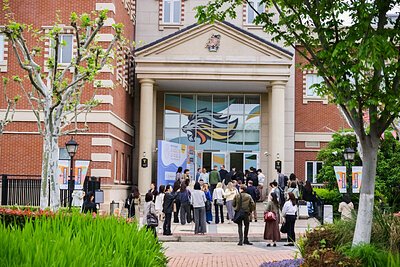
China's Educational Crossroads: Navigating AI, Wellbeing, and Global Ties
SHANGHAI – April 20, 2026 – By George Millen
The 9th China Festival of Education concluded this week after drawing a record-breaking crowd of over 800 educators and leaders to Shanghai, cementing its role as a critical forum for shaping the future of learning. Hosted by Wellington College Education (China) on April 18, the event brought more than 70 global speakers to the stage to confront the most pressing challenges facing modern classrooms: the rapid integration of artificial intelligence, a growing student mental health crisis, and the need for robust international collaboration in an increasingly polarized world.
"This year's Festival proves that when educators come together, real momentum builds," said Jeremy Birk, Director of the China Festival of Education. "We saw honest discussion, bold ideas and genuine connections—a community committed to pioneering education that serves and helps shape a better world."
The AI Dilemma and the Human Response
A central tension of the festival was the dual promise and peril of artificial intelligence. The discussion was sharply framed by keynote speaker Chloe Combi, an author and columnist, who delivered a stark warning about AI's impact on youth employment. "AI is stripping away entry-level jobs—those are the jobs done by young people," Combi stated. "If you keep taking away the bottom, sooner or later you lose the top. You cannot demand the future of leadership if you don't teach young people how to become future leaders and managers."
Her warning resonates deeply within China, a nation currently executing an ambitious "AI+ Education" action plan. Unveiled this month by the Ministry of Education and other government bodies, the plan mandates the integration of AI across all stages of learning, from sparking interest in primary school to designing complex algorithms in senior high. The government's goal is to build a future-ready workforce and cement its technological leadership.
However, Combi's perspective highlights the societal costs that educators on the ground must navigate. While policy aims to leverage AI for educational reform, challenges persist, including a digital divide between urban and rural areas, concerns over data privacy, and a significant gap in teacher preparedness. Recent studies have also flagged the rise of academic misconduct, with a high percentage of students and teachers encountering factually flawed content from AI and grappling with disputes over plagiarism. Against this complex backdrop, Combi's conclusion was not one of despair, but a call to action, emphasizing the need to cultivate uniquely human skills such as critical thinking, service, and leadership that technology cannot replicate.
Prioritizing Minds in High-Pressure Classrooms
Equally urgent was the festival's focus on mental health. Psychotherapist and bestselling author Owen O'Kane addressed the immense pressures facing both students and teachers in his keynote, "Navigating a Healthy Mind." He offered practical strategies for building resilience in an environment of constant stress.
"We walk around with a high volume of thought, and about 70% of those thoughts can be critical, judgmental or anxiously driven," O'Kane explained. He urged attendees to recognize that such thoughts are not facts but transient mental events. The most powerful intervention, he argued, is teaching students self-worth and emotional regulation, skills he believes educators are uniquely positioned to model.
This theme arrives at a critical moment for China's education system. In April 2023, seventeen government bodies, led by the Ministry of Education, launched a special action plan to strengthen student mental health through 2025. The initiative aims to ease the intense academic burden—a primary driver of psychological stress—by reducing homework, limiting test frequency, and banning student rankings. It also mandates the expansion of school-based counseling services and requires teachers to receive psychological training. O'Kane's message at the festival served to reinforce this national priority, translating top-down policy into a tangible, human-centered mission for every educator in the room.
Forging Connections Through Collaboration
The spirit of partnership was a recurring theme, underscored in the opening remarks by Barbara Amono-Oceng, British Deputy Consul-General in Shanghai. "International education works best when it is based on trust and shared purpose," she noted, praising the festival for creating a space for honest discussion and mutual learning.
This sentiment was echoed in a high-profile panel discussion, "Empowering the Future: Fostering Connection in a Polarised World." School leaders including Maxine Lu of Xiehe Education, Cynthia Xin of Tsinghua International School Daoxiang Lake, and Stella Zhou of Hiba Academy Shanghai shared strategies for bridging cultural divides and fostering interdisciplinary learning to equip students for a complex, interconnected world.
Perhaps the most significant manifestation of this collaborative ethos was the announcement of a new partnership between Wellington College Education (China) and Lujiazui Group, a major state-owned enterprise involved in the development of Shanghai. The agreement formalizes an innovative 'education × city × industry' model aimed at developing a high-quality international community in the Qiantan area of Pudong, where Wellington's Shanghai campus is located. This strategic integration of a premier educational institution with urban and industrial planning represents a forward-thinking approach to talent attraction and community-building, positioning education as a core driver of economic and social growth.
A Global Conversation Expanding from China
While rooted in China, the festival is increasingly a node in a global network. Originally founded in the UK in 2010, the event now has established editions in the US and Thailand. The dialogue is set to expand further in 2026, with inaugural festivals planned for Spain and the Netherlands, taking place in Barcelona and The Hague, respectively.
This expansion transforms the event from a regional conference into a global movement, creating a worldwide platform for educators to share solutions to common challenges. The discussions in Shanghai—from managing AI's disruption to nurturing student wellbeing—are not unique to China but are part of a universal conversation about the purpose of education in the 21st century. As educators departed the Shanghai venue, the prevailing message was one of shared responsibility and cautious optimism: that real progress depends on collaboration, open-mindedness, and the courage to pioneer a better future.