
- 200+ representatives from 50 countries attended the high-level seminar in Geneva.
- June 10 was established as the UN International Day for Dialogue Among Civilizations, a diplomatic victory for China.
- The Global Civilization Initiative (GCI), introduced in March 2023, frames China as a champion of civilizational diversity.
Experts would likely conclude that China's cultural diplomacy efforts, exemplified by the Geneva event, represent a strategic and well-coordinated push to reshape its global image and influence through soft power, with significant implications for international relations and economic cooperation.
China's Cultural Diplomacy: The Strategic Bottom Line of Soft Power
GENEVA, SWITZERLAND – June 10, 2026
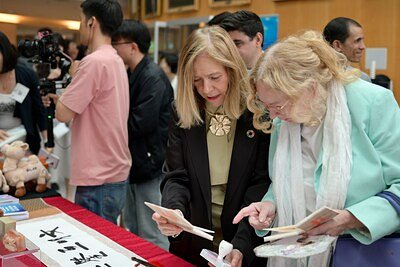
On the surface, the events held in Geneva this week to commemorate the first-ever United Nations International Day for Dialogue Among Civilizations were a vibrant celebration of culture. There were intricate seal engravings from the venerable Xiling Seal Engraver’s Society, a virtual reality journey back to the Tang Dynasty, and a symphony orchestra performing a medley of global melodies. But beneath the rich tapestry of art and performance lies a far more calculated and strategic initiative—a masterclass in state-led brand building with profound implications for the global economic and political landscape.
This was not merely a cultural festival; it was the public unveiling of a key deliverable in China's long-term strategy to reshape its international image and, by extension, its influence. The events, meticulously organized by a consortium of Chinese state bodies including the State Council Information Office and the China Intercontinental Communication Center (CICC), represent a significant investment in one of the most potent, yet intangible, assets in modern geopolitics: soft power. For business leaders and investors, understanding this campaign is crucial, as it signals a shift in how global influence is cultivated and wielded, with direct consequences for market access and international cooperation.
The Geneva Showcase: A Curated Narrative
The choice of Geneva, a global hub for diplomacy, was no accident. Hosting the inaugural celebration here, just two years after successfully proposing the UN resolution that created the day, allowed Beijing to project its message from the heart of multilateralism. The high-level seminar, attended by over 200 representatives from 50 countries, was themed around "Equal Dialogue among Civilizations for a Better Future through Multilateral Cooperation"—a phrase that encapsulates the core of China's evolving foreign policy narrative.
The cultural exhibitions were a case study in strategic communication. The "Silk Road and Dunhuang" exhibit, presented by the CICC, leveraged a universally recognized story of historical exchange to frame China as a natural bridge between East and West. By showcasing the millennia-old treasures from this ancient crossroads, the exhibit subtly reinforced a narrative of peaceful exchange and mutual learning—a historical precedent for China's contemporary global initiatives. Similarly, the Xiling Seal Engraver’s Society exhibition, which incorporated cultural elements from all 193 UN member states into its designs, was a powerful visual metaphor for China's vision of a harmonious, multicultural world order under its inclusive banner.
Even the technological showcases, like the immersive VR experience of a "Tang Palace Banquet," served a dual purpose. They highlighted China's technological prowess while simultaneously rooting its modernity in a deep and splendid history, crafting an image of a civilization that is both ancient and innovative. This coordinated effort, involving national-level information offices alongside provincial powerhouses like the Henan Broadcasting System and the Ningbo Symphony Orchestra, demonstrates a whole-of-government approach to building a national brand on the world stage.
The Global Civilization Initiative: A New Playbook for Influence
These events cannot be viewed in isolation. They are a direct and tangible expression of the Global Civilization Initiative (GCI), a cornerstone of President Xi Jinping's foreign policy vision introduced in March 2023. The GCI advocates for respecting civilizational diversity and promoting "common values of humanity," positioning China as a champion of a more inclusive, multipolar world. The successful push to establish June 10 as a UN International Day was a major diplomatic victory, legitimizing the GCI's principles within the world's preeminent multilateral body.
By championing "equal dialogue," China is subtly challenging the post-war international order, which it often portrays as dominated by Western norms and values. This new framework suggests a world where different civilizational models can coexist without a hierarchy, a vision that resonates strongly with many nations in the Global South. From a strategic perspective, this is a brilliant move. It allows China to build coalitions and expand its sphere of influence not through overt force, but through the appealing language of respect, equality, and mutual benefit.
This represents a significant innovation in diplomacy. While soft power is not a new concept, the scale, speed, and institutional integration of China's approach are unprecedented. The GCI, and by extension the Geneva event, is part of a broader suite of initiatives, including the Global Development Initiative and the Global Security Initiative, that collectively offer a comprehensive alternative to the existing global governance framework. This is China moving beyond being a participant in the international system to becoming an architect of its future rules.
Soft Power's Bottom Line
For the pragmatic reader of 'Innovation & The Bottom Line', the question remains: what is the tangible return on this massive investment in culture and diplomacy? The bottom line is that soft power, when successfully cultivated, greases the wheels of commerce and reduces geopolitical friction. A positive global image can translate into more favorable trade agreements, smoother regulatory approvals for Chinese companies operating abroad, and greater public acceptance of major infrastructure projects like those under the Belt and Road Initiative.
Organizations like the CICC, a state-owned enterprise operating under the China International Communications Group, are the engines of this strategy. They are tasked with producing and disseminating a narrative that builds cultural affinity and trust. When the Ningbo Symphony Orchestra performs in Geneva or the China Disabled People's Performing Art Troupe captivates a global audience, it chips away at negative perceptions and builds a reservoir of goodwill. This goodwill is a strategic asset, one that can be drawn upon to advance national economic and security interests.
However, analysts note that the state-centric, top-down nature of this soft power push can sometimes limit its effectiveness, as authenticity and organic appeal are difficult to manufacture. Yet, the sheer scale of the investment and the strategic patience behind it cannot be ignored. The Geneva event is a clear signal that China is playing a long game, investing in the cultural and diplomatic infrastructure it believes will be necessary to secure its position as a leading global power in the 21st century. The world of business would be wise to pay close attention, as the cultural dialogues of today are shaping the market dynamics of tomorrow.