
- 25 million vehicles: iSOFT's intelligent driving operating system is already deployed in over 25 million vehicles.
- 15 core functional clusters: The CAPI initiative fully implements 15 core functional clusters, including communication, execution management, and diagnostics.
- 30 million vehicles annually: China is the world's largest automotive market, producing 30 million vehicles annually.
Experts would likely conclude that iSOFT's contribution to the CAPI initiative marks a significant shift in the automotive industry, moving from a 'standard-first' to a 'code-first' paradigm, which promises to streamline development, enhance supply chain security, and accelerate innovation in software-defined vehicles.
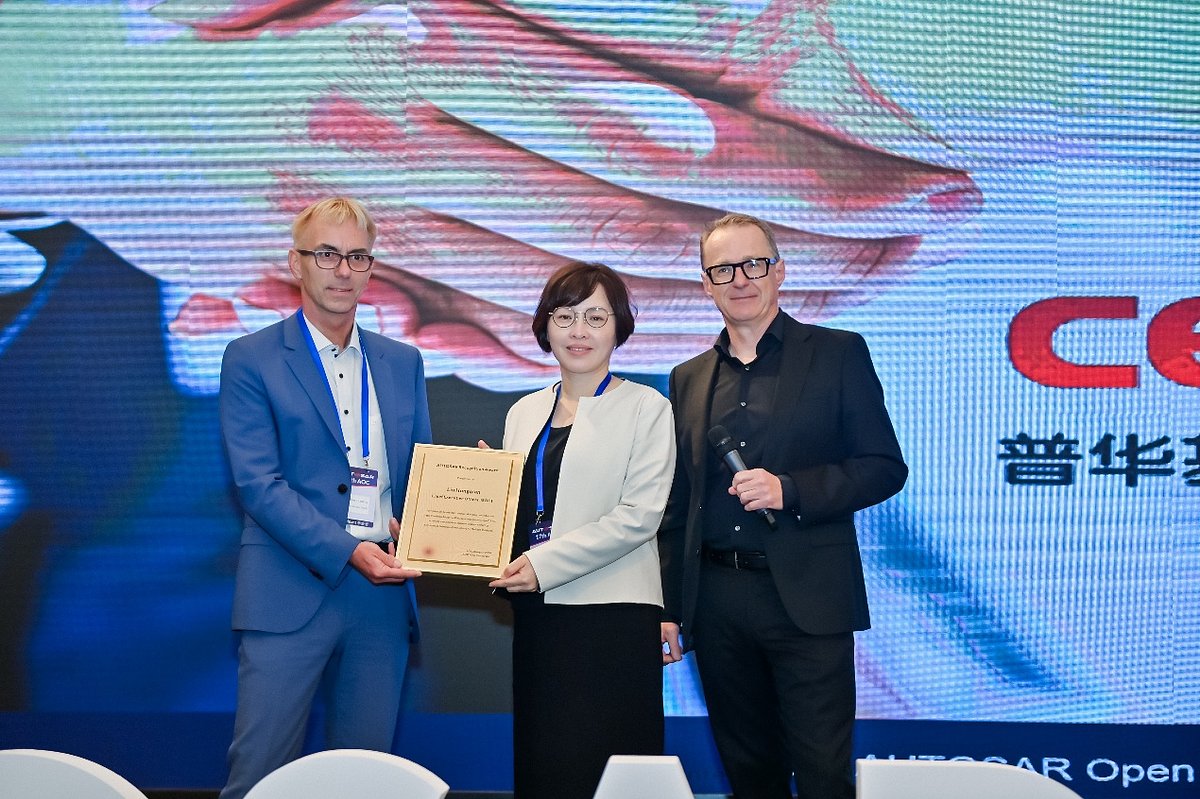
China's Code: How iSOFT Is Redefining Global Automotive Standards
SHANGHAI, China – June 16, 2026 – In a move that reverberates from automotive engineering labs to corporate boardrooms, Shanghai-based iSOFT has contributed its intelligent driving operating system as the foundational code for a new global standard. Announced at the 17th AUTOSAR Open Conference, the company's production-proven software now forms the core of the Common Adaptive Platform Implementation (CAPI), a unified baseline for developing the next generation of smart vehicles. This isn't just a technical update; it's a landmark moment where Chinese software innovation moves from being a regional force to a global standard-setter, fundamentally altering the playbook for how cars are built.
For years, the automotive industry has operated on a 'standard-first' model, where consortiums like AUTOSAR would painstakingly define specifications, leaving individual companies to implement them. iSOFT's contribution flips that script, establishing a 'code-first' paradigm. Now, a single, automotive-grade codebase—already deployed in over 25 million vehicles—will serve as a common starting point for automakers, chip manufacturers, and software suppliers worldwide. The implications are profound, promising to slash development costs, bolster supply chain security, and accelerate the transition to the software-defined vehicle (SDV).
A 'Code-First' Revolution for the Software-Defined Vehicle
The CAPI initiative represents a strategic evolution for AUTOSAR, the global partnership of automotive stakeholders. It shifts the focus from merely defining what the AUTOSAR Adaptive Platform should do to providing the tangible, high-quality source code that actually does it. This move directly addresses a critical bottleneck in the industry: the immense, redundant effort spent by countless companies to independently build the same foundational middleware.
"This is a paradigm shift from 'standard-first' to 'code-first,' responding to new industrial demands of the intelligent connected era," said Liu Hongqian, General Manager of iSOFT. "Open source enables collaboration but must meet automotive-grade safety and performance requirements." The Shanghai-based firm's contribution to CAPI fully implements 15 core functional clusters, including communication, execution management, and diagnostics, providing a robust and certified base layer.
The adoption of an open, 'code-first' approach in a safety-critical domain marks a significant maturation of the industry's mindset. While open-source software has long been dominant in infotainment systems, its application to core vehicle functions has been more cautious. CAPI mitigates these concerns by building on a foundation engineered for functional safety (ISO 26262) and cybersecurity (ISO/SAE 21434). By providing a pre-certified, industry-vetted foundation, it de-risks development and allows engineering teams to focus their resources on building the unique, brand-defining features that consumers actually see and experience, rather than reinventing the underlying plumbing.
The Dragon Sets the Standard: China's Growing Influence
The selection of a Chinese company's technology as a global baseline is a powerful symbol of a broader shift in the automotive world. For the first time, a Chinese enterprise is not just adopting international standards but is actively contributing the core technology that defines them. This move leverages China's unique position as both a massive market and a hyper-competitive hub for electric and intelligent vehicle development.
AUTOSAR spokesperson Joachim Langenwalter underscored this reality, noting that the world is watching China's technological advancements. "China is the world's largest automotive market at 30 million vehicles annually," he stated. "iSOFT leveraged 'China speed' to establish CAPI's foundation, allowing specifications and code to evolve in lockstep with shortened feedback cycles." This feedback loop, where mass-production practices in China directly inform and refine global standards, is a new and powerful dynamic.
The trend extends beyond this single announcement. Beijing has made it clear it intends to play a greater role in shaping the technical rules for next-generation mobility, with government work plans emphasizing deeper participation in UN regulations and the promotion of new international standards. Patrick Will, Head of SW Product Marketing & Management at chipmaker Infineon, acknowledged this evolving landscape. "'China-for-China' development is increasingly essential, yet global collaboration matters — walls make no sense," he commented, highlighting the balance between regional needs and global interoperability. CAPI stands as a testament to this collaborative ideal, creating a unified codebase that, as Langenwalter put it, "transcends geopolitical boundaries."
Unlocking Value Across the Supply Chain
For automakers (OEMs) and their suppliers, the practical benefits of CAPI are immediate and substantial. The initiative directly tackles several chronic industry pain points, from spiraling development costs to fragile supply chains.
Yu Peng, Technical Center GM at EV manufacturer XPENG Motors, detailed the value proposition for OEMs. "It delivers three key benefits for OEMs: reduced redundant costs, enhanced supply chain security, and accelerated ecosystem collaboration," he explained. Peng pointed to the "structural tension" where foundational software development moves at a glacial pace while customer-facing applications must iterate in weeks. CAPI resolves this by providing a stable, common foundation that decouples these layers, allowing for rapid innovation on top of a reliable core.
This common ground enables chip vendors like Infineon, software suppliers like iSOFT, and automakers like XPENG to co-develop on the same baseline, dramatically reducing the friction and cost of integration. For Tier 1 suppliers, it means they no longer have to adapt their software for dozens of different proprietary middleware implementations across various OEMs. For OEMs, it enhances supply chain resilience by creating an interoperable ecosystem where components from different suppliers can be integrated more easily, reducing dependence on any single vendor.
Infineon's DRIVECORE platform exemplifies this new collaborative model, integrating iSOFT's middleware directly with its own software and hardware. This allows customers to "kick off their projects swiftly without encountering licensing barriers," according to Will. By pooling resources on the non-differentiating, pre-competitive foundation that CAPI provides, the entire industry can reallocate its most valuable engineering talent toward the race for true innovation in autonomous driving, in-cabin experiences, and connected services.