
- 3,000+ exhibitors and 350,000 professional visitors expected at CIBF 2026, spanning 280,000 square meters.
- 2.615 million electric vehicles exported by China in 2025, doubling the previous year's total.
- 305 GWh of batteries exported by China in 2025, a 50% year-on-year increase.
Experts agree that China's dominance in the global battery industry is unmatched, with CIBF 2026 serving as a critical platform for showcasing both current technological leadership and future innovations in energy storage.
China's Battery Expo Prepares to Showcase Global Tech Dominance
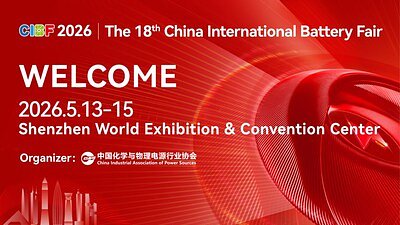
SHENZHEN, China – March 18, 2026 – The global battery industry is set to converge on Shenzhen this May for what is shaping up to be a pivotal event, the 18th China International Battery Fair (CIBF 2026). Organized by the China Industrial Association of Power Sources (CIAPS), the exhibition, running from May 13 to 15, is not just a trade show; it's a powerful statement of China's deepening command over the technologies that will power the 21st century.
Held under the theme "Connecting the World, Empowering Green, and Driving the Future," CIBF 2026 is poised to be the largest in its history. More than 3,000 exhibitors, including industry titans like CATL, BYD, EVE Energy, and Sunwoda, will sprawl across 280,000 square meters at the Shenzhen World Exhibition & Convention Center. With over 350,000 professional visitors expected from more than 50 countries, the event serves as a crucial barometer for the future of energy, transportation, and manufacturing.
A Showcase of Unmatched Scale
The timing of CIBF 2026 is particularly significant, coming on the heels of a record-breaking year for China's green technology sector. Verified industry data confirms the staggering pace of growth. In 2025, China's exports of electric vehicles from its domestic brands surged to 2.615 million units, effectively doubling the previous year's total and cementing its position as the world's leading EV exporter. This boom is powered by a colossal battery industry that, in the same year, exported 305 GWh of power and other batteries, a year-on-year increase of over 50%.
These figures are the backdrop against which CIBF 2026 will unfold. The fair is more than a collection of booths; it is a physical manifestation of a national industrial strategy that has successfully built a dominant position across the entire battery value chain, from mineral processing to final cell manufacturing. The sheer scale of the event, which dwarfs many of its international counterparts, highlights its importance as the primary gateway for understanding and engaging with this industrial behemoth.
Beyond Lithium: The Dawn of a New Battery Era
While China's dominance in conventional lithium-ion batteries is well-established, CIBF 2026 is set to spotlight the next frontier of energy storage. The exhibition halls will be abuzz with discussions and demonstrations of next-generation technologies like solid-state, sodium-ion, and lithium-metal batteries, which promise to solve many of the cost, safety, and performance limitations of current technologies.
Sodium-ion batteries, in particular, are moving from the laboratory to the showroom floor with remarkable speed. Leveraging the global abundance and low cost of sodium, this technology is a strategic hedge against lithium supply chain volatility. CATL, the world's largest battery manufacturer, is a key driver of this trend. In February 2026, the company, in partnership with CHANGAN Automobile, unveiled the first mass-production passenger vehicle equipped with its "Naxtra" sodium-ion batteries, with deliveries expected by mid-year. These batteries boast impressive cold-weather performance and are seen as a viable solution for smaller EVs and stationary energy storage. BYD is also heavily invested, having commissioned a 30 GWh sodium-ion production line and developing a platform capable of 10,000 charge cycles.
Simultaneously, the race toward the industry's holy grail—the solid-state battery—is intensifying. Offering the potential for significantly higher energy density and enhanced safety, solid-state technology could revolutionize electric aviation and long-range EVs. CATL has publicly stated its goal of achieving small-scale production by 2027, with a dedicated team of nearly 1,000 researchers working to solve the remaining engineering challenges. BYD is pursuing a similar timeline, aiming for small-batch production of its sulfide-based solid-state cells by 2027, with large-scale adoption anticipated after 2030.
The Global Battery Race: Cooperation and Competition
CIBF 2026 arrives at a complex geopolitical moment. The event's theme of "Connecting the World" is embodied by its International Pavilion, designed to foster partnerships between Chinese firms and global players. Yet, this spirit of collaboration exists alongside fierce international competition and growing concerns in the West about supply chain dependency.
In a move that reverberated through global industry, Beijing implemented export controls on eight key EV battery manufacturing technologies, effective July 15, 2025. The policy requires government approval for the transfer of critical technologies outside China, a strategic measure to protect its hard-won technological lead. This has added urgency to efforts in the United States and Europe, such as the US Inflation Reduction Act (IRA), to de-risk their supply chains and build domestic manufacturing capacity.
The fair will therefore serve as a critical crossroads where these competing dynamics play out. International firms will navigate the landscape, seeking to secure supply, forge new partnerships, and gain intelligence on the latest innovations, all while contending with the strategic realities of a world where technological leadership is a key component of national security.
The Factory of the Future: Mastering Production
Beyond battery chemistry, a significant portion of CIBF 2026 will be dedicated to the machinery that makes mass production possible. The event's sprawling Intelligent Manufacturing Zone, covering five exhibition halls, will showcase the latest in automated and digitalized battery production solutions. Leading equipment manufacturers like Wuxi Lead Intelligent Equipment and Hymson Laser will demonstrate advanced systems designed to improve battery performance, reduce costs, and accelerate production speeds.
This focus on manufacturing excellence is a crucial, if less glamorous, part of China's dominance. The ability to not only invent new battery technologies but also to scale their production rapidly and cost-effectively is a core competitive advantage. The innovations on display—from high-speed cell assembly lines to AI-powered quality control systems—are essential for meeting the exponential growth in demand for batteries for EVs and grid storage. This mastery over the entire production process ensures that advancements in the lab can be translated into market-leading products at an unprecedented scale.