
- Market Projection: The global exoskeleton market is expected to grow from $2 billion in 2024 to nearly $20 billion by 2035.
- Product Performance: Aiverest's Upper-Limb Exoskeleton reduces shoulder and neck strain by 30%, while its firefighter exoskeleton cuts shoulder and lumbar strain by 70%.
- Productivity Impact: Exoskeletons can boost industrial productivity by up to 10% and reduce energy loss for warehouse workers by up to 50%.
Experts view Aiverest's entry into the European exoskeleton market as a significant challenge to Western dominance, highlighting China's shift from manufacturing to deep-tech innovation, particularly in human-machine integration.
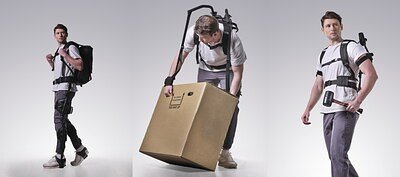
China's Aiverest Enters Europe's High-Stakes Exoskeleton Market
HANNOVER, Germany – April 17, 2026 – The bustling halls of Hannover Messe, the world's premier industrial trade fair, are witnessing a significant new player enter the European robotics arena. Aiverest, an award-winning exoskeleton brand from China, is making its international debut, showcasing a suite of five assistive wearables designed to augment human capability in factories, on rescue missions, and in daily life. The move signals a new phase in the global technology race, where Chinese innovators are increasingly challenging established Western leaders in the high-stakes field of human-machine integration.
The company's name, a blend of "AI" and the "Everest spirit," encapsulates its mission: to use intelligent technology to help humans push limits and climb higher. This debut is not just a product launch; it's a strategic entry into a fiercely competitive market, putting Aiverest head-to-head with industry giants like Ekso Bionics, Sarcos, and Germany's own Ottobock.
A New Front in Global Tech Competition
Aiverest's arrival in Hannover is a clear indicator of China's evolving role in the global economy, shifting from a manufacturing powerhouse to a hub of deep-tech innovation. This transition is a core component of the "Made in China 2025" strategy, which prioritizes advancements in sectors like robotics and artificial intelligence. The global exoskeleton market, projected to surge from around $2 billion in 2024 to nearly $20 billion by 2035, represents a critical frontier in this new landscape.
Headquartered in Hangzhou, Aiverest's approach has been rooted in extensive user research. The company reports spending two years in direct consultation with warehouse workers, firefighters, and seniors to understand their specific physical challenges. The result is a portfolio of tailored solutions, not a one-size-fits-all gadget, reflecting a mature design philosophy focused on practical application and human-centric engineering. This strategy could give them a crucial edge, particularly if combined with the cost-effective production advantages often associated with Chinese technology firms.
Augmenting the Industrial Workforce
At the heart of Hannover Messe's focus on industrial transformation, Aiverest is presenting solutions aimed directly at mitigating workforce strain and boosting productivity. With musculoskeletal injuries (MSIs) remaining a leading cause of sick leave and disability in industrial nations, the demand for ergonomic solutions is at an all-time high.
The Aiverest Upper-Limb Exoskeleton is a passive, battery-free device targeting assembly line workers and others performing repetitive overhead tasks. Weighing a mere 1.9 kilograms, it provides up to 10 kilograms of dynamic support during arm elevation, reportedly reducing shoulder and neck strain by 30%. Because it requires no power or cables, the mechanical assistance is immediate and consistent, helping to reduce fatigue and prevent long-term strain injuries.
For logistics and warehouse workers, the Waist Exoskeleton series offers three variants: passive, light active, and fully active. These models are designed for the constant bending and lifting that define modern fulfillment centers. The company claims these devices can reduce the user's energy loss by up to 50% while supporting loads up to 60 kg, with a rated lifting capacity of 30 kg. By reducing physical stress, such devices not only enhance worker safety but can also lead to significant productivity gains—some industry studies suggest boosts of up to 10%—and enable a rapidly aging workforce to remain active in physically demanding roles.
Redefining Rescue and Personal Independence
Beyond the factory floor, Aiverest is showcasing technology with profound implications for emergency services and personal mobility. The Dexterous Mobile Exoskeleton is engineered for the extreme conditions faced by first responders. This advanced suit features a sophisticated four-link bionic structure that moves beyond simple planar motion to achieve full-freedom dynamic movement, synchronizing precisely with the wearer's joints on a millimeter scale.
For a firefighter carrying heavy gear through smoke-filled, unstable environments, the benefits are tangible. The exoskeleton's passive back-carrying system is designed to reduce shoulder and lumbar strain by a staggering 70%, preserving a rescuer's energy and reducing the risk of injury in life-or-death situations. The suit's innovative design has already garnered international acclaim, earning prestigious honors including the German iF Design Award, the MUSE Design Award, and the New York Product Design Award, lending significant credibility to its technical claims.
Aiverest is also applying its technology to one of society's most pressing challenges: an aging population. The company is demonstrating personal mobility exoskeletons aimed at helping seniors maintain their independence and quality of life. By providing support for walking and standing, these devices can improve endurance, assist in rehabilitation, and critically, help prevent falls—a major health risk for the elderly. This expansion into the consumer and healthcare markets highlights the broad applicability of assistive wearable technology. As global demographics shift, solutions that empower seniors to live more active, independent lives are becoming not just a convenience, but a necessity.
The company's presence at Hannover Messe allows attendees to experience these technologies firsthand, from wearing an industrial model to testing a personal mobility aid. This direct engagement underscores Aiverest's confidence in its user-centric designs and their real-world performance. As the lines between human and machine continue to blur, the technologies on display here offer a compelling glimpse into a future where physical limitations are overcome not by replacement, but by augmentation. The innovations brought forth by Aiverest and its competitors are setting the stage for the next evolution of work, safety, and personal well-being.