
- 83 sets of artifacts from seven museums, including 15 first-grade cultural relics
- 354 textile items from Huang Sheng’s tomb, the largest and best-preserved collection of its kind
- Exhibition opened on March 27, 2026, featuring garments from the Southern Song Dynasty (1127–1279)
Experts view this exhibition as a groundbreaking reconstruction of ancient lives through meticulously preserved textiles, offering unparalleled insights into the social hierarchy, fashion, and cultural identity of the Southern Song Dynasty.
China Unveils Ancient Lives Through 800-Year-Old Silks
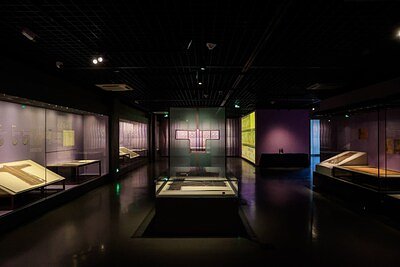
HANGZHOU, China – March 30, 2026 – The delicate threads of history are being rewoven at the China National Silk Museum, where a groundbreaking exhibition is offering an unprecedented window into the daily lives of two individuals who lived over 800 years ago. Opened on March 27, Unveiling the Wardrobe of the Southern Song Dynasty moves beyond grand historical narratives to tell the intimate stories of an imperial clan member and a noblewoman, pieced together from the stunningly preserved garments they took to their graves.
The exhibition centers on Zhao Boyun, a descendant of the Song Dynasty's founding emperor, and Huang Sheng, a noblewoman from Fujian. Their tombs, unearthed in separate archaeological discoveries, yielded one of the most significant caches of Song Dynasty textiles ever found. Featuring 83 sets of artifacts drawn from seven different museums, including 15 items classified as first-grade cultural relics, the display resurrects the world of these two figures through the clothes they wore, the objects they used, and the society they inhabited.
A Glimpse into an Elegant Past
The Southern Song Dynasty (1127–1279), with its capital established in Lin'an (modern-day Hangzhou), represents a period of remarkable cultural and economic advancement. Despite facing constant military threats, the era is often described by scholars as a cultural efflorescence, an “Eastern Renaissance” marked by sophisticated philosophy, artistic innovation, and burgeoning urban life. Cities like Hangzhou swelled to populations of over a million, fostering vibrant social clubs, entertainment venues, and public services.
In this highly structured society, textiles—and silk in particular—were far more than mere clothing. They were a language of power, status, and identity. The imperial court enforced a strict dress code, with specific colors, patterns, and fabrics legally reserved for different ranks of the officialdom. Fine silks were the exclusive domain of the elite, while commoners were restricted to plant fibers like hemp. The province of Zhejiang, where the museum is located, became a veritable “Silk House,” with state-run and private workshops producing vast quantities of luxurious fabrics that were traded across the globe via a booming maritime Silk Road.
The Wardrobes of Zhao Boyun and Huang Sheng
The exhibition’s power lies in its focus on the personal. It brings visitors face-to-face with Zhao Boyun (1155-1216) and Huang Sheng, whose lives are rendered in vivid detail through their surviving wardrobes. Zhao Boyun’s tomb in Huangyan, Zhejiang, contained what archaeologists described as an “unprecedented and unique discovery”: a complete noble’s wardrobe, including eight layers of clothing worn for his burial. These garments provide a tangible connection to a man who, historical records show, was not only a member of the imperial family but also a civic leader involved in local bridge-building projects.
Even more astonishing is the collection from the tomb of Huang Sheng in Fuzhou, Fujian. Considered a “treasure trove of ancient Chinese silk,” her grave contained an incredible 354 textile items. This collection, the largest and best-preserved of its kind, has revolutionized scholarly understanding of Southern Song fashion. It reveals a world of lightweight floral silks, intricate metallic threadwork, and a surprisingly diverse color palette, challenging previous notions of the era's sartorial customs. The artifacts are so significant that reconstructed outfits from her wardrobe have been featured on the popular Chinese cultural series National Treasure, bringing her story to millions.
Weaving Science with History
Presenting such fragile, 800-year-old textiles to the public is a monumental challenge, one that the China National Silk Museum has met through a combination of inter-institutional collaboration and cutting-edge technology. The inclusion of 15 first-grade cultural relics—a designation reserved for representative artifacts of “especially important historical, artistic, or scientific value”—underscores the national importance of the collection. Under Chinese law, these items are subject to stringent protection, making their public display a rare event.
To bridge the gap between preservation and access, the museum has embraced the digital realm. A concurrent exhibition, Digital Restoration of Song Dynasty Ceremonial Attire, showcases how technology can resurrect the past without endangering it. Using non-invasive techniques like multispectral imaging and 3D scanning, conservators create precise digital models of the garments. These virtual replicas can be manipulated, studied, and displayed in ways the fragile originals cannot, allowing researchers to analyze weave structures and visitors to appreciate the garments from every angle. A highlight is a fully realized digital figure of Zhao Boyun, dressed in a virtually restored glossy gauze robe with a lotus pattern, demonstrating how technology can breathe new life into ancient history.
The Enduring Thread of Silk
In a global context, where institutions like the V&A in London and the Met in New York curate blockbuster fashion exhibitions, Unveiling the Wardrobe of the Southern Song Dynasty distinguishes itself through its deep archaeological roots. While other exhibitions may showcase historical costumes, few can present a narrative so directly and completely reconstructed from specific, scientifically excavated tomb finds. This unique approach provides an unparalleled depth of authenticity, connecting the artifacts directly to the individuals who owned them.
The exhibition is more than a historical display; it is a statement of cultural identity and a bridge for international understanding. It reinforces the legacy of silk as one of China’s most significant cultural and technological contributions to the world, tracing an enduring thread from the ancient Silk Road to modern cultural diplomacy. To complement the main exhibition, the museum also launched an immersive cultural event, A Night of Southern Song Elegance, featuring scholarly discussions alongside traditional dance, guqin music, and a Song-style tea ceremony. A third exhibition, Women's Inner Garments in Ancient China, further expands the comprehensive presentation of the period's dress culture. Together, these interconnected events and displays offer an unparalleled journey into the heart of a dynasty defined by its sophisticated culture and artistic brilliance.