
- 54 countries and 9 international organizations have joined the Global Alliance for Poverty Reduction and Development.
- China claims to have lifted 800 million people out of poverty through its rural revitalization model.
- The alliance aims to share China's state-led infrastructure and industrial policies as a development blueprint.
Experts would likely conclude that while China's poverty reduction model offers valuable lessons, its replicability remains uncertain due to unique political and economic conditions.
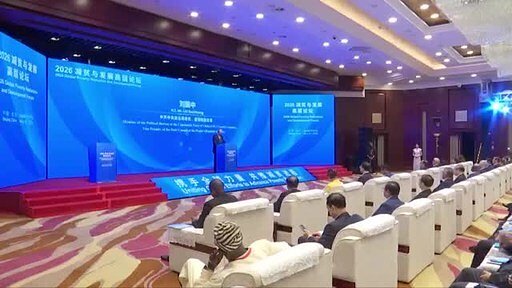
China Launches Global Poverty Alliance, Offering Its Development Engine
BEIJING, China – June 02, 2026 – In a move signaling a major push to reshape global development frameworks, Beijing today officially launched the Global Alliance for Poverty Reduction and Development. The initiative, unveiled during a high-level forum, brings China together with 53 other countries and nine international organizations in a concerted effort to tackle one of humanity's most persistent challenges, positioning Beijing as a central architect in a new era of South-South cooperation.
Eradicating poverty is the first and perhaps most ambitious of the UN's 2030 Sustainable Development Goals. With progress stalled by economic shocks, climate change, and conflict, the international community is searching for new models and fresh momentum. This new alliance, initiated and championed by China, presents itself as a primary vehicle for that search, promising to build a "community of shared development" through practical cooperation and shared governance experience.
The Alliance's Blueprint
According to official statements, the alliance is designed as a platform for sharing knowledge and promoting action. Its core tenets revolve around mutual learning, capacity building, and tailoring poverty reduction strategies to specific national contexts. Chinese officials have stressed that the goal is not to export a single model but to foster a collaborative environment where developing countries can learn from one another's successes and failures. The initiative explicitly welcomes a wide range of stakeholders, including governments, the private sector, academia, and media, aiming to create a broad-based coalition.
While the headline numbers—54 countries and nine international organizations—are impressive, a complete public roster of the founding members remains elusive. This lack of transparency raises questions about the full scope and composition of the coalition. However, the operational mechanics are described as being action-oriented and results-driven, a clear nod to China's own pragmatic and often engineering-like approach to domestic policy. UN Secretary-General António Guterres acknowledged the forum with a congratulatory letter, highlighting the urgency of the global fight against poverty and lending a degree of institutional legitimacy to the new body.
One senior UN official described China's domestic success in lifting 800 million people out of poverty as a "breathtaking accomplishment," stressing the need for the Global South to study and apply lessons from that experience. It is this experience that forms the core of China's value proposition to the world.
The 'China Model' on the World Stage
At the heart of the alliance is the promise of sharing the secrets behind China's "comprehensive rural revitalization." This state-led strategy combined massive infrastructure investment, targeted industrial policy, e-commerce integration, and a rigorous data-driven monitoring system to lift its entire population above the national poverty line—a feat achieved a decade ahead of the UN's 2030 target.
This track record is a powerful calling card. For many developing nations, particularly those in Latin America and Africa, the Chinese experience offers an appealing alternative to Western-led development paradigms that have often come with stringent conditions and mixed results. The enthusiasm was palpable among delegates in Beijing.
"We are learning from China's comprehensive rural revitalization," said Martha Viviana Carvajalino Villegas, Colombia's Minister of Agriculture and Rural Development. She noted that China has not only reduced poverty but also "achieved remarkable rural development and enhanced recognition of those who work the land—goals that Colombia has long been striving to advance." For Colombia, the partnership is also practical. "Increasing the presence of Colombian food products in China will help strengthen our agricultural production," she added.
This sentiment was echoed by Cuba's Vice Minister of Agriculture, Telce Abdel González. He pointed to tangible results from existing bilateral projects. "There is currently a major technical assistance project between China and Cuba covering crops such as rice and maize, as well as egg production, pork production, and potatoes," he stated. "The results so far have been very positive."
However, the central question remains: Is the China model truly replicable? Critics and development economists caution that China's success was achieved under a unique political and economic system, with a level of state control and capacity that few other nations possess. Without careful adaptation, attempts to simply copy and paste the blueprint could falter or lead to unintended consequences, such as unsustainable debt or environmental degradation.
A New Axis in Global Development?
The launch of the Beijing-based alliance does not happen in a vacuum. It represents another step in China's broader effort to play a more prominent role in global governance and to champion the interests of the Global South. It also enters a landscape where new multilateral structures are beginning to form, often outside of traditional Western-dominated institutions.
Notably, this is the second major poverty-focused global alliance to be launched by a BRICS nation in less than two years. In November 2024, Brazil initiated the "Global Alliance Against Hunger and Poverty" at the G20 summit. While the goals are similar, the two initiatives represent distinct poles of influence and potentially different approaches. The Brazilian-led effort has emphasized social policies like cash transfers and school meal programs, while the Chinese alliance appears more focused on infrastructure, agricultural technology, and industrial development.
Whether these two alliances will compete for members and influence or find ways to complement each other remains to be seen. For now, their parallel existence underscores a powerful trend: developing nations are no longer waiting for solutions from the Global North. Instead, they are building their own platforms, sharing their own experiences, and charting their own courses in the fight against poverty.
This shift challenges the post-war development consensus and suggests a more multipolar and complex future for international cooperation. The Chinese government, for its part, frames its role as a responsible major power contributing to global public goods. As Vice Premier Liu Guozhong stated at the forum, China will actively support the alliance in strengthening policy dialogue, technical demonstrations, and talent training to help developing countries build their own capacity.
For the 53 nations that have signed on, the calculation is clear. They see an opportunity to partner with a country that has walked the path of development at an unprecedented scale and speed. The promise is not just aid, but access to a proven engine of economic transformation. The ultimate test of this new alliance will be its ability to translate high-level pronouncements and memorandums of understanding into tangible, sustainable improvements in the lives of the world's poorest citizens.