
- NEV Market Growth: South Africa's NEV sales doubled year-on-year in 2024, now accounting for 2.4% of the total new-vehicle market.
- BEV Sales Decline: Pure battery electric vehicles (BEVs) saw a 16.4% year-on-year dip in Q1 2025 due to high costs and infrastructure challenges.
- Charging Infrastructure: Public charging network has grown to over 500 stations, with solar-powered ultra-fast charging projects underway.
Experts view Chery's LEPAS brand as a strategic but high-risk move, leveraging Chery's established footprint to navigate South Africa's complex EV market, where infrastructure challenges and consumer caution pose significant hurdles.
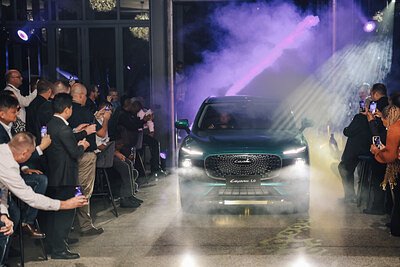
Chery's LEPAS Brand: An Elegant Gamble on South Africa's EV Future
JOHANNESBURG, SA – November 24, 2025 – In a grand ceremony in Johannesburg last week, Chery Group officially pulled the covers off its all-new new energy vehicle (NEV) brand, LEPAS, for the South African market. The launch, complete with the signing of 16 inaugural dealer partners, was a statement of intent, positioning LEPAS not merely as a new product line but as a purveyor of premium mobility under the banner of "Drive Your Elegance." Yet, behind the polished debut of the L4 and L8 models, this move represents a calculated, high-stakes entry into one of the world's most complex and promising emerging NEV markets.
LEPAS arrives at a pivotal moment. While its launch signifies a new chapter in Chery's global expansion, it also serves as a crucial test case for the broader adoption of electric mobility in South Africa—a nation grappling with economic pressures, infrastructure challenges, and a cautious consumer base.
A Calculated Entry into a Cautious Market
The South African new energy vehicle market is a study in contrasts. On one hand, NEV sales have shown explosive growth, doubling year-on-year in 2024 and now accounting for roughly 2.4% of the total new-vehicle market. On the other hand, this growth is heavily skewed. Traditional hybrids, led by mainstream models like the Toyota Corolla Cross, dominate sales, comprising over 85% of the NEV segment in early 2025. Plug-in hybrids (PHEVs) are also gaining traction, with sales jumping over 70%.
Pure battery electric vehicles (BEVs), however, tell a different story. After initial enthusiasm, BEV sales saw a 16.4% year-on-year dip in the first quarter of 2025. The reasons are multifaceted but familiar. High upfront costs, with most models priced well over R800,000, place them firmly in the luxury category, out of reach for the average consumer. More critically, persistent power outages, known locally as load-shedding, create significant anxiety around the reliability of at-home and public charging.
Despite these hurdles, the groundwork for an electric future is being laid. The public charging network has grown to over 500 stations, and ambitious projects are underway to bolster this infrastructure. Companies like CHARGE are pioneering off-grid, solar-powered ultra-fast charging stations along major highways, a direct response to both range anxiety and grid instability. This forward momentum is bolstered by a landmark government policy: a 150% tax deduction for investments in local EV and hydrogen vehicle production, set to take effect in March 2026. This incentive is a clear signal that South Africa is committed to becoming a manufacturing hub for next-generation vehicles, creating a powerful tailwind for brands willing to invest.
Chery’s Strategic Power Play
LEPAS does not enter this market as an unknown upstart. It arrives with the formidable backing of the Chery Group, a parent company that has already carved out a significant and successful presence in South Africa. Chery has consistently ranked in the top ten for new vehicle sales, shattering its own monthly sales records in late 2024 and demonstrating a keen understanding of the local consumer.
This established footprint is perhaps LEPAS’s greatest strategic advantage. Chery already boasts an extensive network of 96 dealerships across every province, providing a ready-made platform for sales, service, and building consumer trust. The initial signing of 16 dealer partners for the new brand suggests a strategy of leveraging the strongest performers within this existing network to ensure a high-quality launch. This allows LEPAS to sidestep the costly and time-consuming process of building a retail and service infrastructure from scratch—a hurdle that has stalled other new entrants.
By launching a distinct NEV brand, Chery is executing a sophisticated multi-brand strategy. It allows the core Chery brand to continue focusing on its popular, value-driven combustion engine SUVs while positioning LEPAS as a more aspirational, tech-forward marque aimed at a different segment of the market. This move insulates the parent brand from the risks of the nascent EV market while simultaneously positioning it to capture future growth.
The 'Leopard Aesthetics' Gambit
At the launch, LEPAS made it clear that it intends to compete on more than just powertrain technology. The brand's philosophy is built around "Leopard Aesthetics," a design language embodied by the showcased L4 and L8 SUVs. With their dynamic proportions and distinctive styling, the vehicles are designed to evoke a sense of power and grace. The endorsement by former Miss South Africa, Tansey Coetzee, was a deliberate move to reinforce this connection between the vehicles and a lifestyle of modern elegance.
The brand's slogan, "Drive Your Elegance," is being presented as a core service principle that extends from the showroom to the ownership experience. This focus on branding and aesthetics is a strategic attempt to differentiate LEPAS in an increasingly crowded field. Rather than leading with price or range alone, the brand is making an emotional appeal, aiming to build a cultural resonance that transcends technical specifications.
The product offerings themselves—particularly the flagship L8 D-segment SUV—are designed for flexibility. By offering PHEV and BEV variants alongside a traditional combustion engine option, LEPAS can cater to different levels of consumer readiness. The PHEV, with a claimed combined range of over 1,300 km, directly addresses the range and infrastructure anxiety holding many South Africans back from going fully electric, serving as a critical bridge technology for the brand.
Navigating the Competitive Gauntlet
Elegance and strategy aside, LEPAS faces a formidable array of competitors. The South African NEV market is no longer an open field. Chinese compatriots like BYD and GWM have already made significant inroads, particularly at the more affordable end of the spectrum with models like the BYD Dolphin and GWM Ora 03. At the same time, established premium players like BMW, Mercedes-Benz, and Volvo are defending their turf with a growing portfolio of electric and hybrid models.
LEPAS appears to be targeting a space between these two poles: premium, but not prohibitively expensive. The ultimate success of the L4 and L8 will hinge critically on their final pricing. If they can offer a compelling package of style, technology, and performance at a price point that undercuts the German luxury brands while feeling substantially more premium than the entry-level Chinese EVs, they may find a lucrative niche.
The government's manufacturing incentive, while beneficial for the industry, will only intensify this competition. It is expected to attract a new wave of investment, further crowding the market and putting more pressure on pricing and differentiation. For LEPAS, the launch is just the first step. The true test will be in its ability to convince a discerning and cautious market that its promise of elegance is backed by real-world value, reliability, and a seamless ownership experience in the unique context of South Africa.