
- 70 million users: Moises, the AI-powered music platform, has over 70 million users.
- $50.2 million in funding: Moises has secured $50.2 million in funding to date, including a $40 million Series A round in January 2025.
- 80 million social media followers: Charlie Puth has 80 million social media followers.
Experts would likely conclude that Charlie Puth's appointment as Chief Music Officer at Moises signifies a strategic shift toward artist-driven AI development, emphasizing the augmentation of human creativity rather than its replacement.
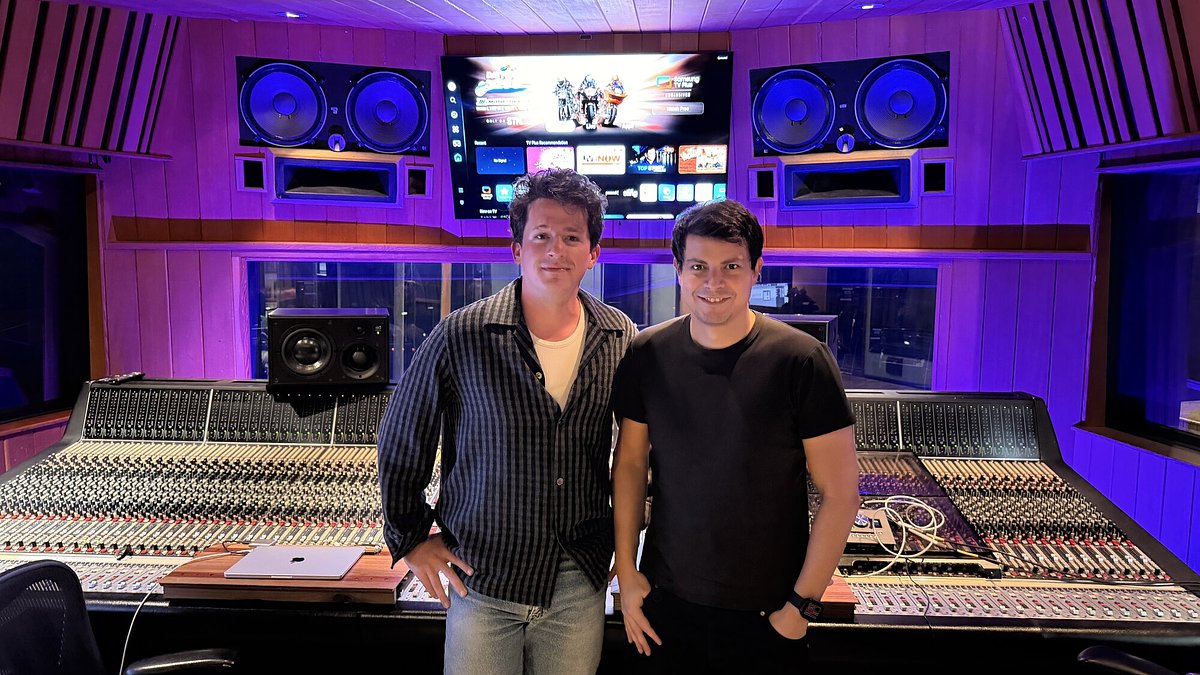
Charlie Puth Joins AI Firm Moises to Steer Music's Tech Future
SALT LAKE CITY, UT – March 04, 2026 – Grammy-nominated artist and producer Charlie Puth has taken on a new role, not in the studio, but in the boardroom. Moises, an AI-powered music platform with over 70 million users, announced today that Puth has joined the company as its first Chief Music Officer. The move signals a significant moment in the evolving relationship between music and artificial intelligence, placing a prominent artist at the helm of developing the very tools that are reshaping the creative process.
Puth will guide the creative and product direction for the Salt Lake City-based tech firm, aiming to ensure its AI tools are built from a musician's perspective. This partnership goes beyond a simple endorsement, positioning Puth to directly influence the future of a platform designed to amplify, not automate, human artistry.
The Artist as Architect
For many, Charlie Puth is known for a string of multi-platinum hits like "Attention" and "See You Again." But for a generation of aspiring producers, he is also a respected educator who regularly demystifies the complexities of music production for his 80 million social media followers. This reputation as a "musician's musician," bolstered by a degree in Music Production and Engineering from the prestigious Berklee College of Music, makes his appointment less of a surprise and more of a logical next step.
"I've been using Moises in my own creative process for years, as have many of my friends," Puth stated in the official announcement. His familiarity with the platform underscores the authenticity of the partnership. He highlighted its ability to deconstruct music for study and experimentation, adding, "It opens up possibilities that used to take hours or expensive studio setups."
Puth's core philosophy on technology aligns perfectly with Moises' stated mission. In a landscape fraught with anxiety about AI's potential to supplant human creators, he offers a more optimistic vision. "AI, when done right, isn't here to replace musicians," he explained. "It's here to help artists learn, explore, and bring their ideas to life." In his new capacity, Puth will collaborate on developing artist-focused features, ensuring the platform's evolution reflects the practical, day-to-day needs of working musicians.
Moises' Strategic Play in a Crowded Field
The partnership is a major strategic move for Moises, a company that has already carved out a significant niche in the burgeoning music-tech space. Honored as Apple's 2024 iPad App of the Year and a 2025 Apple Design Awards finalist, the platform has demonstrated both technical prowess and user-centric design. It processes a staggering amount of audio daily—equivalent to nearly six years' worth—and is backed by a team of engineers with experience at tech giants like Spotify, Pandora, and TikTok.
Moises operates on a freemium model, offering basic features for free while a "Pro" subscription unlocks unlimited use and higher-quality processing. This model has proven successful, helping the company secure $50.2 million in funding to date, including a substantial $40 million Series A round in January 2025 led by Connect Ventures and monashees. With investors also including music industry figures like Steve Aoki and 3LAU, the company has strong financial and industry backing.
In a market increasingly saturated with AI tools, Moises differentiates itself by focusing on augmentation rather than generation. While competitors like Suno and Udio gain attention for creating entire songs from text prompts, Moises provides tools that assist in the process of music-making: isolating vocals and instruments, identifying chords, and changing tempo.
Geraldo Ramos, CEO of Moises, articulated this distinction clearly. "We believe the future of music creation isn't about AI generating songs for you. It's about AI amplifying what makes human creativity irreplaceable: intuition, emotion, and artistic vision," he said. "AI should be a brush in the artist's hand, not a paint-by-numbers kit." By bringing Puth on board, Moises not only gains invaluable creative input but also sends a powerful message to the industry: its technology is being shaped and validated by the very artists it aims to serve.
Navigating the Crossroads of Music and Machine
The collaboration arrives at a critical juncture for the music industry, which is grappling with the ethical and creative implications of artificial intelligence. Artist advocacy groups like SAG-AFTRA have been actively negotiating with major record labels to establish guardrails around AI, focusing on consent, compensation, and transparency for any use of an artist's voice or likeness. The resulting agreements underscore a growing industry consensus: technology should serve art, not exploit it.
The Puth-Moises partnership appears to model a path forward that many artists find palatable. By focusing on "complementary AI," the company sidesteps the more contentious debate around generative models that can create music that mimics or replaces human artists. Moises has also stated that its AI models are trained ethically on licensed content, addressing another key concern within the creative community regarding copyright and data provenance.
This artist-centric approach, now championed by a globally recognized musician from within the company, could set a new standard for how tech companies and creators collaborate. It reframes the narrative from one of conflict to one of partnership, where AI is developed as a sophisticated tool to enhance a musician's workflow, much like the advent of synthesizers or digital audio workstations in previous eras.
Putting Theory into Practice: The 'Beat Yourself Up' Challenge
To celebrate the new partnership, Puth and Moises have immediately launched a global initiative that puts their philosophy into practice. The "Moises Jam Session" is a remix and cover competition centered around Puth's new single, "Beat Yourself Up," the lead track from his forthcoming album Whatever's Clever!, due out March 27.
Through the Moises app, participants gain exclusive access to the song's individual audio components, or "stems," such as the isolated vocal track, bassline, and drum parts. This allows musicians and fans to deconstruct the song and rebuild it in their own image, fostering a hands-on creative engagement.
The stakes are high, with a prize package valued at $100,000 in cash and prizes. Puth will personally select the winners, who will also receive signed merchandise and a backstage meet-and-greet at his upcoming Madison Square Garden concert. The contest, which runs through March 31, serves as a powerful demonstration of the Moises platform, turning a passive listening experience into an interactive creative opportunity and directly inviting its community to engage with music on a deeper level.