
- Market Growth: The special mission aircraft market is projected to grow from $18.6 billion in 2025 to over $27 billion by 2031.
- Payload Capacity: The SkyCourier freighter variant offers a 6,000-pound payload capacity.
- Availability: The new in-flight operable door will be available starting in 2028.
Experts view this upgrade as a strategic move by Textron to position the Cessna SkyCourier as a versatile, cost-effective competitor in the rapidly expanding special missions market, particularly for military, humanitarian, and commercial skydiving operations.
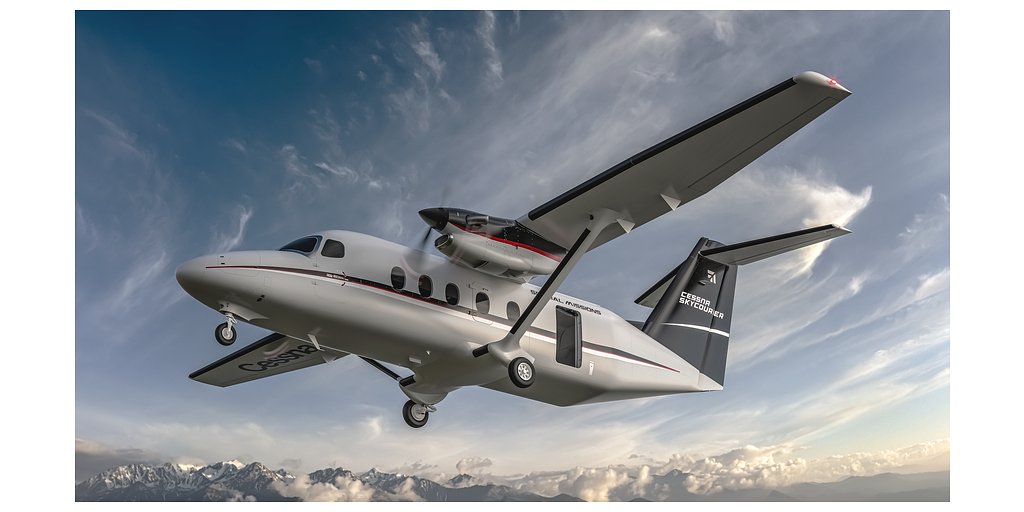
Cessna SkyCourier Gets New Door to Unlock Special Mission Markets
SANTIAGO, Chile – April 07, 2026 – Textron Aviation has announced a pivotal upgrade for its Cessna SkyCourier turboprop: a new factory-installed, in-flight operable door designed to significantly broaden the aircraft's capabilities in the demanding special missions sector. The modification, available on the passenger variant starting in 2028, transforms the utilitarian aircraft into a highly flexible platform for military paratroopers, smokejumpers, humanitarian aid drops, and commercial skydiving operations.
Announced at an event in Santiago, the new feature is far more than a simple hardware addition. It represents a strategic push by Textron into the lucrative and growing special missions market, positioning the SkyCourier as a direct competitor to established multi-role aircraft. The integrated door is designed to be opened safely during flight, enabling the deployment of personnel or precision airdrops of cargo, while still functioning as a standard cargo door on the ground.
A Strategic Play in a Competitive Arena
The market for special mission aircraft is expanding rapidly, with analysts projecting growth from approximately $18.6 billion in 2025 to over $27 billion by 2031. This growth is fueled by government agencies and military forces seeking versatile, cost-effective platforms for everything from surveillance and transport to emergency response. Textron’s move places the SkyCourier squarely in this competitive landscape.
For years, operators have relied on a mix of aging and new aircraft like the De Havilland Canada DHC-6 Twin Otter and the CASA C-212 Aviocar, the latter of which features a rear ramp for similar missions. More recently, in 2023, Deutsche Aircraft received European certification for an in-flight operable door on its D328 turboprop, signaling a clear industry trend toward this type of mission flexibility. By offering this capability directly from the factory, Textron aims to provide a seamless, fully certified solution that bypasses the complexities of aftermarket modifications.
“An In-Flight Operable Door builds on the Cessna SkyCourier’s reputation for reliability and adaptability, reinforcing its role as a purpose-built solution for high-demand missions,” said Bob Gibbs, vice president of Special Missions Sales for Textron Aviation. “The option opens new opportunities for customers worldwide, including armed forces, smokejumpers, disaster relief groups and commercial skydiving operators.”
The strategic importance of this development is underscored by the aircraft’s recent adoption by military clients. The Belgian Air Force has already selected the SkyCourier for its Special Operations forces, marking the platform's first military order and validating its potential in the light tactical transport segment even before this new capability was announced.
Redefining Versatility for Critical Operations
The true impact of the in-flight operable door lies in the new operational possibilities it unlocks for its target users. For military special forces, the SkyCourier becomes a more agile and economical alternative to larger, more costly transports like the C-130 Hercules for deploying small paratrooper teams, especially into smaller, less-prepared airfields.
For smokejumpers and wildfire response teams, who currently rely on a fleet of aircraft including the Dornier 228 and Shorts Sherpa, the SkyCourier offers a modern, high-performance platform. Its combination of a 6,000-pound payload capacity in the freighter variant and the ability for jumpers to exit in-flight makes it a compelling option for rapid deployment into remote and rugged terrain. Similarly, humanitarian and disaster relief organizations gain a new tool for delivering life-saving supplies with precision. The ability to perform airdrops from the SkyCourier can be critical in scenarios where runways are damaged or nonexistent, enabling aid to reach isolated communities.
The commercial skydiving industry also stands to benefit significantly. The SkyCourier’s 19-passenger capacity and new door make it an attractive, modern alternative to popular skydiving aircraft like the Cessna Caravan and Twin Otter, offering a reliable platform with potentially lower operating costs and faster turnarounds thanks to its single-point pressure refueling.
The Engineering and Certification Challenge
Integrating a door that can be safely opened in flight is a significant engineering feat that goes far beyond simply cutting a hole in the fuselage. As a factory-installed option, the modification will be certified as part of the SkyCourier’s amended Type Certificate with aviation authorities like the Federal Aviation Administration (FAA) and the European Union Aviation Safety Agency (EASA). This rigorous process, reflected in the 2028 availability timeline, involves extensive design, stress analysis, and flight testing.
Engineers must ensure the aircraft’s structural integrity and aerodynamic stability are not compromised when the door is open under various flight conditions. Safety protocols for personnel are paramount, requiring features such as secure attachment points for harnesses, non-slip flooring, and grab handles. The fact that the SkyCourier is an unpressurized aircraft simplifies some aspects of the door's design, as it does not require the heavy, complex sealing mechanisms of a pressurized cabin, but the aerodynamic and structural challenges remain substantial.
The SkyCourier itself provides a robust foundation for such a modification. It is powered by two wing-mounted Pratt & Whitney Canada PT6A-65SC turboprop engines and features a heavy-duty four-blade propeller designed for performance while hauling heavy loads. With a maximum cruise speed of over 200 knots and a 900-nautical-mile range, the aircraft has the performance envelope to support these demanding missions. The addition of the in-flight operable door builds upon this solid platform, transforming a capable utility transport into a true multi-mission asset.