
- $800M: Ceribell's market capitalization as of December 2025
- 10%: U.S. acute care hospital penetration achieved by Ceribell
- 4.1 days: Reduction in median ICU stay for patients monitored with Ceribell System (SAFER-EEG trial)
Experts would likely conclude that Ceribell's AI-powered brain monitoring technology represents a significant advancement in neurological diagnostics, with strong clinical evidence supporting its ability to improve patient outcomes and reduce healthcare costs.
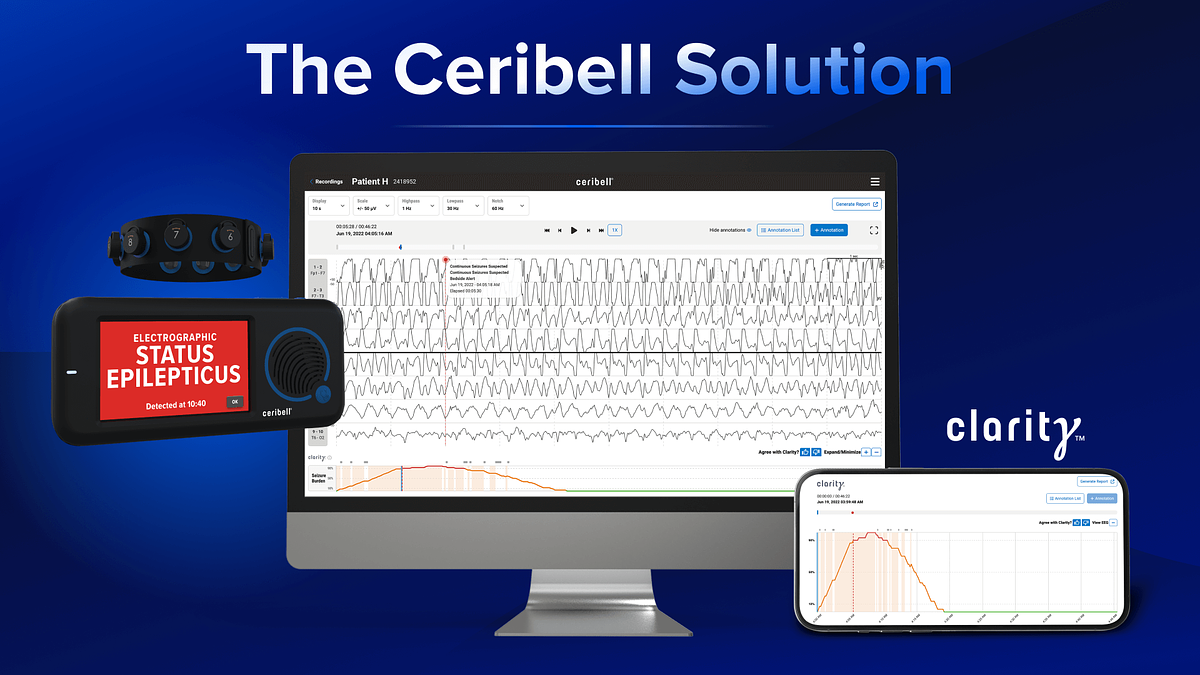
Ceribell to Spotlight AI Brain Monitoring at J.P. Morgan Conference
SUNNYVALE, CA – December 30, 2025 – Medical technology firm Ceribell is poised to capture the attention of the global healthcare investment community as it prepares to present at the prestigious 44th Annual J.P. Morgan Healthcare Conference. The company announced today that its CEO and Co-founder, Jane Chao, Ph.D., will take the stage in San Francisco on January 12, 2026, to detail the company's vision and its transformative impact on neurological diagnostics.
For a growth-stage company like Ceribell (Nasdaq: CBLL), this presentation is more than a calendar entry; it's a strategic platform to articulate its value proposition to a room of influential investors, analysts, and potential corporate partners. The conference is a critical venue for companies to define their narrative, and Ceribell arrives with a compelling story of rapid innovation, strong market adoption, and a clear runway for future expansion.
A Strong Financial Footing for an Ambitious Mission
Ceribell enters this high-stakes event on solid financial ground. Following a successful upsized Initial Public Offering in October 2024 that raised $207.3 million, the company has established a significant presence on the public market. With a market capitalization hovering around $800 million, Ceribell is backed by substantial investor confidence. While currently operating at a net loss, a common trait for companies heavily investing in growth and R&D, its balance sheet shows a healthy net cash position of approximately $147 million.
This financial stability is crucial as the company executes its strategy to make its point-of-care EEG system the standard of care in acute settings. The company's revenue model, based on recurring income from both system subscriptions and single-use disposable headbands, provides a predictable and scalable financial structure. To date, Ceribell has achieved an estimated 10% penetration of U.S. acute care hospitals. This figure highlights both its current success and the vast untapped market opportunity that remains, a key point likely to be emphasized for the investor audience at the conference.
Revolutionizing Emergency Neurological Care
The core of Ceribell's value proposition lies in its flagship product, the Ceribell System. This portable, AI-powered electroencephalography (EEG) platform is fundamentally changing how hospitals respond to neurological emergencies. Traditionally, obtaining an EEG to detect seizure activity is a cumbersome process, often involving long waits for specialized technicians and bulky equipment, resulting in critical delays where every minute counts.
The Ceribell System condenses this process from hours to minutes. Designed for use by emergency room physicians and ICU nurses with minimal training, the system can be deployed at the bedside, providing real-time brain activity data. This rapid access to critical information has a profound impact on patient outcomes, a fact substantiated by a growing body of clinical evidence.
For instance, the multi-center SAFER-EEG trial demonstrated that patients monitored with the Ceribell system had a median ICU stay that was 4.1 days shorter compared to those receiving conventional EEG. Furthermore, the study showed that door-to-EEG time was expedited by an average of 19.4 hours. Another key study, the DECIDE trial, found that access to Ceribell's data changed physicians' treatment decisions in approximately 40% of cases, leading to more accurate care and a reduction in unnecessary treatments. These clinical improvements translate directly into economic benefits for hospitals, with studies indicating potential cost savings of over $4,800 per patient due to shorter ICU stays and a reduction in costly patient transfers.
With the system already in use at over 615 U.S. hospitals and having impacted the care of more than 100,000 patients, its real-world efficacy is well-established.
The AI Edge in a Competitive Landscape
While the neurodiagnostic market includes established players like Natus Medical and Nihon Kohden, Ceribell has carved out a unique niche through its pioneering use of artificial intelligence. The system's true power is unlocked by its Clarity™ algorithm, which continuously analyzes EEG data and provides instant alerts for suspected seizure activity.
This AI integration is not just an add-on; it is a core differentiator. In 2023, the Clarity algorithm became the first and only AI-powered device to receive FDA 510(k) clearance for diagnosing electrographic status epilepticus, a life-threatening condition of continuous seizure. This regulatory milestone, followed by a New Technology Add-on Payment (NTAP) from CMS, validated the system's clinical uniqueness and utility.
Ceribell has continued to push the boundaries of its AI capabilities. In November 2025, the company secured a landmark FDA 510(k) clearance for its next-generation Clarity algorithm, making it the first and only point-of-care EEG cleared to detect electrographic seizures across all age groups—from pre-term neonates to adults. This significantly expands the system's addressable patient population and addresses a critical unmet need in pediatric and neonatal intensive care units, where seizures are often difficult to diagnose.
Charting the Future: From Seizures to a Multi-Indication Platform
Ceribell's presentation at the J.P. Morgan conference will likely focus as much on the future as on its current success. The company is actively expanding its diagnostic capabilities beyond seizure detection, transforming its device into a comprehensive neuromonitoring platform.
A key area of expansion is delirium, a common and serious form of acute brain dysfunction in ICU patients. After receiving an FDA Breakthrough Device Designation, Ceribell announced in December 2025 that it had obtained 510(k) clearance for a delirium monitoring solution, making it the first of its kind. This new indication opens another significant market and addresses a condition that is frequently under-diagnosed.
The company's R&D pipeline also includes programs for other serious neurological conditions, such as ischemic stroke, which represents a massive potential market. Alongside algorithm development, Ceribell is also working on second-generation hardware to further enhance usability. This forward-looking strategy signals a long-term vision to make real-time brain monitoring a new vital sign in critical care, providing clinicians with a more complete picture of a patient's neurological status.