
- €1.2 billion invested in sodium-ion R&D since 2016
- 40 GWh of annual production capacity already operational
- 60 GWh supply contract signed with HyperStrong, the world's largest for sodium-ion technology
Experts would likely conclude that CATL's TENER Sodium Energy Storage System represents a significant breakthrough in energy storage, offering a viable alternative to lithium-ion batteries with advantages in cost, safety, and geopolitical stability.
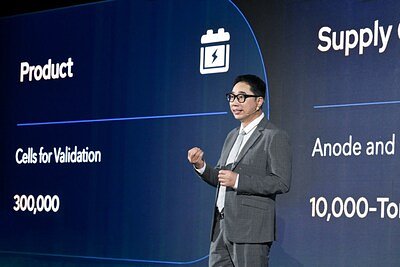
CATL's Sodium Battery: A Saline Solution for Our Energy Future
MUNICH, GERMANY – June 23, 2026 – Yesterday, in a move that rippled through the global energy sector, battery giant CATL unveiled the TENER Sodium Energy Storage System. While the corporate world is accustomed to product launches, this was something different. This wasn't just another battery; it was the formal, commercial-scale debut of a technology poised to fundamentally reshape the foundation of our energy infrastructure. By bringing the world's first field-validated, mass-producible sodium-ion battery storage system to market, CATL is offering more than just an alternative to lithium—it's proposing a new blueprint for energy security and sustainability.
For years, the conversation around the energy transition has been dominated by lithium, the lightweight element that powers everything from our phones to our cars. But as grids struggle to integrate intermittent renewables and the dawn of the AI era promises a surge in power demand, the industry's reliance on a single, geopolitically sensitive resource has become its Achilles' heel. With the launch of TENER Sodium, we are witnessing a pivotal moment where institutional innovation directly addresses this systemic vulnerability, offering a path toward a more resilient and distributed energy landscape.
A New Foundation for the Grid
The core challenge for our future grid isn't just generating clean power; it's storing it reliably and affordably. Lithium-ion batteries have been the default solution, but their supply chain is fraught with challenges. Lithium is concentrated in a few regions, its price is notoriously volatile, and its extraction carries significant environmental baggage. Sodium, by contrast, is over 1,000 times more abundant, found in common salt, and distributed evenly across the globe. This simple fact carries profound implications.
"We believe that sodium and lithium together will form the twin foundations of the future energy storage system," said William Wu, Director of CATL's Energy Storage Technology Center. This vision of a "twin foundation" is not about replacing lithium but complementing it. While lithium may remain dominant in applications where high energy density is paramount, like performance electric vehicles, sodium is emerging as the workhorse for stationary grid storage. Its advantages are clear: superior performance in extreme temperatures, enhanced safety, and a significantly lower potential cost ceiling.
This shift is not merely theoretical. Market analysts have been forecasting that sodium-ion could capture a substantial portion of the stationary storage market, which is expected to grow exponentially in the coming decade. CATL's move from laboratory to mass production validates these predictions, signaling that the era of diversification is no longer a future prospect but a present reality. The reliance on a single chemistry is giving way to a more robust, multi-faceted approach to energy storage.
The Engineering of Certainty
In her keynote speech, Amanda Xu, CTO ESS and President of ESS Europe CATL, captured the essence of the company's strategy: "The principle we most firmly believe in is that readiness creates certainty." The TENER Sodium system is the physical embodiment of that principle, engineered from the ground up to address the practical pain points of grid operators and communities.
This is not a delicate piece of lab equipment. The system is built on a modular architecture, with each 42-tonne module delivering over 30 MWh of capacity. This means a massive 1 GWh storage site can be constructed with just 34 units, dramatically simplifying project deployment. The design also decouples energy and power, allowing for flexible storage durations from one to eight hours, tailored to specific grid needs—from rapid frequency regulation to long-duration energy shifting.
Beyond the modularity, CATL has invested in a suite of innovations that enhance real-world performance and community acceptance:
- Enhanced Efficiency: A dedicated bidirectional voltage regulation system smooths out the unique voltage curve of sodium-ion batteries, boosting round-trip efficiency by nearly 2%. For a 1 GWh station, that translates to millions of additional kilowatt-hours delivered to the grid annually.
- Smarter Management: The system's advanced BMS leverages the sodium chemistry to provide more accurate state-of-charge estimations and has a 20% higher overcharge tolerance than lithium-ion, building in a crucial safety and operational margin.
- Reduced Operating Costs: By redesigning airflow and using a high-efficiency liquid cooling system, CATL has slashed auxiliary power consumption from the industry average of 2% down to just 1%. For large-scale projects, this seemingly small percentage point can save millions in operating costs over the asset's lifetime.
- Community-Friendly Design: Operating at just 65 decibels—about the level of a normal conversation—the system is significantly quieter than conventional solutions. This addresses a common source of local opposition, allowing storage facilities to be located closer to population centers and reducing the need for costly transmission infrastructure.
Furthermore, the system shares the same physical footprint as CATL's lithium (LFP) systems, giving customers the flexibility to switch between chemistries without costly redesigns—a practical hedge against lithium price volatility. This is the kind of thoughtful innovation that builds confidence and accelerates adoption.
The Race to Commercial Scale
CATL's announcement is credible because it's backed by a decade of focused effort and immense capital investment. The company has poured nearly €1.2 billion into sodium-ion R&D since 2016, amassing over 1,600 patent families and overcoming more than 100 technical hurdles. This isn't a speculative venture; it's the culmination of a long-term strategic vision.
Now, that vision is being matched with industrial might. The company has already invested heavily to add 40 GWh of annual sodium-ion production capacity at its Fuding base, with another 160 GWh planned for its Jining base. These are not paper promises; the mass-production lines are commissioned and ready for large-scale deployment.
The market is already responding. In April 2026, CATL signed a landmark three-year, 60 GWh supply contract with HyperStrong, a major energy storage integrator. This single deal, the world's largest for sodium-ion technology, catapulted the chemistry from pilot projects into the GWh-scale deployment era. Deliveries in China are set to begin this September, with a target of 1 GWh shipped by year-end. Global deliveries are slated to follow in June 2027.
While competitors like BYD, Northvolt, and Natron Energy are also making significant strides in sodium-ion, CATL's combination of a fully-validated system, massive production capacity, and major commercial contracts places it firmly at the head of the pack, accelerating the entire industry's transition.
The Geopolitics of Salt and Power
Ultimately, the rise of sodium-ion technology transcends corporate competition. It represents a fundamental shift in the geopolitics of energy. By championing a battery chemistry based on one of the most abundant and equitably distributed materials on Earth, CATL is providing a powerful tool for nations seeking greater energy independence.
This move helps insulate the global energy transition from the supply shocks and resource nationalism that have plagued the market for critical minerals like lithium and cobalt. For countries without domestic lithium reserves, sodium offers a viable path to building a local battery supply chain, strengthening national energy security and fostering economic development. The stability of sodium's cost provides a predictable foundation for the massive infrastructure investments required to decarbonize our grids.
From pioneering LFP as the mainstream chemistry for energy storage to now launching a commercially-ready sodium-ion system, CATL has consistently demonstrated how dedicated investment and institutional innovation can solve systemic challenges. The TENER Sodium system is more than just a technological achievement; it is a tangible step toward a more stable, cost-effective, and sustainable foundation for the world's energy future.