
- 90% drop in lithium-ion battery pack costs since 2010
- 80% cost reduction for lithium iron phosphate (LFP) batteries over the last decade
- 1,800+ hours in 2025 where California's clean energy met or exceeded the state's entire electricity demand
Experts agree that technological advancements and cost reductions have made sustainable energy the most commercially viable option, marking a shift from environmental idealism to economic necessity.
CATL CEO: The Economic Case for a Zero-Carbon Future Is Here
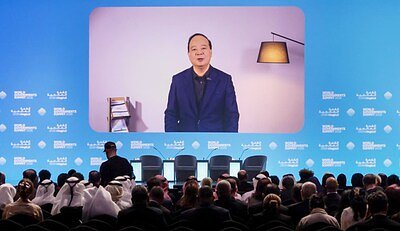
DUBAI, UAE – February 04, 2026 – The global transition to sustainable energy has reached a pivotal inflection point, moving from a climate-driven ideal to an economic inevitability. That was the central message from Dr. Robin Zeng, Chairman and CEO of battery giant Contemporary Amperex Technology Co., Limited (CATL), in a landmark speech delivered at the World Governments Summit in Dubai. Zeng declared that the era of sustainable energy is no longer a distant vision but an imminent reality, predicting that 2030 will mark its true beginning, propelled by technological advancements that have made clean energy the most commercially viable option in a growing number of markets.
“Throughout human history, energy has been the driving force behind civilization's growth,” Zeng stated, framing the current shift as a revolution comparable to the agricultural transition. He described a move away from hunting for fossil fuels to a new paradigm of harvesting wind and solar power, storing it efficiently in advanced batteries. This transition, he argued, is now being led by balance sheets as much as by environmental policy.
The Economic Tipping Point
The most compelling driver of this new energy era is a dramatic collapse in costs. Independent analysis from leading market research firms like BloombergNEF (BNEF) confirms the trend, showing that the price of lithium-ion battery packs has fallen by over 90% since 2010. The cost of lithium iron phosphate (LFP) batteries, a key technology for CATL, has seen a particularly steep decline, falling roughly 80% over the last decade—a figure mirrored by the plummeting cost of solar power generation.
This radical cost reduction has transformed sustainable energy from a premium, niche product into a powerful engine for economic efficiency. Dr. Zeng provided concrete examples of this transformation in action across the globe. In the remote mining operations of Chile and the Democratic Republic of the Congo, solar-plus-storage systems powered by CATL are delivering electricity at approximately one-fourth the cost of traditional diesel generators. Similarly, in Pakistan, industrial facilities like cement plants are slashing their electricity costs by half by integrating distributed solar power with the company's energy storage solutions.
These case studies illustrate a broader market reality. In California, a global leader in renewable adoption, the grid recorded over 1,800 hours in 2025 where clean energy production met or surpassed the state's entire electricity demand. This milestone, made possible by a massive expansion in battery storage capacity, demonstrates that renewables are no longer just a supplemental power source but are capable of forming the backbone of a modern, stable grid. The infamous “duck curve,” which shows a sharp drop in net load during the day followed by a steep evening ramp-up, has been significantly flattened by these storage assets.
Architecting the Future Grid
According to Zeng, the future energy system will be defined by three core pillars: it will be distributed, intelligent, and circular. This vision represents a fundamental departure from the centralized, fossil-fuel-dependent infrastructure of the 20th century.
A distributed system replaces massive, centralized power plants with a network of smaller, localized renewable generation and battery storage assets. This model is particularly advantageous in regions with weak or non-existent grid infrastructure, allowing for rapid electrification and enhanced energy security.
To manage the inherent variability of wind and solar power, this new grid must be intelligent. Zeng highlighted the use of advanced AI-driven algorithms for scheduling and optimizing energy flows, ensuring a constant balance between supply and demand. As an example, CATL is using AI to manage the fluctuating energy needs of SenseTime's AI Data Center in Shanghai, showcasing how technology can tame intermittency.
Perhaps most critically, the system must be circular. Unlike fossil fuels, which are consumed and their emissions released, the materials used in batteries can be recovered and reused. Here, CATL claims a significant industry lead through its subsidiary, Brunp Recycling. The company reports industry-leading recovery rates of 99.6% for nickel and cobalt and 96.5% for lithium. This high level of circularity not only mitigates environmental impact but also creates a more stable and sustainable supply chain for critical raw materials, reducing dependence on primary mining.
To support this new architecture, CATL has developed a high-voltage grid-forming energy storage technology. This system acts as a powerful stabilizer for zero-carbon grids, providing essential services like frequency regulation, system inertia, and black-start capabilities—the ability to restart a grid after a total blackout. This technology is already being deployed in China to create an off-grid industrial park, powered entirely by renewables and storage, that will support a 40GWh battery plant.
Scaling Through Investment and Cooperation
Dr. Zeng was candid that while the path is clear, significant challenges remain. “With today's technologies, we may have solved less than 30% of what a fully sustainable energy system requires,” he admitted, stressing the need for continued breakthroughs in basic science.
To that end, CATL is making unprecedented investments in research and development. While Zeng's claim of investing more than “all other players in the industry combined” may be an ambitious statement, independent analysis confirms the company’s dominance. Reports from Interact Analysis show CATL’s annual R&D spending from 2022-2024 was equivalent to the combined spending of its next four largest competitors. This financial muscle is being directed toward frontier technologies like condensed and solid-state batteries, which promise even greater energy density and safety.
However, innovation in the lab is not enough. To accelerate the global transition, Zeng issued a call for greater international cooperation and put forth a bold, and potentially contentious, proposal: the establishment of special economic zones (SEZs) for advanced energy manufacturing. He suggested these zones could adopt the streamlined building and equipment regulations that have proven successful in rapidly scaling up production in China. While SEZs are a well-established tool for economic development, the suggestion of exporting a specific regulatory model is likely to spark debate among policymakers weighing the benefits of accelerated deployment against concerns over trade standards and national sovereignty.
This proposal underscores the urgency that permeated Zeng’s address. Citing a recent Columbia University study projecting a 1.7-degree Celsius temperature rise as early as 2027, he framed the energy transition as a fundamental development issue requiring immediate, coordinated action. The race is on, not just to build a cleaner world, but to build a more efficient and prosperous one, powered by the sustainable, intelligent, and circular energy systems of tomorrow.