
- $5.73 billion: The global biopreservation sector's value in 2026, projected to grow to $26 billion by 2032.
- 80%: The percentage of mesenchymal stem cell (MSC) therapy submissions to the FDA requiring cryopreservation.
Experts in cell therapy and biopreservation would likely conclude that CaseBioscience's new products represent a significant advancement in addressing critical preservation challenges, offering superior performance and regulatory advantages that could streamline the development and commercialization of cell therapies.
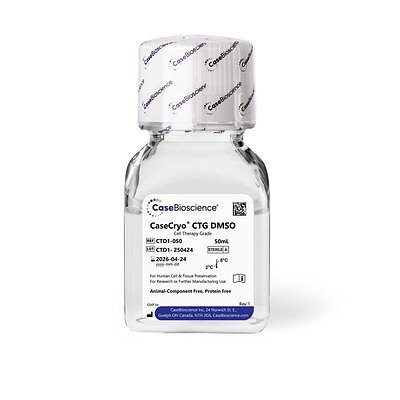
CaseBioscience Aims to Redefine Cell Therapy with New Biopreservation Tools
ST. PETERSBURG, Fla. – February 06, 2026 – As the cell and gene therapy industry converges for Advanced Therapies Week (ATW) 2026, Florida-based CaseBioscience has unveiled two new products designed to tackle one of the sector's most persistent challenges: the preservation of living therapeutic materials. The company announced the launch of CaseCryo® CTG DMSO for cryopreservation and CaseStor® HSS for hypothermic storage, a move that signals a significant push towards enhancing the quality, consistency, and regulatory readiness of next-generation medicines.
These solutions arrive at a critical moment for an industry grappling with the complexities of manufacturing and logistics, where the viability and function of cells are paramount to patient outcomes.
Addressing a Critical Bottleneck in Cell Therapy
The promise of cell therapy—using living cells to treat diseases ranging from cancer to autoimmune disorders—is immense, but its delivery is fraught with logistical hurdles. A major bottleneck lies in biopreservation, the process of storing and transporting cells outside the body without compromising their integrity. Effective preservation is essential for everything from storing intermediate products during complex manufacturing workflows to ensuring a final therapeutic product has a viable shelf-life.
The market reflects this critical need. The global biopreservation sector, valued at approximately $5.73 billion in 2026, is projected to surge to over $26 billion by 2032. This growth is fueled by the rapid expansion of regenerative medicine, where the demand for reliable preservation methods is non-negotiable. Industry data underscores this point, with reports indicating that over 80% of mesenchymal stem cell (MSC) therapy submissions to the U.S. Food and Drug Administration (FDA) require cryopreservation.
CaseBioscience is positioning its new products to directly address these pain points. The company aims to provide solutions that go beyond simple cell survival, focusing instead on maintaining the long-term functional performance crucial for therapeutic efficacy.
A New Standard in Biopreservation Performance
At the heart of the launch are two distinct but complementary solutions. CaseCryo® CTG DMSO is a cell therapy-grade (CTG) cryopreservation medium designed for freezing cells for long-term storage. Its counterpart, CaseStor® HSS, is a hypothermic storage solution for short-term transport and storage of cells and tissues at refrigerated temperatures.
According to the company, these products have demonstrated superior performance over leading commercially available solutions in internal evaluations. CaseCryo® CTG DMSO is reported to enhance the long-term recovery and subsequent expansion of sensitive T cells and human pluripotent stem cells (hPSCs). Meanwhile, CaseStor® HSS has shown it can improve the post-storage expansion of hPSCs, T cells, and MSCs.
This performance is attributed to what CaseBioscience calls a "systems-level approach" to biopreservation. This philosophy moves beyond the traditional metric of immediate post-thaw viability and instead prioritizes sustained cell health and functional performance throughout the entire cell therapy workflow, from manufacturing to patient administration.
"Cryopreservation and hypothermic storage are critical to enabling cell and tissue therapies," said Kevin Flynn, PhD, Chief Scientific Officer at CaseBioscience, in the company's official announcement. "With CaseCryo® CTG DMSO and CaseStor® HSS, we're providing solutions built for clinical applications that prioritize long-term cell performance, quality, and regulatory rigor."
The Strategic Advantage of Regulatory Rigor
In a field dominated by intense regulatory scrutiny, CaseBioscience is making a strategic play that distinguishes it from competitors like Thermo Fisher Scientific and BioLife Solutions. Both new products are manufactured in an FDA-registered facility under cGMP-aligned and ISO 13485:2016–certified quality systems. More significantly, the company has filed Drug Master Files (DMFs) with the FDA for both solutions.
A DMF is a confidential submission to the FDA containing detailed information about a product's manufacturing. For cell therapy developers, this is a game-changer. By referencing CaseBioscience's DMF in their own Investigational New Drug (IND) or Biologics License Application (BLA), developers can significantly streamline their regulatory submissions, saving time and resources. It provides them with an assurance of quality and consistency, as the FDA has already reviewed the proprietary manufacturing details.
This regulatory foresight aligns perfectly with a key theme at ATW 2026: the urgent need for sustainable and efficient pathways to commercialization. By de-risking a crucial component of the supply chain, CaseBioscience aims to become an indispensable partner for companies moving their therapies from the lab to the clinic.
From Assisted Reproduction to Advanced Therapies
Underpinning the company’s quality claims is a unique heritage. CaseBioscience's scientific approach is guided by principles established in assisted reproductive technology (ART), the highly regulated field of human in-vitro fertilization. ART workflows demand unparalleled precision and consistency, as the success of a procedure hinges on the viability of a few precious cells.
By applying these ART-inspired quality principles, the company leverages decades of expertise in handling highly sensitive biological materials. This background informs its manufacturing processes, which are designed to ensure high batch-to-batch consistency—a critical quality attribute for any therapeutic product. This focus on minimizing variability and maximizing functional outcomes is a direct translation of the stringent demands of reproductive medicine into the burgeoning field of cell therapy.
This expertise is not limited to its new clinical-grade products. The launch expands a portfolio that already includes research-focused media. The company is also actively looking toward the future, with ongoing development of alternative formulations, such as a clinical-grade, non-DMSO cryoprotectant. This forward-looking research, recently highlighted at an international stem cell symposium, includes using AI-assisted methods to identify novel cryoprotectants, underscoring a commitment to continuous innovation that supports the next wave of emerging cell therapy modalities.