
- CAS IP Finder integrates over 100 scientific, patent, and non-patent literature databases
- AI-enhanced exploratory search reduces risk of missing critical prior art
- Platform includes specialized CAS Bioactivity file for life sciences research
Experts agree that CAS IP Finder successfully democratizes patent search while maintaining precision, making it a valuable tool for accelerating innovation and mitigating risk across industries.
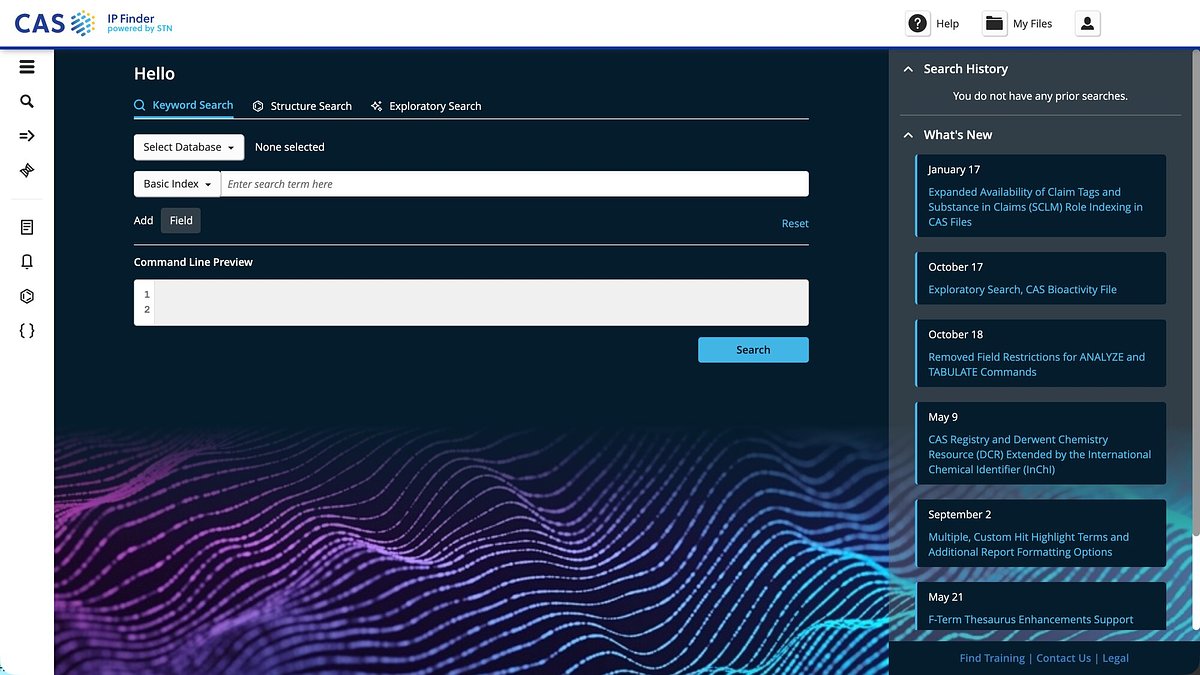
CAS Unlocks AI-Powered Patent Search to Bridge Expert-Novice Gap
COLUMBUS, OH – January 20, 2026 – CAS, a long-standing specialist in scientific knowledge management, has announced the full-scale launch of CAS IP Finder, an intellectual property (IP) search platform designed to dismantle the traditional barriers between expert patent searchers and broader research and development teams. The solution, powered by the robust STN engine, integrates advanced artificial intelligence to make complex patent analysis more accessible across entire organizations, aiming to accelerate innovation and mitigate risk in an increasingly convoluted data landscape.
The move comes as organizations grapple with an unprecedented surge in patent volume and the growing interconnectedness of scientific disciplines. This complexity has historically created a difficult choice for companies: either invest in highly specialized, command-line-driven tools for a small group of IP professionals or provide simpler, less precise tools to a wider audience, risking incomplete or inaccurate findings.
"As scientific and patent data grow in complexity, organizations need IP search solutions that enable access across entire teams," said Manuel Guzman, President, CAS, in a statement. "CAS IP Finder enables broader participation in IP research while maintaining the depth and accuracy that complex patent work demands, supporting faster, evidence-based decisions."
Democratizing a Highly Specialized Field
For decades, the world of professional patent searching has been the domain of experts trained in complex command-line syntax, necessary to navigate the vast and intricate databases of prior art. CAS IP Finder aims to level this playing field by marrying the comprehensive data of its legacy STN platform—which includes over 100 scientific, patent, and non-patent literature databases—with a modern, user-friendly interface.
The new platform introduces an intuitive query builder that allows users without specialized training to construct high-quality, precise searches. This shift is critical in a market where IP has evolved from a purely legal function to a core driver of corporate strategy. By empowering scientists, engineers, and business strategists to conduct their own initial research, companies can foster a more proactive and informed approach to innovation. The goal is to eliminate the bottleneck created by relying solely on a handful of IP experts, thereby speeding up the entire research and development lifecycle.
This democratization does not come at the cost of precision. The platform's foundation remains the curated, high-quality data that IP professionals have relied on for years. "The challenge was maintaining the precision and depth of CAS STNext while eliminating the traditional command-line barrier," noted Tim Wahlberg, Chief Product Officer, CAS. This balance is central to the product's strategy: providing broader access without sacrificing the accuracy essential for high-stakes patent decisions.
AI as the Engine for Deeper Insight
At the heart of CAS IP Finder's new capabilities is a proprietary AI-enhanced exploratory search. This feature moves beyond simple keyword matching, which can often miss relevant documents that use different terminology. Instead, it employs machine learning and natural language processing (NLP) to analyze the full text of a query—such as a project summary or invention disclosure—and understand its underlying concepts.
The system, trained on the vast and human-curated CAS Content Collection, identifies relevant patents and scientific literature by understanding semantic relationships. It also intelligently suggests refinements and related terms, guiding users toward a more comprehensive set of results without requiring them to be experts in search syntax. According to CAS, this advanced approach is already delivering significant value. "Our proprietary exploratory search uses machine learning... to deliver insights that patent examiners are now relying on," Wahlberg stated, highlighting a critical validation of the technology's effectiveness by the very professionals who determine patentability.
This integration of AI reflects a broader industry trend. As the volume of global data explodes, AI is becoming indispensable for IP analysis. It helps bridge the "semantic gap," where different authors or inventors describe the same concept using varied language. By automating the discovery of conceptual links, these tools drastically reduce the risk of missing critical prior art, a failure that can lead to costly litigation or wasted R&D investment.
From Risk Mitigation to Strategic Advantage
The strategic implications of more accessible and powerful IP search tools are profound. By significantly lowering the risk of missing prior art, CAS IP Finder helps organizations protect their investments and avoid pursuing unpatentable ideas. In a competitive environment, this foundational risk management is invaluable.
Beyond defense, the platform is positioned as a tool for offense. With interactive visualization tools and enhanced reporting features, it enables teams to explore patterns in large datasets, identify emerging technological trends, and monitor competitor activity. This transforms IP data from a static archive into a dynamic source of business intelligence. R&D leaders can identify "white space" opportunities for new innovation, while business development teams can vet potential acquisitions or partnerships with greater confidence.
The ability for a wider range of stakeholders to access and interpret this data fosters a more integrated innovation strategy. When scientists can easily check the novelty of an idea or a business manager can quickly assess the patent landscape of a new market, the entire organization becomes more agile and evidence-driven. This shift helps shorten development cycles and ensures that resources are allocated to projects with the highest potential for impact and commercial success.
A Targeted Solution for High-Stakes Life Sciences
Nowhere are the stakes of IP higher than in the pharmaceutical and biotechnology sectors, where the journey from discovery to market can take over a decade and cost billions of dollars. CAS IP Finder addresses the unique needs of this industry with specialized content and curated datasets.
A key differentiator is the inclusion of the CAS Bioactivity file. Curated by CAS scientists, this database provides normalized and structured data on structure-activity relationships (SAR), ADME (Absorption, Distribution, Metabolism, and Excretion), and toxicity. This information is vital for drug discovery, allowing researchers to understand how chemical structures interact with biological targets and how potential drug compounds will behave in living organisms.
Searching this type of complex, interconnected data through conventional methods is exceptionally difficult and time-consuming. By structuring it specifically for patent research workflows, the platform enables life sciences IP professionals and researchers to pinpoint critical information for freedom-to-operate searches, assess patentability, and monitor the competitive landscape with far greater precision. This targeted approach helps de-risk the early stages of drug discovery and development, where failure rates are notoriously high, and provides a crucial tool for protecting the massive investments inherent in life sciences innovation.