
- $2.6 billion: Annual cost of Canada's labor shortage to the economy
- 93,000: Job vacancies in healthcare and social assistance
- 700,000: Skilled trades workers expected to retire by 2028
Experts agree that Canada's proposed Global Skilling Centres offer a strategic solution to labor shortages by aligning immigrant skills with market needs, potentially transforming both workforce integration and vocational education exports.
Canada's Bold Plan: Train Skilled Workers Before They Arrive
TORONTO, ON – May 19, 2026 – As Canada grapples with a deepening labor crisis costing its economy billions, a new policy paper proposes a radical shift in its approach to immigration and talent acquisition: training the future workforce before they even set foot in the country.
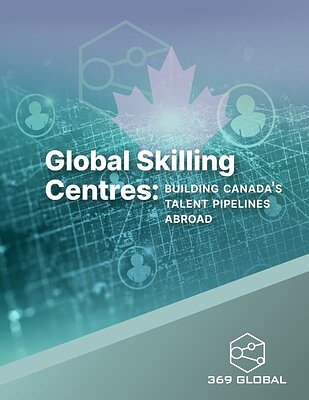
The landmark proposal, released today by the Canadian talent mobility group 369 Global, calls for the creation of "Global Skilling Centres" (GSCs). These purpose-built, Canadian-led vocational institutions would operate in key international markets, delivering Canadian-recognized credentials to prospective immigrants in sectors facing critical shortages. The paper, titled Global Skilling Centres: Building Canada's Talent Pipelines Abroad, argues this proactive model could solve chronic skills gaps, streamline immigrant integration, and create a new multi-billion dollar education export market.
An Economic Emergency
The call for such a dramatic overhaul comes as Canada's labor shortages reach a breaking point. The Canadian Chamber of Commerce has previously estimated that the worker shortage costs the economy approximately $2.6 billion annually. The problem is not just a headline number; it is a daily reality in critical sectors.
According to data cited in the proposal and supported by government statistics, the skills crisis is an emergency unfolding in real-time. The healthcare and social assistance sector is reeling from nearly 93,000 job vacancies. The rapidly expanding technology industry is short 25,000 cybersecurity professionals, and even Canada's educational services are facing 16,000 unfilled positions.
Beyond these figures, the construction and skilled trades sectors face a demographic cliff. With an estimated 700,000 skilled trades workers expected to retire by 2028, industries are desperate for welders, electricians, and carpenters. This persistent gap between labor supply and demand is a significant drag on productivity, with over half of Canadian small and medium-sized businesses citing labor shortages as a primary barrier to growth.
The GSC proposal argues that Canada's current immigration system, while successful in attracting highly educated individuals, often fails to address these specific vocational needs. A staggering one-in-four recent immigrants with a bachelor’s degree or higher experiences an "education-occupation mismatch," meaning they are overqualified for their jobs. Meanwhile, workers with the college and trade certifications desperately needed by employers represent just 12 per cent of economic immigrants.
A New Blueprint for Talent
Global Skilling Centres aim to flip this equation. Instead of selecting immigrants based on foreign credentials that often require lengthy and costly re-evaluation in Canada, the model proposes training them to Canadian standards from the start.
Under the GSC framework, Canadian colleges and polytechnics would partner with industry employers to co-design and deliver targeted vocational programs abroad. A prospective healthcare worker in Manila or a future welder in Chennai could enroll in a GSC, receive hands-on training benchmarked to Canadian provincial standards, and graduate with a credential recognized by employers and licensing bodies across Canada.
The training would extend beyond technical skills, incorporating pre-arrival workplace orientation to familiarize trainees with Canadian professional culture, safety standards, and communication norms. For many, the program would culminate not just in a diploma, but in a secured job offer from a Canadian employer before they even apply for immigration.
"As first-generation Canadians, we know firsthand what it means to arrive and have to prove yourself all over again - to have your skills doubted, your credentials questioned," said Muraly Srinarayanathas, Chairman of 369 Global, in the press release. "Global Skilling Centres are about dignity as much as economics: train people properly, give them real credentials, connect them to employers who want them, and set them up to succeed from the moment they land."
Streamlining Immigration Pathways
Graduates of these centres would become prime candidates for immigration. With a Canadian-recognized credential, verified skills, and often a pre-arranged job, they would be positioned to integrate seamlessly into the workforce. The policy paper suggests these candidates could be fast-tracked through new or adapted pathways, including dedicated streams within the Express Entry system's category-based selection and Provincial Nominee Programs (PNPs).
Provinces, which are on the front lines of labor shortages, could work directly with GSCs to develop training programs that meet their specific regional needs, ensuring a steady pipeline of workers for in-demand jobs. The paper also floats the idea of a pilot "Globally Skilled Workers Program" designed specifically for GSC graduates, potentially mirroring the success of programs like the Global Skills Strategy which expedites processing for certain high-skilled workers.
This model builds on the spirit of existing pre-arrival services funded by Immigration, Refugees and Citizenship Canada (IRCC), but takes it a step further by embedding credentialing and direct employer links into the process before arrival, tackling the systemic issue of underemployment among skilled newcomers.
Canada's Untapped Export Potential
Beyond fixing its domestic labor woes, the GSC proposal positions Canada to enter a lucrative global market: the export of technical and vocational education and training (TVET). While countries like Germany, Australia, and the United Kingdom have actively built their international TVET presence, Canada has largely remained on the sidelines.
Germany's "Dual Vocational Training System," which combines classroom instruction with paid apprenticeships and provides a clear path to employment, is a world-renowned model that has been successfully adapted for international markets. It demonstrates a proven framework for turning vocational education into a powerful tool for both economic development and global influence.
The paper argues that Canada is leaving billions in potential services exports on the table. To catalyze this new industry, it calls for a $300 million "Global Skilling Fund" over three years. This investment would be supported by federal agencies like Export Development Canada, which would provide financing and risk management for institutions establishing GSCs, and the Trade Commissioner Service, which would help Canadian colleges navigate international markets.
"Canada is in a race for human capital it doesn't yet know it's losing," stated Kumaran Nadesan, Group Chief Executive Officer of 369 Global. "While we debate immigration numbers, other countries are proactively building pipelines through global skilling partnerships... Global Skilling Centres are how Canada can do the same."
The paper lays out sixteen concrete recommendations for federal and provincial governments, employers, and educational partners, providing a detailed roadmap for turning this ambitious vision into reality. It frames the initiative not just as an immigration strategy, but as a nation-building project designed to secure Canada's future economic prosperity while offering a more dignified and successful pathway for the skilled workers it seeks to attract.
Now, it is up to policymakers and industry leaders to decide if they will embrace this bold blueprint for building Canada's talent pipelines from the ground up, all around the world.