
- $600M market projection: Sodium-ion battery market expected to grow from under $200M in 2026 to nearly $600M by 2033.
- Dual-chemistry strategy: Camel Energy offers both lithium-ion and sodium-ion batteries to serve diverse EV segments.
- European expansion: Camel Energy established its European HQ in Düsseldorf, Germany, in April 2026.
Experts would likely conclude that Camel Energy's strategic pivot into Europe with its dual-chemistry battery solutions positions it as a key player in the continent's EV transition, offering both technological innovation and supply chain resilience.
Camel Energy's European Gambit: Powering EVs Beyond Just Lithium
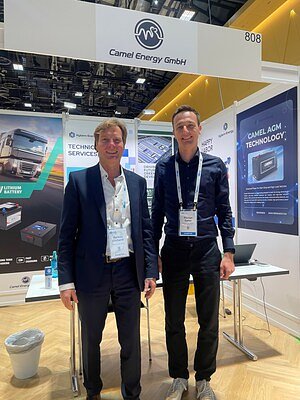
MAINZ, GERMANY – June 07, 2026 – The Advanced Automotive Battery Conference (AABC Europe), which recently concluded here, is a crucial barometer for the future of mobility. Amid the flurry of presentations on next-generation chemistries and supply chain logistics, the appearance of Camel Energy GmbH signaled more than just a routine technology showcase. It represented a calculated and timely strategic maneuver by its parent, Chinese battery giant Camel Group, to embed itself within the heart of Europe's electric vehicle transition.
The company’s presentation of advanced lithium-ion and, more notably, sodium-ion battery solutions was not just a technical update; it was a declaration of intent. As Europe grapples with securing a resilient, sustainable, and cost-effective battery supply chain, Camel Energy is positioning itself not merely as a supplier, but as a pivotal technology partner armed with a dual-pronged strategy to meet the market’s diverse and pressing needs.
The European Beachhead
Camel Energy’s participation at AABC Europe 2026 is the public-facing component of a much deeper strategic push into the continent. The company, the European subsidiary of Camel Group, only recently established its headquarters in Düsseldorf, Germany, in April 2026. This move from a remote supplier to a locally-based entity is a classic playbook for capturing market share in the fiercely competitive European automotive sector. The goal, as industry insiders note, is to move beyond mere transactions and forge deep, collaborative partnerships with "the big guns of the automotive world."
This strategy is perfectly timed. A key theme dominating the discussions in Mainz was the urgent need for supply chain resilience. European automakers are actively seeking to diversify their battery sources to mitigate risks associated with geopolitical tensions and volatile raw material prices. By establishing a physical and operational presence in Germany, Camel Energy is sending a clear message: it is here to be a stable, long-term part of the European ecosystem.
Their showcase of integrated battery solutions—encompassing not just cells but also sophisticated Battery Management Systems (BMS)—underscores a commitment to providing turnkey systems that can be readily adopted by automotive OEMs. This approach simplifies integration and de-risks the development process for car manufacturers, making the company an attractive potential partner in the race to electrify their fleets.
The Dual-Chemistry Strategy: Beyond Lithium
The most compelling aspect of Camel Energy's presentation was its dual-chemistry approach. While the company highlighted its capabilities in advanced lithium-ion technology, the true head-turner was its focus on sodium-ion (Na-ion) batteries. This positions the company at the forefront of a critical industry shift, moving beyond a singular reliance on lithium.
Sodium-ion batteries represent a paradigm shift in energy storage. They eliminate the need for lithium, cobalt, and nickel—minerals plagued by ethical sourcing concerns, price volatility, and concentrated supply chains. Instead, they use sodium, one of the most abundant and inexpensive elements on Earth. This fundamental advantage promises to dramatically lower battery costs and create a more secure and politically stable supply chain.
While Na-ion technology currently offers lower energy density than high-performance lithium-ion cells, it is perfectly suited for a massive segment of the automotive market. Its ideal applications include compact passenger vehicles, urban mobility platforms, and light commercial fleets, where extreme range is less critical than affordability and durability. Industry analysts project the automotive sodium-ion battery market to grow from under $200 million in 2026 to nearly $600 million by 2033.
Camel Group has already demonstrated leadership in this nascent field, showcasing Na-ion cells with "outstanding low-temperature pulse performance, long cycle life, and superior adaptability to high-temperature environments." Furthermore, the company has taken a proactive role in shaping the market by leading proposals for international standards for 12V sodium-ion batteries, signaling a mature and long-term vision for the technology's deployment.
A Market on the Cusp of Change
The buzz around sodium-ion at AABC Europe was palpable, with many experts anticipating a "true sodium-ion outbreak window" toward the end of 2026 and into 2027. While mass production is still ramping up, the technology is rapidly moving from laboratory curiosity to commercial reality. Companies like Camel are leveraging modified lithium-ion manufacturing lines to accelerate production, lowering the capital barrier to entry.
This dual-chemistry strategy allows Camel Energy to address the full spectrum of the market. High-performance lithium-ion can serve the premium, long-range EV segment, while cost-effective sodium-ion can power the high-volume, entry-level market, effectively democratizing electric mobility. This approach provides automakers with a flexible toolkit to meet diverse consumer price points and regulatory mandates.
By championing both technologies, Camel Energy is not just selling batteries; it is selling strategic optionality. In a rapidly evolving technological and geopolitical landscape, this flexibility is perhaps the most valuable commodity of all. The company's presence in Mainz was a clear signal that it is ready to supply the critical components for Europe's clean energy transition, adapting its offerings as the market itself evolves.