
- 1.9 MWdc: Solar installation capacity across Pearl Crop's facilities.
- $230,000 annually: Estimated utility savings at the largest site.
- 86% energy coverage: Projected solar contribution to Stockton facility's needs.
Experts would likely conclude that Pearl Crop’s strategic timing and policy navigation set a benchmark for commercial solar projects in California, demonstrating how proactive planning can secure long-term financial benefits amid shifting energy regulations.
California's Solar Race: How One Nut Processor Locked In Decades of Savings
SANTA CLARA, CA – June 29, 2026 – In the sun-drenched Central Valley, where agriculture is both a way of life and a massive energy consumer, a family-run nut processor has made a significant move that is about more than just sustainability. Pearl Crop, Inc., in partnership with developer Renewable America, recently completed a 1.9 MWdc commercial solar installation across its facilities. While the press release highlights an impressive estimated $230,000 in annual utility savings at its largest site, the true masterstroke lies in the project's strategic timing, which narrowly sidestepped a major state policy shift, locking in favorable economics for the next two decades.
This project is more than a feel-good story about green energy; it is a critical case study in navigating the complex intersection of business operations, energy policy, and engineering execution. For energy-intensive industries facing volatile utility costs, Pearl Crop's solar leap offers a blueprint for achieving financial resilience and operational autonomy.
A Case Study in Strategic Execution
For an agricultural business like Pearl Crop, which processes thousands of tons of almonds and walnuts, energy is a primary operational expenditure. The company's state-of-the-art facilities have immense power demands, leaving them vulnerable to California's escalating energy costs. The move to solar was not just an environmental choice but a financial imperative.
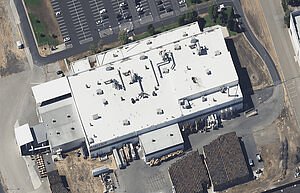
The collaboration with Renewable America resulted in four distinct solar projects across three locations in Ripon, Linden, and Stockton. The largest of these, at the Stockton facility, is a powerful example of distributed generation's impact. The new solar array is projected to cover 86% of the site's energy needs, effectively insulating the company from grid price volatility for a majority of its consumption. "Our Pearl Crop operations have high energy demands, and we're on track for significant cost reductions from the transition to solar power," said Ulash Turkan, CEO of Pearl Crop, in a statement celebrating the milestone.
By turning to a turnkey solutions provider like Renewable America, which managed the project from development through to its role as the Engineering, Procurement, and Construction (EPC) contractor, Pearl Crop streamlined a complex transformation. This integrated approach proved essential, not just for operational efficiency, but for navigating a rapidly closing window of opportunity.
Beating the Policy Clock: The NEM 2.0 Advantage
The most telling detail of this project is not the size of the solar array, but its completion date. The Renewable America team successfully brought the systems online before April 15, 2023, the cutoff date for California's Net Energy Metering 2.0 (NEM 2.0) program. This is not a minor footnote; it is the crux of the project's long-term financial success.
Under NEM 2.0, commercial solar owners were compensated for excess electricity exported to the grid at nearly the full retail rate. This created a powerful economic incentive for businesses to go solar. However, the subsequent policy, NEM 3.0 (also known as the Net Billing Tariff), dramatically altered this equation. The new structure slashed export compensation rates by an estimated 60-80%, basing them on wholesale prices that are far less favorable. For projects developed today, the financial payback period is significantly longer, and achieving substantial savings often necessitates a much larger investment in battery storage to maximize on-site energy consumption.
By securing a 20-year grandfathered status under the more lucrative NEM 2.0 terms, Pearl Crop has guaranteed itself a level of financial return that is now impossible for new commercial solar projects to achieve without much higher upfront costs. This strategic execution by Renewable America demonstrates a profound understanding of the policy landscape. "We've had a collaborative and beneficial partnership with Pearl Crop from agreement to completion," noted Ardeshir Arian, President & CEO of Renewable America, highlighting the successful journey.
Engineering Resilience for an Energy-Hungry Sector
Policy acumen alone does not build a power plant. The Pearl Crop project also showcases the kind of practical, on-the-ground problem-solving required for complex industrial retrofits. Installing solar panels on the rooftops of active food processing facilities presented unique engineering challenges that go far beyond standard installations.
First, the development team conducted extensive roof inspections and structural evaluations to ensure the buildings could safely support the added weight of the solar arrays without compromising structural integrity. Second, the panel layout was meticulously designed to avoid shading from nearby structures, a critical step for maximizing the system's energy output and, therefore, its financial return. Finally, and perhaps most crucially for a food-grade facility, the installation process had to guarantee that no roof leaks would occur. For a company whose products are almonds and walnuts, any potential for water intrusion that could compromise product quality was a non-starter.
Overcoming these challenges while adhering to a strict policy deadline underscores the value of an experienced EPC partner. It’s a tangible demonstration of how resilient and efficient strategies are built not just in the boardroom, but on the rooftops where innovation meets real-world execution.
Powering California's Agricultural Future
Zooming out, the Pearl Crop project is a powerful symbol of a larger trend. California's agricultural sector, a cornerstone of the state's economy, is increasingly turning to renewable energy. The number of farms in the state producing renewable energy nearly tripled in just a few years, from 1,900 in 2009 to almost 5,500 in 2012, and the trend has only accelerated. For an industry defined by high energy and water use, solar offers a dual benefit: reducing operational costs and, in the case of ground-mounted systems on fallow land, conserving water.
Projects like this are vital components of California's ambitious energy transition. The state's mandate to achieve 100% clean energy and carbon neutrality by 2045 cannot be met by large-scale utility projects alone. It requires a massive build-out of distributed energy resources (DERs)—local solar, storage, and microgrids that generate power where it's used. By delivering "local power to local load," these projects enhance community energy autonomy and bolster the resilience of the wider distribution grid, reducing strain during peak demand periods.
As California's agricultural businesses continue to face pressures from climate change, water scarcity, and rising operational costs, the Pearl Crop story serves as an instructive model. It demonstrates that with strategic foresight, deep policy knowledge, and robust engineering, transitioning to clean energy is not just a sustainable choice, but a decisive competitive advantage.