
- 10,000+ applicants nationwide for the 2025 Single Parent Household & Families Scholarship, reflecting immense demand for educational support.
- 5 recipients selected for their academic excellence and commitment to social impact.
- $100,000+ in scholarship funds distributed to support students in critical fields like computer science, education, nursing, and public health.
Experts agree that investing in human capital—particularly through targeted scholarships—is essential for building a resilient, equitable, and technologically advanced society, as the next generation of innovators will drive the development of smart cities and connected infrastructure.
Building the Builders: How Scholarships Forge Our Connected Future
MIAMI, Dec. 15, 2025 – In the race to build the smart cities of tomorrow, we often focus on the physical infrastructure: the miles of fiber optic cable, the deployment of 5G towers, and the intelligent networks that will manage autonomous fleets. But the most critical component of this connected future isn't forged from silicon or steel; it's forged in the minds of the next generation of innovators. This month, Louis Hernandez Jr.'s Foundation For A Bright Future (FABF) highlighted this very principle by announcing the five recipients of its 2025 Single Parent Household & Families Scholarship, underscoring a vital investment in the human capital that will design, build, and sustain our future.
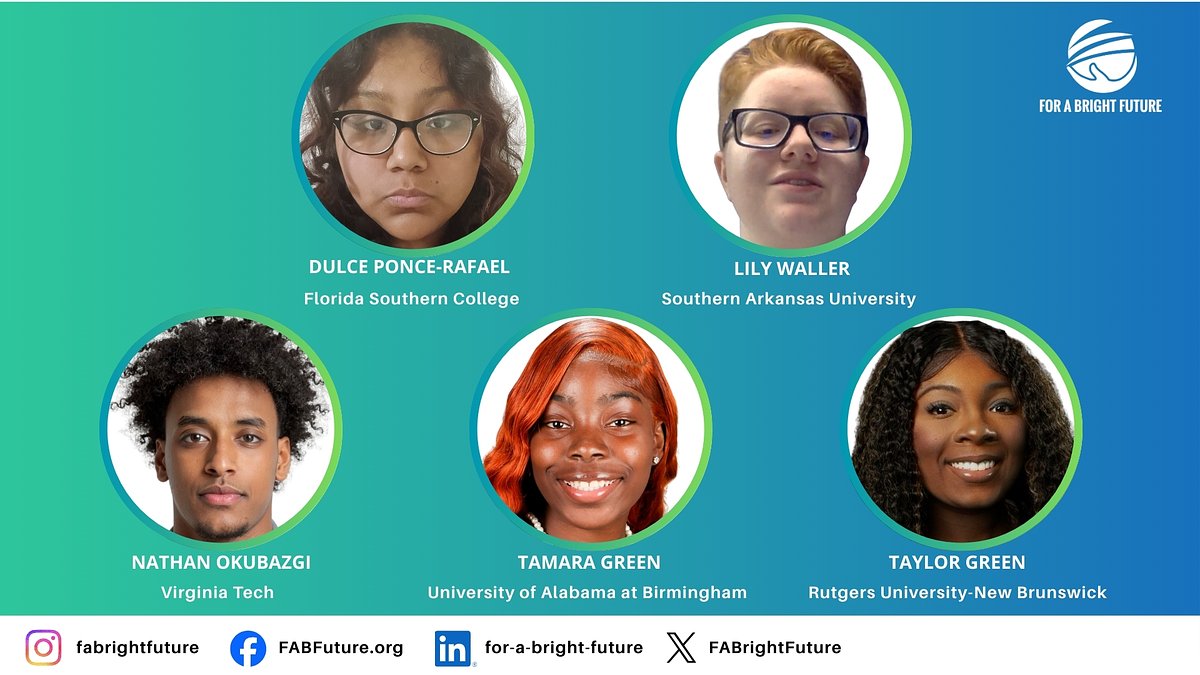
From a pool of over 10,000 applicants nationwide—a figure that speaks volumes about the immense need for educational support—five exceptional students were chosen for their academic prowess and commitment to social impact. The recipients, Dulce Ponce-Rafael, Lily Waller, Nathan Okubazgi, Tamara Green, and Taylor Green, are pursuing degrees in fields that form the bedrock of a functional, equitable, and technologically advanced society: education, computer science, nursing, and public health.
The Human Blueprint for a Digital World
While this column typically examines the hardware of connectivity, the stories of these scholarship winners remind us that software, systems, and social platforms are driven by human ingenuity. Two recipients, in particular, are poised to directly shape the digital infrastructure of the future. Nathan Okubazgi, a Computer Science major at Virginia Tech, isn't just learning to code; he's architecting a solution to a systemic problem. His goal is to develop "ConnectEd," a digital platform designed to provide free, high-quality educational resources and mentorship to underserved students. This is infrastructure in its purest form—a digital bridge designed to span the educational gap and empower those from low-income backgrounds.
"To me, this scholarship is a reminder that my hard work is paying off," Okubazgi stated. "It gives me the support I need to keep pushing toward my goals." His vision directly aligns with the promise of a connected future, where high-speed networks are leveraged not just for commerce and entertainment, but for creating equitable access to opportunity. The networks we build are only as valuable as the content and services they carry, and innovators like Okubazgi are the ones who will ensure they serve a greater purpose.
Similarly, Lily Waller is pursuing a Computer Science degree at Southern Arkansas University with a flawless 4.0 GPA. Her ambition is to become an animator who illuminates complex issues, planning to gain hands-on experience in Japan. In an increasingly visual and data-driven world, the ability to translate complex information—whether it's urban mobility data or public health advisories—into accessible and engaging formats is a critical skill. Animators and developers like Waller will be essential in designing the user interfaces for smart city dashboards, creating simulations for autonomous vehicle training, and fostering the informed public conversations necessary for technology adoption. "This scholarship means so much to me in supporting my dreams," Waller said, hoping to "work to impact positive change with companies around the world."
More Than Code: Building Resilient Communities
A truly intelligent city is more than just efficient; it's resilient, healthy, and equitable. The other FABF scholarship recipients are dedicating their careers to building this social and civic infrastructure. Dulce Ponce-Rafael, studying Elementary Education at Florida Southern College, plans to return to her hometown as a teacher. She recognizes that the foundation for a society of innovators is laid in its earliest classrooms. "Receiving this award shows that my dedication to school, family, and my passion to become an educator have not gone unnoticed," she shared, acknowledging the sacrifices of her single mother.
In a world of advancing telemedicine and data-driven healthcare, the human element remains irreplaceable. Tamara Green, a nursing student at the University of Alabama at Birmingham, was inspired by her mother's resilience with a chronic illness. She aims to become a pediatric travel nurse, delivering care to underserved communities. Taylor Green, a mother herself studying Public Health at Rutgers, is focused on maternal and child health policy. "This scholarship means so much because everything I do is for my daughter," Taylor reflected. "It reminds me that even when the journey feels heavy, there are people who see my effort and want to help me keep going."
These fields are fundamental to the success of any smart city initiative. Advanced mobility and connectivity can improve emergency response times and enable remote healthcare, but their impact is maximized only when there are skilled, dedicated professionals like Tamara and Taylor on the ground and shaping policy. They are building the infrastructure of community health and well-being, without which technological advancements would serve only a privileged few.
A Strategic Investment in Untapped Potential
The work of For A Bright Future is a case study in strategic philanthropy. Founded by Louis Hernandez Jr., a technology investor and CEO of Black Dragon Capital℠ who grew up in an underprivileged community, the foundation is built on a deep understanding of systemic barriers. Hernandez's personal support of the foundation's operating costs ensures that donations go directly to programs, maximizing their impact. The sheer volume of applications—growing from 6,000 in 2024 to over 10,000 in 2025—reveals a vast, nationwide reservoir of talent and ambition waiting to be unlocked.
This isn't just charity; it's a calculated investment. Students from single-parent households often face immense financial and time constraints that can derail their educational paths. By providing targeted financial support, the scholarship acts as a crucial catalyst, freeing these high-potential individuals to focus on their studies and future contributions. The rigorous selection process, led by a committee of industry experts, ensures that the investment is directed toward students who not only excel academically but also possess a clear vision for creating positive change.
Ultimately, the story of these scholarships is a powerful addendum to the narrative of our connected future. It asserts that building the smart cities and next-generation mobility systems we envision requires a dual investment. We must lay the fiber and raise the towers, but we must also empower the people who will turn that raw connectivity into a more equitable, intelligent, and humane world. These five students, and thousands like them, are the architects and engineers of that better future.