
- 838 new residents per day projected in Florida through 2030
- 125,000 net income tax filers moved to Florida between 2021-2022
- $111 billion global moving services market value in 2025
Experts view Florida's population boom as a historic wealth redistribution, driving economic growth but also straining infrastructure and affordability.
Florida's Boom: The Infrastructure Cashing In on the Great Migration
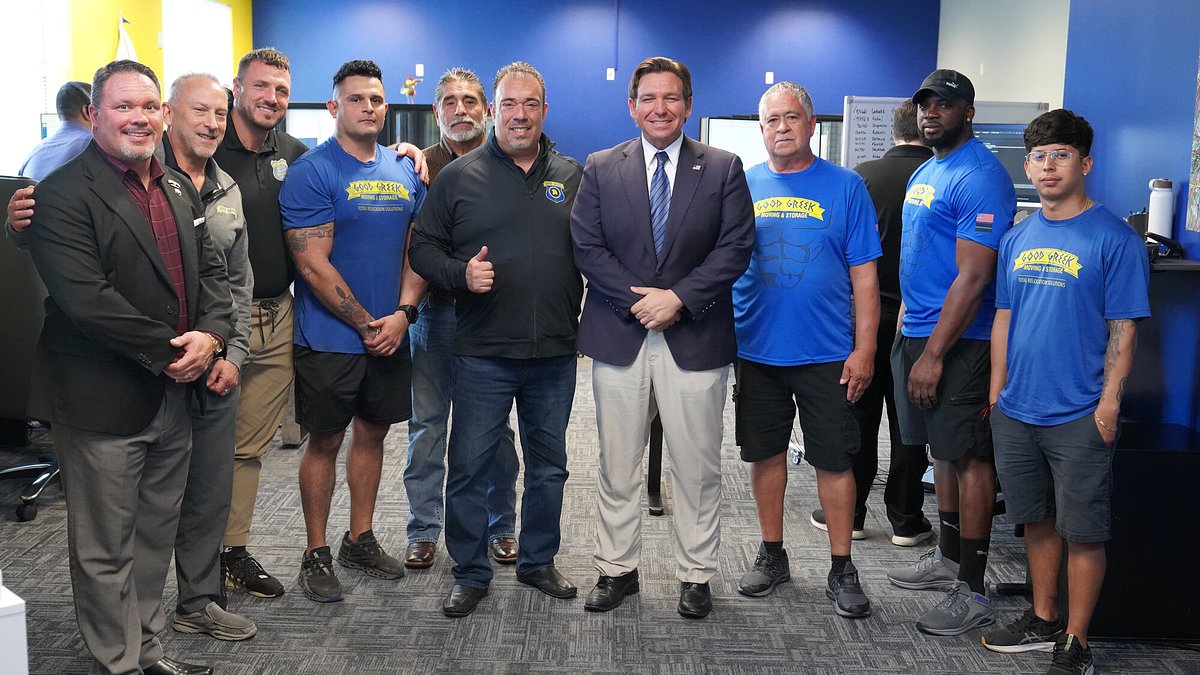
WEST PALM BEACH, FL – December 15, 2025 – The setting for a major announcement on Florida’s economic future wasn’t a polished government building, but the concrete expanse of a 150,000-square-foot warehouse. On December 10, inside the West Palm Beach operations hub of Good Greek Moving & Storage, Governor Ron DeSantis, flanked by economists, declared Florida a premier destination for Americans “voting with their feet.” The choice of venue was no accident. It was a calculated signal, placing the state's booming relocation industry at the very center of its economic narrative. The moving trucks, stacked pallets, and logistical machinery served as a tangible backdrop for a story of unprecedented demographic and capital shift, revealing the critical, often-overlooked infrastructure that underpins a state in hyper-growth.
The Economics of Exodus
The migration to Florida is more than a trend; it's a recalibration of the American map. State economists project Florida will welcome an average of 838 new residents per day through 2030, a pace that will swell its population past 25 million. This isn't a gentle tide but a powerful current, driven primarily by an exodus from high-tax, highly regulated states like California, New York, and Illinois. During the press conference, economist Stephen Moore characterized the phenomenon as one of the largest single-state wealth redistributions in modern U.S. history.
Data from the U.S. Census Bureau and economic analysis firms validates this narrative. Between 2021 and 2022 alone, Florida saw a net gain of over 125,000 income tax filers from other states, while New York and California lost a combined total of more than 250,000. This influx is the primary engine of Florida’s economic expansion, with its GDP projected to outpace the national average in 2025. The new residents are not just bringing their belongings; they are bringing capital, starting businesses, and fueling demand across sectors from healthcare to professional services. The result is a supercharged economy, but one that also faces the immense pressure of its own success, including soaring housing costs and strained public resources.
The New Mobility Infrastructure: Beyond Boxes and Trucks
This mass migration is a monumental logistical challenge, transforming the moving industry from a simple service into a sophisticated piece of mobility infrastructure. Companies on the front lines are no longer just transporting boxes; they are managing complex, multi-stage life transitions. Good Greek Moving & Storage, which bills itself as the “World's Only Total Relocation Company®,” exemplifies this evolution. Its business model offers a case study in the infrastructure required to facilitate the Florida dream.
Beyond loading and unloading, the company’s services form an integrated supply chain for relocation. This includes realty services to find a new home, insurance to protect assets in transit, dedicated transport for vehicles and pets, and concierge services that handle everything from utility setup to finding local schools. This “total relocation” model addresses the friction points of a modern, long-distance move, where families and businesses expect a seamless, digitally managed experience. This level of integration is becoming a competitive necessity. The global moving services market, valued at over $111 billion in 2025, is increasingly driven by digital tools for real-time tracking, inventory management, and personalized customer solutions.
However, this boom is not without its operational hurdles. The logistics sector faces persistent labor shortages, making it difficult to find and retain qualified crews and drivers. As demand skyrockets, so do operational costs, a pressure that inevitably trickles down to the consumer. For companies like Good Greek, which was named the 2024 Mover of the Year by the American Trucking Associations, scaling up means investing heavily in training, technology, and fleet management to maintain service quality amidst relentless demand.
A Strategic Stage: When Business and Politics Align
Hosting the governor's press conference was a masterful stroke of public relations, creating a symbiotic branding opportunity. For Governor DeSantis, the warehouse provided a powerful, real-world visual aid for his policy arguments, demonstrating a direct line between his administration's economic strategy and private-sector success. For Good Greek, it offered an unparalleled platform, elevating the company from a service provider to a symbol of Florida's growth narrative.
“As a company that supports large-scale relocations every day, we see firsthand why people are choosing Florida,” said Spero Georgedakis, the company's Founder and CEO, in a statement. His comment perfectly encapsulates the strategic alignment: the company’s daily operations are a living testament to the political and economic talking points being discussed. This alignment validates the company's business model and provides a level of brand endorsement that traditional advertising cannot buy, amplified by extensive regional media coverage.
Such a move, however, isn't without risk. In a polarized climate, aligning a consumer-facing brand so publicly with a prominent political figure can alienate potential customers. Yet, for a business whose success is intrinsically tied to a specific, state-level growth story, the benefits of cementing its role as a key player in that story may outweigh the risks of appearing partisan. It’s a strategic gamble that the company is central to a trend so powerful it transcends typical political divides.
The Ripple Effect: Building Tomorrow's Florida
The flood of new residents, facilitated by an evolving logistics network, is creating profound ripple effects across Florida's entire infrastructure. The most immediate impact is on the housing market, where shrinking inventory and intense demand have pushed affordability to a crisis point in many urban and suburban areas. But the strain extends further, testing the capacity of roads, schools, and healthcare systems.
This is where the next wave of infrastructure investment becomes critical. The logistics of moving people are increasingly reliant on digital connectivity—from AI-powered route optimization for moving fleets to the robust broadband required by the influx of remote workers and tech-centric businesses. The successful integration of 1.4 million new residents by 2030 will depend not just on building more homes and highways, but on deploying intelligent, resilient networks. This massive demographic shift is, in effect, a real-time stress test of Florida's ability to build a truly connected and sustainable future, forcing the state to innovate or buckle under the weight of its own appeal.