
- 35% expansion of the Wildland-Urban Interface (WUI) over the last three decades, increasing wildfire risks for millions of homes.
- Class A fire rating achieved by CitroTech’s non-pressure treatment, the highest level of fire resistance under ASTM E84 standards.
- $100 million annual market for high-margin chemical sales within the Fire-Retardant Treated Wood (FRTW) industry, a segment CitroTech aims to disrupt.
Experts agree that CitroTech’s non-pressure fire-rated lumber technology represents a significant advancement in wildfire resilience, offering superior structural integrity and safety compared to traditional pressure-treated alternatives, while aligning with evolving building codes and environmental standards.
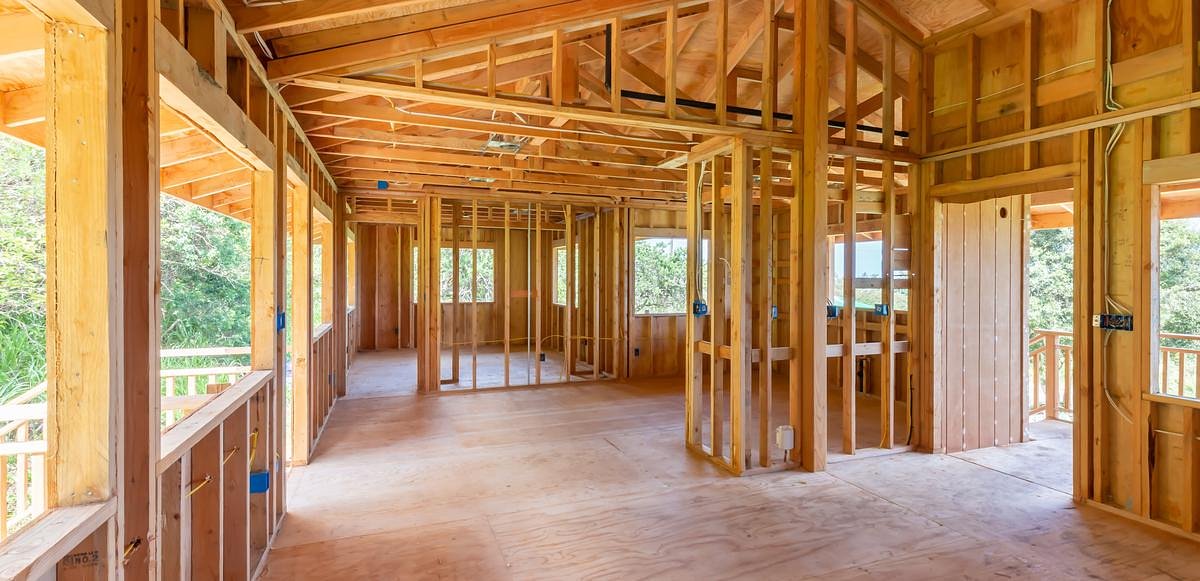
Building a Fire-Proof Future: New Lumber Tech Aims to Save Homes
OCEANSIDE, CA – December 16, 2025 – A pivotal shift is underway in the American building materials industry, one that promises to bolster the resilience of homes against the ever-growing threat of wildfire. CitroTech, a division of General Enterprise Ventures, Inc., has initiated a landmark commercial partnership with a leading national lumber company to begin large-scale production of Class A fire-rated lumber. The collaboration, which commenced on December 1, marks one of the first commercial adoptions of a non-pressure treatment technology capable of elevating standard dimensional lumber to the highest level of fire resistance.
This development moves a breakthrough technology from the lab to the lumberyard, with three of the partner’s facilities in the Western United States now actively treating wood for commercial distribution. The initial rollout is strategically focused on supporting construction in fire-prone regions, offering a new tool for architects, builders, and homeowners rebuilding communities ravaged by recent blazes.
A New Line of Defense in the Wildland-Urban Interface
The timing of this innovation could not be more critical. The Wildland-Urban Interface (WUI)—the zone where housing developments meet or intermingle with undeveloped wildland—has expanded by over 35% in the last three decades, placing millions more homes in direct peril. As climate change fuels longer and more intense fire seasons, the demand for fire-resilient building materials has skyrocketed.
CitroTech's technology directly addresses this need. Instead of relying on traditional, high-pressure chemical impregnation, the company uses a proprietary chemistry that can be applied through a simple dip-treatment process at the factory. This method upgrades standard, flammable wood into a material that resists ignition and dramatically slows the spread of flames, all while maintaining the wood's natural structural properties. The treatment has also been validated for field application, meaning entire structures can be sprayed on-site to achieve the same Class A protection, a significant advantage for retrofitting existing homes.
“This partnership marks a transformative moment for the building materials industry,” said Steve Conboy, Chief Technology Officer of CitroTech, in a recent announcement. “Our solution is fast, cost-efficient, and delivers proven, uncompromising results. By protecting lives and property while streamlining manufacturing and reducing costs for builders, it creates benefits that extend to homeowners, the building materials and construction industry, and communities in wildfire-prone regions alike.”
Upending a Billion-Dollar Industry
For decades, the standard for fire-resistant wood has been Fire-Retardant Treated Wood (FRTW), an industry estimated to be worth over $1 billion annually in the United States. However, these legacy products have well-documented drawbacks. The manufacturing process typically involves forcing chemical salts into wood fibers under intense pressure. This can compromise the wood's structural integrity over time, a phenomenon known as acid hydrolysis, where moisture absorption leads to fiber degradation. Furthermore, the corrosive nature of some older treatments could damage metal fasteners and connectors, a critical concern in modern construction.
CitroTech's non-pressure treatment sidesteps these issues entirely. By avoiding high-pressure applications and incising, the process preserves the wood's inherent fiber strength, shear, and overall structural capacity. This distinction represents a significant leap forward, offering the fire-resistant benefits without the structural trade-offs of older technologies. The move signals a broader market shift toward safer, more efficient, and structurally reliable fire-retardant solutions, challenging the long-held dominance of pressure-treated products.
This disruption could allow CitroTech to capture a significant portion of the high-margin chemical sales within the FRTW market, which industry analysts place at over $100 million annually. As building codes and insurance requirements evolve to favor more advanced materials, the competitive advantage of a non-corrosive, structurally sound treatment is expected to accelerate its adoption.
The Gold Standard: Certification and Safety Validated
A critical component of this market debut is robust, independent validation. CitroTech-treated lumber recently received the formal Class A designation through Technical Evaluation Report (TER 2504-101), issued by the trusted independent certifier DrJ Engineering. This report is not just a technicality; it provides the legal authorization for treated lumber to be stamped and recognized as Class A compliant, giving architects and builders the confidence to specify it in their projects and ensuring it meets stringent building codes.
The Class A rating is the highest achievable under the ASTM E84 standard, often called the “the Steiner Tunnel Test.” This rigorous, 10-minute burn test measures a material's flame-spread and smoke-development indexes. To earn a Class A rating, a material must demonstrate minimal flame spread and low smoke production. CitroTech reports that its product exceeded these standards, performing exceptionally even under extended burn conditions.
Beyond fire performance, the treatment boasts formidable environmental and health credentials. It is the only fire inhibitor recognized by the EPA's Safer Choice program, which certifies that its chemical ingredients are safer for human health and the environment compared to conventional alternatives. Additionally, it holds a UL Greenguard Gold certification, signifying it produces virtually no smoke and has ultra-low volatile organic compound (VOC) emissions. This dual certification ensures that while protecting a structure from external fire, the material also contributes to a healthier indoor air environment for its occupants.
From Blueprint to Building Site: The Path to Widespread Adoption
With a validated, safer, and more effective product, the primary challenge becomes scalability and market integration. The partnership with a major national distributor is the first crucial step in building a robust supply chain. While the partner's name remains undisclosed, its network of facilities provides an immediate commercial-scale platform to serve the high-demand Western U.S. market. CitroTech has already signaled its intent to sign additional lumber and building material partners in early 2026, aiming for a nationwide footprint.
The versatility of the application—both factory and field-applied—is a key driver for adoption. New construction projects can seamlessly integrate factory-treated lumber, while the ability to spray entire structures on-site opens up a vast market for upgrading existing homes and commercial buildings. This is particularly relevant as federal, state, and local governments pour billions of dollars into wildfire mitigation and resilient construction initiatives.
These funding streams are already shaping material specifications for rebuilding efforts and new developments in high-risk areas. As insurers, developers, and regulators increasingly prioritize materials that enhance resilience without adding manufacturing complexity or environmental hazards, technologies like CitroTech's are positioned squarely at the intersection of market demand and public need. The path is being paved for a new generation of building materials that can create safer, more durable communities capable of withstanding the environmental challenges of the future.