
- Revenue Growth: 22.7% surge to SAR 2.4 billion in 2025
- Net Profit: SAR 345.8 million, up nearly 10% from 2024
- Tourism Boom: 122 million visitors in 2025, surpassing 2030 target
Experts view Budget Saudi's record growth as a strong indicator of the Kingdom's successful economic diversification under Vision 2030, driven by surging tourism and non-oil sector expansion.
Budget Saudi's Record Year Mirrors Kingdom's Vision 2030 Boom
JEDDAH, Saudi Arabia – April 06, 2026 – Budget Saudi Arabia has posted stellar financial results for 2025, with revenue surging 22.7% to SAR 2.4 billion. The performance not only marks a milestone for the car rental giant but also serves as a powerful indicator of the broader economic transformation sweeping the Kingdom under its ambitious Vision 2030 plan.
The company, a fixture in the Saudi mobility landscape for over four decades, reported a net profit attributable to shareholders of SAR 345.8 million, a nearly 10% increase from the previous year. These figures, released today, reflect more than just corporate success; they mirror the burgeoning activity in tourism, business, and infrastructure development that is redefining the Saudi economy.
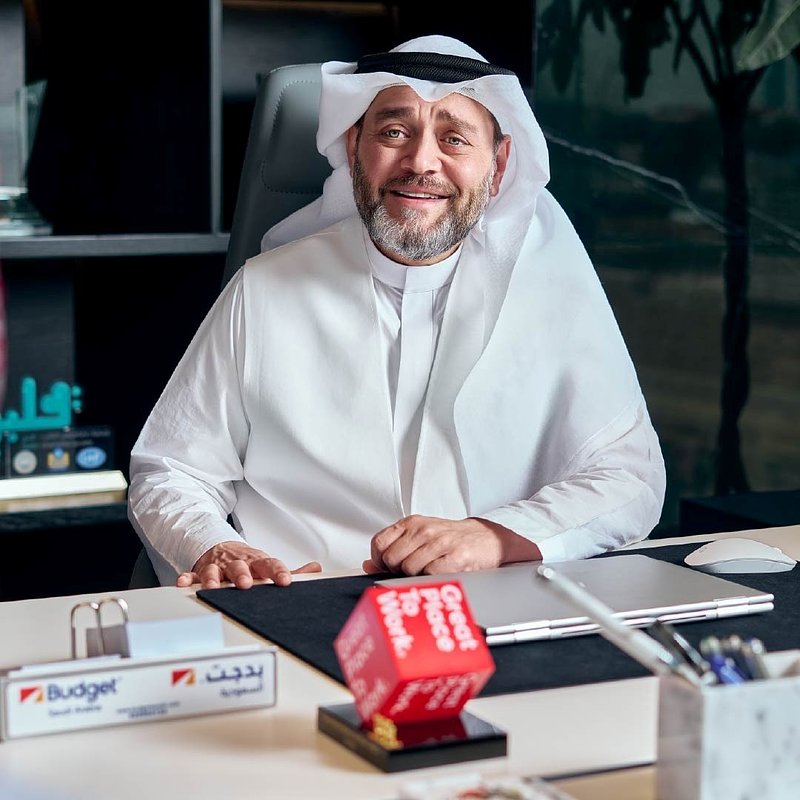
Fawaz Abdullah Danish, President & Group CEO, celebrated the milestone, stating, “2025 was a strong year for Budget Saudi. Crossing SAR 2.4 billion in revenue is something the whole team should take pride in — it reflects years of work building the right fleet, the right partnerships, and a service that customers keep coming back to.”
A Barometer for National Ambition
Budget Saudi's impressive growth is not happening in a vacuum. It is directly fueled by an unprecedented boom in Saudi Arabia's tourism sector, a cornerstone of Vision 2030. The Kingdom welcomed an estimated 122 million visitors in 2025, far surpassing its original 2030 target of 100 million visitors six years ahead of schedule. This has prompted officials to set an even more ambitious goal of 150 million tourists annually by 2030.
This massive influx of international and domestic travelers creates a direct and sustained demand for reliable mobility solutions. From business travelers attending conferences in Riyadh to tourists exploring the historic sites of AlUla, the need for rental vehicles is surging. The 40.6% year-on-year increase in licensed hospitality accommodations in the third quarter of 2025 further illustrates the scale of the infrastructure being built to support this growth, all of which requires ancillary services like transportation.
The robust performance is also underwritten by the strength of the wider Saudi economy. With the IMF forecasting economic growth of 4% for 2026 and the World Bank projecting 4.3%, the business environment is buoyant. Crucially, this growth is increasingly powered by the non-oil sector, which is expected to expand by as much as 6.2% in 2026. This diversification is the core objective of Vision 2030, and companies like Budget Saudi are both beneficiaries and enablers of this shift.
Strategic Moves in a Dynamic Market
The CEO's comments about “the right fleet, the right partnerships, and a service that customers keep coming back to” point to a deliberate strategy that has allowed the company to capitalize on the favorable market conditions. While the press release did not detail specific operational moves, the 22.7% revenue growth suggests significant investment and strategic positioning.
Building the 'right fleet' in today's Saudi market likely involves significant diversification. This means providing not just standard sedans but also luxury vehicles for high-end tourists and business executives, SUVs for families exploring the Kingdom's diverse terrain, and economical options for budget-conscious travelers. The company’s ability to meet the varied demands of individual, corporate, and government clients is central to its success.
Forging the 'right partnerships' is equally critical. This strategy likely includes deep integrations with the tourism ecosystem, such as collaborations with airlines, major hotel chains, and tour operators to create seamless travel packages. Furthermore, with over 571 international companies having established regional headquarters in the Kingdom—surpassing another Vision 2030 target—the demand for corporate fleet management and long-term leasing represents a substantial and growing revenue stream.
The Financial Foundation of Growth
From a financial perspective, the 2025 results paint a picture of both aggressive expansion and disciplined management. The headline revenue figure of SAR 2.419 billion is a significant leap from the SAR 1.971 billion reported in 2024. This top-line growth was matched by strong profitability metrics.
Gross profit climbed 22.6% to SAR 685.9 million, indicating that the company managed its cost of revenue effectively even as it scaled its operations. While operational profit growth was a more moderate 14.9% to SAR 457.8 million, the final net profit of SAR 345.8 million demonstrates sustained profitability. This ability to grow profit alongside revenue is a key point highlighted by the CEO and a positive sign for investors.
The company’s balance sheet also strengthened, with total shareholders’ equity rising to SAR 2.94 billion from SAR 2.70 billion at the end of the prior year. This growing equity base provides a solid foundation for future investments and expansion, signaling financial health and stability to the market.
Driving Towards Future Opportunities
Looking ahead, the road appears wide open for further growth. Management's statement about pursuing a “number of opportunities in the Saudi market” is almost an understatement given the scale of development underway. The most significant of these opportunities are the giga-projects at the heart of Vision 2030.
Projects like NEOM, the futuristic city-state; The Red Sea Project, a luxury regenerative tourism destination; and Qiddiya, the capital of entertainment, sports, and arts, are set to create entirely new economic hubs. For a mobility provider, these are not just future cities and resorts; they are massive, captive markets requiring comprehensive transportation solutions from day one. Positioning to be the primary mobility partner for the construction, operational, and visitor phases of these projects presents a monumental opportunity.
Beyond these marquee projects, the continued growth in business travel, religious tourism for Hajj and Umrah, and the increasing disposable income of the domestic population all point towards sustained demand. As Saudi Arabia continues its rapid transformation, the need for flexible, accessible, and reliable transportation will only intensify. Budget Saudi Arabia, with its established network and proven strategy, appears well-positioned to meet that need and continue its growth trajectory in lockstep with the Kingdom itself.