
- 5% growth: BSH Home Appliances Group achieved a 5% turnover increase in North America for 2025, outpacing a flat market.
- €463 million investment: The company invested 3% of its turnover globally in future-oriented initiatives.
- $600 billion market: The connected home market is projected to exceed $600 billion by 2030, with BSH embracing the Matter smart home standard.
Experts would likely conclude that BSH's strategic investments in AI, premium brands, and regional manufacturing have positioned it as a resilient leader in the competitive North American home appliance market.
BSH Defies Market With 5% Growth, Bets Big on AI and Luxury Brands
NEW YORK, NY – April 29, 2026 – While many companies in the home appliance sector faced a turbulent 2025, BSH Home Appliances Group charted a different course in North America. The division of the Bosch Group announced a robust turnover increase of more than 5% in U.S. dollar terms for its 2025 fiscal year, significantly outpacing a market that saw mixed and often flat performance. The results underscore a strategy of targeted investment and brand strength that appears to be paying dividends.
At an exclusive media event at the company's Experience and Design Center in Manhattan, Darcy Clarkson, CEO of BSH Region North America, presented a picture of resilience. While the global parent company, BSH Hausgeräte GmbH, saw a modest 1.6% decline in Euro terms to €15 billion, the story in North America—comprising the U.S., Canada, and Mexico—was one of aggressive growth and market share expansion.
“2025 tested the industry on a wide range of fronts, but we can confidently say that our business held strong,” said Clarkson. “Despite clear challenges, our organization did not stand still. We continued to invest, and in North America we grew faster than the market, which reinforces confidence in our long-term strategy and responsible, yet bold growth plans for the region.”
Investing Through the Turmoil
A key pillar of BSH's success is its counter-cyclical investment philosophy. While some competitors pulled back amidst economic uncertainty, BSH maintained future-oriented investments totaling €463 million globally, representing 3% of its turnover. This commitment is particularly visible in North America, where investments are being funneled into manufacturing, research, and consumer-facing experiences.
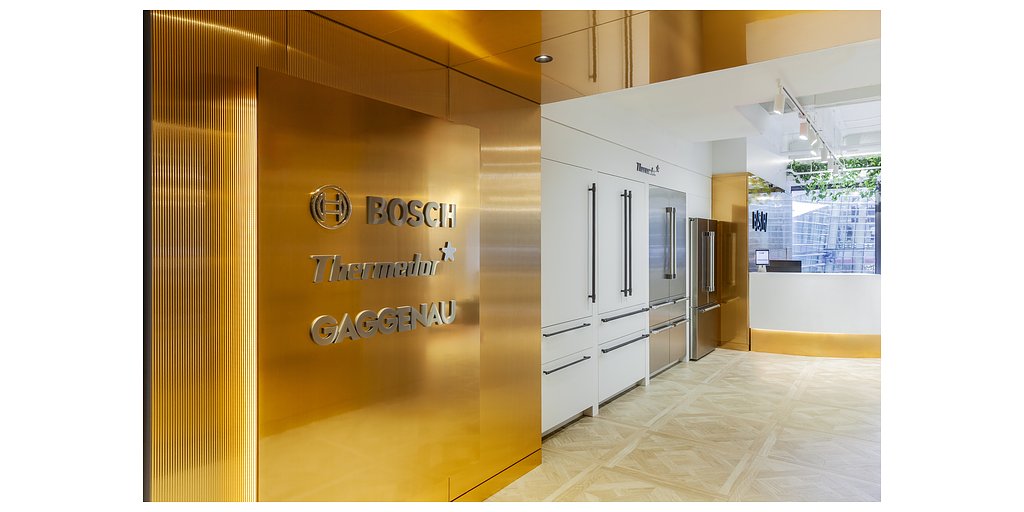
This strategy is not just talk. In June 2025, the company committed to an $11 million expansion of its facilities in North Carolina to bolster its regional manufacturing capabilities. This move follows the inauguration of a state-of-the-art, 8,000-square-foot Experience and Design Center (EDC) in Miami’s prestigious Design District in early 2024, providing a showcase for its premium brands. These physical investments are designed to shorten supply chains, foster innovation, and bring the brand closer to both trade partners and end-users.
This approach stands in contrast to a market where growth is hard-won. Independent industry analysis from sources like Euromonitor shows that while the U.S. appliance market saw a 4% increase in retail value, it remained flat in terms of volume. With various forecasts pinning North American market growth between 3% and 5%, BSH's performance indeed signifies a capture of market share from competitors.
A Three-Pronged Attack on the Premium Market
BSH's market share gains are not accidental; they are the result of a meticulously managed multi-brand strategy that targets the lucrative premium and luxury segments. The company's portfolio creates a powerful synergy, with each brand catering to a distinct consumer profile.
Bosch, serving the premium segment, continues to leverage its reputation for German engineering and reliability. The brand celebrated its tenth consecutive year as the world's No. 1 dishwasher brand, a testament to its dominance. Its recent “The More You Bosch, the More You Feel Like a Bosch” ad campaign achieved significant pop culture traction, earning accolades from Ad Age and USA Today’s Ad Meter, and successfully translating brand awareness into consumer demand.
Thermador anchors the traditional luxury segment. For 2026, the company is launching its “No One Else” campaign, aiming to reinforce a legacy of innovation that includes pioneering products like the wall oven and the patented Star Burner. The focus is on inspiring culinary enthusiasts who demand professional-grade performance in their homes.
Gaggenau, positioned in the ultra-luxury tier, is experiencing what the company calls “record U.S. demand” heading into 2026. This aligns with broader consumer trends showing a willingness among high-net-worth individuals to invest heavily in home renovation and high-performance, design-forward appliances. The brand’s new Expressive Series, with its bold, sculptural forms inspired by Bauhaus principles, directly targets this discerning clientele.
The Intelligent Kitchen Becomes Reality
Beyond brand power, BSH is aggressively pushing the technological frontier, embedding artificial intelligence and seamless connectivity into its products. Adhering to a “People First” philosophy, the company aims to use AI not as a gimmick, but as a tool to genuinely improve daily life. With its parent, the Bosch Group, holding over 2,000 AI-related patents, the company has a deep well of expertise to draw from.
At CES 2026, BSH unveiled “Bosch Cook AI,” an agentic AI cooking assistant within its Home Connect app. The feature promises to give home cooks step-by-step, real-time guidance, orchestrating the oven and cooktop to achieve specific results, effectively democratizing chef-level cooking. In another forward-thinking move, the company integrated Amazon's generative AI, Alexa+, into its Bosch 800 Series espresso machines, allowing users to have natural-language conversations to create their perfect coffee, much like talking to a barista.
Furthermore, BSH was among the first major manufacturers to embrace the Matter smart home standard across its refrigerator lineup. This commitment to an open ecosystem—allowing its appliances to connect seamlessly with Google, Apple, or Amazon platforms—addresses a major consumer pain point and positions BSH as a key player in the connected home, a market projected to exceed $600 billion by 2030.
A Confident Outlook in a Competitive Field
Looking ahead, BSH plans to press its advantage with major product launches and a deepening of customer relationships through its growing EDC network. However, it operates in a fiercely competitive arena. Rivals are not standing still; GE Appliances, owned by Haier, recently invested billions to expand its U.S. manufacturing footprint, while premium competitor Miele is also establishing a new production facility in the United States. The fight for the North American consumer is intensifying.
Clarkson acknowledged the challenges ahead but remained steadfast. “Our region clearly remains an important growth market for BSH, and we will drive forward with local investments and bold initiatives to further elevate our iconic premium and luxury brands,” he stated. The record demand for Gaggenau and the sustained strength of Bosch provide a strong foundation, but the company's ability to continue innovating, both in its products and its business strategy, will determine if it can maintain its impressive momentum through 2026 and beyond.