
- 17 kilometers: The ARmate's 'Global Location Function' simulates human-like movement within this radius to bypass physical travel limitations.
- No jailbreak required: The Flashman works with iOS devices without jailbreaking, lowering technical barriers.
- Risk of bans: Brook Gaming acknowledges potential account suspensions or permanent bans for using these tools.
Experts agree that while Brook Gaming's AR tools offer accessibility benefits, they directly violate most AR game terms of service, creating ethical and regulatory challenges for players and developers alike.
Brook Gaming's New AR Tools: Innovation or a Shortcut to a Ban?
NEW TAIPEI CITY – February 26, 2026 – By Stephanie Kelly
Hardware developer Brook Gaming has launched two new accessories, the ARmate and Flashman, aimed at augmented reality gamers looking to gain an edge in global events. The devices promise a future where marathon gaming sessions are automated and worldwide events are accessible from the comfort of home. However, this convenience comes at a cost, placing players squarely in a gray area that challenges the rules of popular AR games and raises significant questions about fair play, accessibility, and the very real risk of being banned.
The Promise of the Perfect Hunt
Announced today from its headquarters in New Taipei City, Brook Gaming, a division of Zeroplus Technology with over two decades of hardware experience, unveiled the duo as “technical support solutions” for high-intensity AR gaming. The company's press release paints a picture of a stress-free and highly efficient gaming experience.
The ARmate is positioned as an all-in-one automation tool. It features classic “auto-catch” and “auto-spin” functions, allowing players to passively collect creatures and items from in-game points of interest without manual input. Its most significant feature, however, is a “Global Location Function.” Brook claims this allows players to access event spots worldwide, bypassing the physical travel limitations that often define AR games. The device uses a “smart roaming” technology designed to simulate realistic, human-like movement over a radius of up to 17 kilometers, a feature explicitly designed to make the virtual travel less detectable.
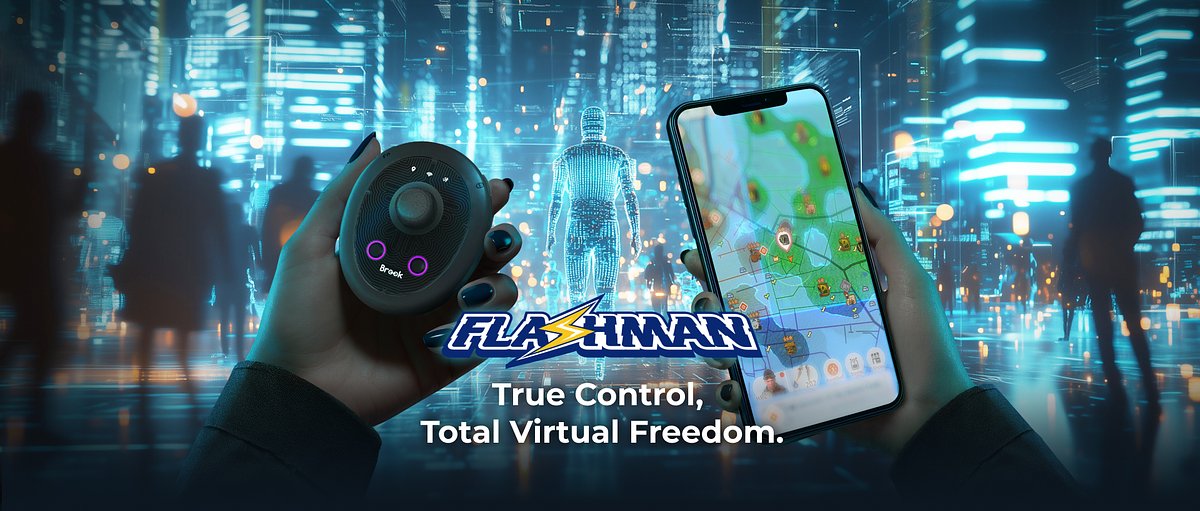
For iOS users seeking more hands-on control, the Flashman offers a different approach. It acts as a system-wide virtual GPS joystick for iPhones, requiring no device jailbreaking. This peripheral provides a high-precision 360° joystick for nuanced in-game movement, a coordinate memory button to instantly save and revisit key locations, and speed toggles for shifting between rapid travel and careful exploration. It even includes a “Team Sync” mode, enabling groups of players to synchronize their virtual locations for coordinated strategy.
Together, Brook Gaming presents them as the “perfect AR gaming duo,” tools that allow players to focus on high-level strategy rather than the grind of movement and resource collection. For many, the appeal is undeniable: a way to participate in a time-limited event in another hemisphere or to continue playing while managing daily responsibilities.
Navigating a Digital Minefield
While Brook Gaming markets these devices as performance enhancers, they operate in direct opposition to the terms of service for most major AR titles. Niantic, the developer behind the global phenomenon Pokémon GO, maintains a strict policy against any tools that falsify a player's location or automate gameplay using unauthorized third-party software. Their terms explicitly prohibit location spoofing, and violation can lead to punishments ranging from warnings and temporary suspensions to permanent account bans.
This isn't a secret that Brook Gaming is trying to hide. The company’s own product documentation acknowledges the inherent risks. In its frequently asked questions, the company advises users on how to manage in-game “cooldown” timers—the period a game requires a player to wait after performing an action before they can interact with the game in a new, distant location. Failure to respect these cooldowns is a primary way developers detect illicit location changes. The very existence of such advice is a tacit admission that the devices enable activity that developers consider cheating.
Game developers like Niantic have invested heavily in anti-cheat systems that analyze player behavior for unrealistic patterns. Instantaneous long-distance travel is an obvious red flag, which is precisely why Brook’s ARmate emphasizes its “smart roaming” feature to simulate more plausible movement. Yet, even this is no guarantee of safety. Online gaming communities are rife with stories of players who have received bans, with discussions on forums like Reddit revealing a constant state of anxiety among users of such tools. “Can you get banned for these?” is the most common question from prospective buyers, with the answer always being a conditional and cautious “yes.”
The Accessibility and Ethics Debate
The controversy surrounding the ARmate and Flashman feeds into a larger, more complex debate within the gaming community: where is the line between a helpful tool and a cheat? Brook Gaming's products bring the issue of accessibility to the forefront. For players with mobility issues, chronic illness, or those living in rural areas with few in-game points of interest, these devices could be transformative. They offer a way to participate in a global gaming culture from which they might otherwise be excluded.
From this perspective, the tools are equalizers, leveling a playing field that is inherently tilted towards able-bodied players in urban centers. Why should a player be unable to participate in a major event simply because they cannot physically travel to a designated park in Los Angeles, Berlin, or Tokyo?
However, for every argument about accessibility, there is a counterargument about game integrity. AR games were built on the foundation of exploration and physical activity. They encourage players to discover their local neighborhoods and interact with the real world. Tools that allow players to teleport across the globe from their couch fundamentally undermine this core design philosophy. Critics argue that this not only constitutes cheating but also devalues the effort of players who participate as intended. It creates a two-tiered system: those who play by the rules and those who use technology to bypass them, often gaining significant in-game advantages in the process.
This debate is further complicated by developers' own actions. Niantic, for example, sells the Pokémon GO Plus+, an official accessory that automates some catching and spinning. This suggests the company is not against the concept of automation itself, but rather against unauthorized tools that it cannot control or monetize. This distinction is lost on many players, who see a blurry line between what is a sanctioned convenience and what is a forbidden advantage.
A Calculated Risk from a Seasoned Player
Brook Gaming’s entry into this contentious market is not an accident. The company has a long history of developing hardware that pushes the boundaries of official support. In the fighting game community, they are celebrated for their “Wingman” series of converters, which allow players to use legacy arcade sticks and controllers on modern consoles—functionality the console manufacturers themselves do not provide. They have experience navigating the gray areas of hardware compatibility and have built a reputation for creating high-quality solutions for niche gaming problems.
The ARmate and Flashman represent a strategic pivot towards the lucrative, if risky, AR enhancement market. They are competing with existing software-based spoofing solutions and hardware like the iTools devices, but Brook is leveraging its brand reputation for quality hardware and a key selling point: Flashman for iOS works without jailbreaking the device, lowering the technical barrier to entry significantly.
Ultimately, Brook Gaming is placing a bet that a segment of the AR gaming population is willing to accept the risks in exchange for the powerful benefits its devices offer. Players are left to weigh their options. Is the ability to complete a collection, participate in a distant event, or simply play more efficiently worth the constant threat of losing years of progress in an instant? With the launch of ARmate and Flashman, the cat-and-mouse game between developers and third-party hardware makers has a new, sophisticated set of players, and the community is watching to see who comes out on top.