
- BreachLock's Adversarial Exposure Validation (AEV) solution, first launched in 2025 for network layers, now expanded to web applications in 2026.
- AI-powered autonomous red teaming simulates sophisticated attacker behavior, including multi-step exploit chaining.
- Platform validates actual, exploitable risk rather than theoretical vulnerabilities, reducing alert fatigue for security teams.
Experts would likely conclude that BreachLock's AI-powered autonomous red teaming represents a significant advancement in application security, offering a more realistic and actionable measure of an organization's security posture by validating actual exploitability and business impact.
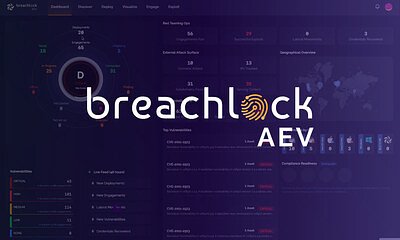
BreachLock's AI Red Team Mimics Hackers to Secure Web Applications
NEW YORK, NY – January 15, 2026 – Offensive security leader BreachLock today announced a significant expansion of its platform, introducing generative AI-powered autonomous red teaming for web applications. This new capability for its Adversarial Exposure Validation (AEV) solution, first launched in 2025 for network layers, marks a pivotal evolution in how organizations can defend their most critical digital assets.
The system is designed to continuously emulate the behavior of sophisticated human attackers—thinking, pivoting, and chaining together exploits to test defenses in real-time. By moving beyond theoretical vulnerability scans to validate actual, exploitable risk, BreachLock aims to provide a more realistic and actionable measure of an organization's security posture.
A New Breed of Digital Adversary
For years, application security has relied on a suite of tools: Static Application Security Testing (SAST) to scan code, Dynamic Application Security Testing (DAST) to probe running applications, and periodic, human-led penetration tests to simulate attacks. While valuable, these methods face significant challenges in the era of rapid, continuous software development. They can be slow, generate high volumes of unverified alerts, and fail to capture the creative, multi-step attack chains used by modern adversaries.
BreachLock's expanded AEV solution represents a fundamental departure from these traditional approaches. It employs an 'agentic' generative AI engine that functions as an autonomous red team member. Instead of just scanning for a known list of vulnerabilities, the AI autonomously discovers and interacts with a web application, learning its logic and workflows. It then crafts and executes complex attack scenarios, attempting to chain together seemingly low-risk flaws to achieve high-impact objectives, such as data exfiltration or unauthorized access.
This capability to 'think' and 'pivot' is what sets it apart. Where a traditional DAST scanner might report a potential Cross-Site Scripting (XSS) flaw, the AEV engine attempts to exploit that flaw, perhaps to steal a session cookie, escalate privileges, and then pivot to another part of the application to access sensitive data—all while documenting the successful attack path. It continuously validates a wide range of weaknesses, including the OWASP Top 10, complex business logic flaws, and code injection vulnerabilities that often evade automated scanners.
From Theoretical Risk to Business Impact
The most pressing challenge for many Chief Information Security Officers (CISOs) is not a lack of data, but a lack of context. Security teams are often inundated with alerts from dozens of tools, making it nearly impossible to distinguish genuine threats from theoretical risks. This 'alert fatigue' leads to inefficient resource allocation, with teams spending valuable time chasing down false positives or low-impact vulnerabilities while critical exposures remain unaddressed.
BreachLock's approach directly targets this problem by focusing on validated exploitability and business impact. By simulating and confirming successful attack paths, the AEV platform provides security leaders with concrete evidence of what an attacker could actually achieve. This shifts the conversation from an abstract list of vulnerabilities to a business-centric discussion about risk.
"Security teams don't need more tools—they need better outcomes," said Seemant Sehgal, Founder and CEO of BreachLock, in the company's announcement. "With agentic autonomous penetration testing for web applications, we're pushing the boundaries of what offensive security can do by continuously thinking, adapting, and validating risk the way real attackers do. This is a fundamental shift in how organizations measure and improve their security posture."
This focus on validated outcomes is supported by features like an interactive, real-time attack path visualization, which allows security teams to see precisely where their defenses held and where they failed. The platform also generates detailed reports aligned with the MITRE ATT&CK framework, providing a common language to communicate findings, prioritize remediation with development teams, and demonstrate compliance to auditors.
Integrating Security at the Speed of DevSecOps
The rise of DevSecOps and agile development has rendered the traditional, point-in-time security model obsolete. Manual penetration tests, often conducted annually or quarterly, create a significant bottleneck and cannot keep pace with weekly or even daily code deployments. This gap leaves new vulnerabilities exposed for extended periods.
The market has been searching for a solution that provides the depth of a human-led red team with the speed and scalability of automation. The emergence of AEV as a technology category, recognized by industry analysts like Gartner, signals a broader industry move toward continuous, automated evidence of attack feasibility. BreachLock’s web application capability directly addresses this need, offering a way to embed continuous adversarial testing directly into the software development lifecycle.
Because the platform is SaaS-native and agentless, it can be deployed quickly to provide unified coverage across complex hybrid and cloud-native environments. This allows organizations to run continuous, autonomous red teaming exercises against their applications, ensuring that security validation is an ongoing process, not a one-time event. As developers push new features, the AI can immediately begin testing them for new weaknesses, providing rapid feedback and enabling a true 'shift-left' security culture where flaws are found and fixed early in the development cycle.
By automating the complex logic of an attacker, BreachLock is providing a tool that not only helps organizations find flaws faster but also trains their defensive teams to better understand and anticipate real-world adversarial techniques. This continuous feedback loop between automated offense and human defense is poised to become the new standard for securing the applications that power the modern enterprise.