
- Brazil's e-commerce market: Projected to grow from nearly $70 billion today to over $150 billion by 2031.
- MSME finance gap: Estimated in the hundreds of billions of dollars, highlighting significant unmet credit needs.
- BNPL adoption: Introduced as a transparent, often interest-free alternative to traditional high-interest credit cards.
Experts would likely conclude that this partnership represents a strategic and innovative approach to addressing critical bottlenecks in Brazil's digital economy, leveraging embedded finance to drive financial inclusion and e-commerce growth.
Brazil's Digital Gold Rush: A New Partnership Aims to Bankroll E-Commerce
SÃO PAULO, Brazil – June 26, 2026
In the world of disruptive innovation, the most powerful shifts often happen not at the consumer-facing surface, but in the underlying infrastructure that makes new business models possible. A landmark partnership announced in Brazil between local fintech unicorn QI Tech and Ant International’s Bettr is a case in point. By weaving credit directly into the fabric of the country’s booming e-commerce sector, this collaboration provides a blueprint for how strategic alliances are building the next generation of financial plumbing.
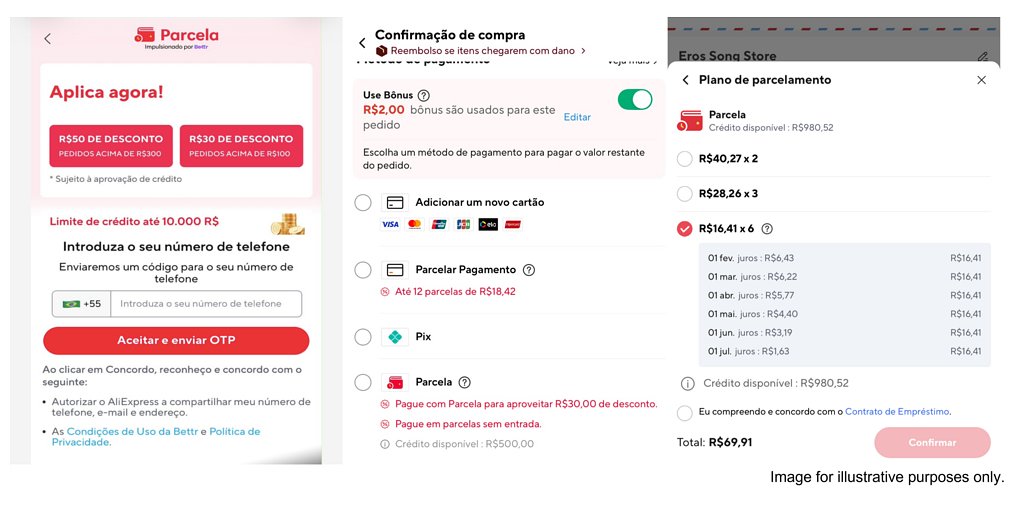
The partnership targets two critical bottlenecks in Brazil's digital economy: access to working capital for small and medium-sized e-commerce businesses, and flexible payment options for consumers. In a market projected to soar from nearly $70 billion today to over $150 billion by 2031, the financial mechanisms supporting this growth have struggled to keep pace. This new venture aims to change that, starting with merchants and shoppers on the global marketplace, AliExpress.
Fueling the E-Commerce Engine
For Brazil's legions of small and medium-sized enterprises (SMEs), the digital marketplace represents a massive opportunity, but one often locked behind a significant financial barrier. The country's MSME finance gap is staggering, estimated in the hundreds of billions of dollars. Many entrepreneurs rely on informal financing or are shut out of the credit system entirely by traditional banks that find them too costly or risky to serve. This partnership directly confronts that challenge.
By providing working capital loans directly within digital marketplaces, QI Tech and Bettr are enabling merchants to expand their inventory, invest in marketing, and scale operations in lockstep with demand. This isn't just a loan; it's a lifeline integrated into their daily workflow. The system leverages automated analysis of real-time transactional data, allowing for credit decisions that reflect a business's actual health rather than its historical ability to secure a conventional bank loan.
On the consumer side, the partnership introduces a "Buy Now, Pay Later" (BNPL) option, a model perfectly suited to the Brazilian market. Installment payments have been a cornerstone of Brazilian retail for decades, but they have often been tied to high-interest credit cards. BNPL offers a more transparent and often interest-free alternative, enhancing purchasing power and reducing cart abandonment—a persistent pain point for online retailers. This is especially crucial for bringing a wider swath of the population into the digital economy, including those with limited access to traditional credit. The timing is opportune, with the Central Bank of Brazil’s upcoming "Pix Parcelado" feature expected to further streamline these installment payments through the nation's ubiquitous instant payment system.
The Architecture of Embedded Finance
This collaboration is more than just a new credit product; it's a masterclass in the power of embedded finance. The core principle is to move financial services from being a standalone destination to an integrated, almost invisible, component of a user's experience. As QI Tech's founder and CEO, Pedro Mac Dowell, aptly puts it, "Credit is moving away from being an isolated product to becoming a natural part of the digital experience."
The technical sophistication behind this seamless experience is immense. The partners are deploying "automated analysis based on transactional data, real-time decision-making and sophisticated risk management models" to underwrite both business and consumer credit. This is where QI Tech’s unique position comes into focus. As the first company to obtain a Direct Credit Society (SCD) license from Brazil's Central Bank, and also operating as a licensed Securities Broker/Dealer (DTVM), it provides the regulated, scalable infrastructure that makes this entire system possible.
This regulatory backbone is QI Tech's key competitive advantage. While many fintechs operate in a gray area, QI Tech is a fully licensed financial institution built for the digital age. It provides Banking-as-a-Service and Lending-as-a-Service solutions, essentially offering its regulated status and technological prowess to partners like Bettr. This allows international players to enter the complex Brazilian market with confidence, knowing their operations are built on a compliant and robust foundation.
A Strategic Play on the Global Stage
From the perspective of Ant International, this partnership is a shrewd strategic move into Latin America's largest and most dynamic market. Rather than attempting a solo entry, Ant is leveraging the deep local expertise and regulatory credentials of a domestic champion. Quan Yu, General Manager of Bettr Credit and Senior Vice President of Ant International, highlighted this approach, stating, “The partnership underlines our commitment to local collaboration for deeper insights and creating greater synergy.”
This move is a tangible expression of Bettr's global mission to advance financial inclusion. By combining its global technological capabilities with QI Tech's local infrastructure, Ant International can effectively deploy its proven models for serving underserved populations in a new and promising region. The decision to launch on AliExpress, a platform within the wider Alibaba ecosystem, demonstrates a strategy of leveraging existing commerce channels to embed financial services, creating a powerful, self-reinforcing loop of commerce and credit. This is how global giants build a sustainable, localized foothold.
Navigating Risk in a Regulated System
Of course, rapid innovation in credit comes with inherent risks, namely data privacy and the potential for over-indebtedness. The partnership appears to be built with these challenges in mind. Operating in Brazil means strict adherence to the Lei Geral de Proteção de Dados (LGPD), the country's comprehensive data protection law. Furthermore, the reliance on sophisticated risk models is not just for efficiency, but for sustainability.
The press release emphasizes that the models are "designed to align with users’ needs and repayment capability, encouraging the sustainable use of financing." In a landscape where digital footprints provide a wealth of data, the ethical and responsible use of that information becomes a core pillar of the business model. Brazil’s progressive Open Finance framework, which empowers consumers to securely share their data between institutions, further supports the development of such personalized and risk-aware financial products.
By building on a regulated platform and explicitly designing for sustainable use, QI Tech and Bettr are not just creating a new credit channel; they are engineering a more resilient and inclusive financial ecosystem. This partnership demonstrates that the future of finance is not about replacing old systems wholesale, but about building new, intelligent layers on top of a regulated, trusted foundation.