
- $3.5B Valuation: BOXABL's post-SPAC merger valuation, despite only $1.51M in 2025 revenue.
- $14M Cash: Only $14M remains from the SPAC trust after $68.8M in redemptions.
- 800 Units Shipped: Company has delivered over 800 Casita homes to date.
Experts view BOXABL's Nasdaq debut as a high-risk, high-reward test of whether viral housing innovation can scale operationally and financially under public market scrutiny.
BOXABL Unfolds on Nasdaq, Facing a $3.5B Valuation and a Cash-Light Reality
LAS VEGAS, NV – June 10, 2026 – BOXABL, the housing startup known for its rapidly deployable, foldable homes that captured viral attention, is set to become a publicly traded company. Following a stockholder vote on June 9, the company’s planned business combination with the special purpose acquisition company (SPAC) FG Merger II Corp. has been approved. The deal paves the way for BOXABL to trade on the Nasdaq under the ticker symbol 'BXBL'.
This transition from a venture-backed, crowdfunded darling to a public entity is a landmark moment for the company and the burgeoning modular construction industry. It represents a critical test: can an innovative housing solution scale fast enough to meet both intense market demand and the unforgiving expectations of public investors?
In a statement, BOXABL Founder and Co-CEO Paolo Tiramani hailed the move as a crucial step to "accelerate our mission: transforming construction with scalable, factory-built housing." Larry Swets, CEO of FG Merger II Corp., echoed this sentiment, noting the "strong stockholder support" reflects conviction in BOXABL's model. Yet, a closer look at the transaction details reveals a more complex picture, one that tempers the celebratory tone with the stark realities of the current financial market.
A SPAC Deal with a Twist
The path to the public markets via a SPAC has become a well-trodden, if sometimes treacherous, road for high-growth companies. For BOXABL, the merger with FGMC was intended to inject significant capital to fuel its ambitious expansion plans. However, the final numbers tell a story of investor caution.
FG Merger II Corp. initially raised over $80 million in its trust account. But in a sign of the times for SPAC deals, the merger saw significant redemptions. Approximately $68.8 million was pulled out by FGMC stockholders who opted for cash instead of shares in the new company. This leaves BOXABL with just $14 million in cash from the trust—a fraction of the capital it might have anticipated.
This high redemption rate is a critical piece of the signal. While the merger was approved, the low cash retention suggests that institutional investors, who often drive SPACs, are taking a wait-and-see approach. It places immense pressure on BOXABL to perform with a much leaner war chest than the initial SPAC size would imply.
The $3.5 Billion Execution Gap
The most striking number in the entire transaction is BOXABL's valuation. The merger agreement values the company at a staggering $3.5 billion. This figure stands in stark contrast to its reported financials. As of the end of 2025, the company posted annual revenue of just $1.51 million. During one period in mid-2025, reports indicated it had shipped only a single unit, highlighting the immense gap between its valuation and its current operational output.
This “execution gap” is at the heart of the BOXABL story. The company has been extraordinarily successful at capturing the public imagination, raising over $170 million from more than 40,000 individual investors in prior funding rounds. Its flagship product, the 361-square-foot 'Casita', which famously unfolds on-site in under an hour and once housed Elon Musk, became a viral sensation. This groundswell of support is what underpins its lofty valuation. The question now is whether it can convert that enthusiasm into a sustainable, high-volume manufacturing business.
Analysts note that while the demand for affordable, innovative housing is undeniable, the company's ability to scale production rapidly enough to justify its valuation remains its single greatest challenge. The public listing provides a new currency—its stock—but the limited cash from the merger means it will be under intense scrutiny to manage its capital efficiently as it works to ramp up production.
From Factory Floor to Main Street
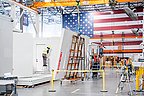
BOXABL’s promise lies in its factory. Inside its Las Vegas facility, it aims to do for housing what Henry Ford did for the automobile: apply mass-production principles to create a high-quality, affordable product at scale. The Casita, which comes with a full kitchen and bathroom, is designed for efficiency not just in manufacturing but also in logistics. By folding down to a width of 8.5 feet, it can be transported on standard highways without the costly special permits required for most modular homes.
To date, the company has shipped over 800 of its Casita homes and is diversifying its product line with the smaller 'Baby Box' and plans for stackable units suitable for multifamily housing. The goal is to create a system of 'build anything' building blocks to address a wide range of housing needs, from backyard accessory dwelling units (ADUs) to emergency housing and large-scale developments.
However, scaling a manufacturing operation of this complexity is fraught with challenges, from supply chain management to quality control. The company's ability to move from producing hundreds of units to tens of thousands will determine its long-term success and its capacity to make a real dent in the housing crisis.
Navigating the Maze of Regulation
Beyond manufacturing, BOXABL's other major hurdle is the labyrinth of local and state regulations. Building codes, zoning laws, and permitting processes vary dramatically from one jurisdiction to another, creating a significant barrier to the rapid deployment of any new housing type.
BOXABL has shown a savvy approach to this problem. It offers its Casita in two versions: one built to residential building codes, which requires a permanent foundation, and another built to park model RV standards, offering more flexibility in certain zones. This dual-track strategy helps navigate some of the regulatory complexity.
Furthermore, the company has been making strategic inroads. In December 2025, it secured a crucial license as a 'Commercial Modular Manufacturer' in California and received approval for a two-bedroom Casita design in the state. These are not minor administrative wins; they are essential steps to unlocking one of the largest and most housing-strapped markets in the country. With the merger approved and its Nasdaq ticker reserved, all eyes are now on BOXABL to see if it can build a public company as efficiently as it unfolds a house.