
- Median home price in Boulder: $850,000+
- Average two-bedroom apartment rent: $2,400/month
- Homes built annually at BoulderMOD factory: 12–15
Experts would likely conclude that the Ponderosa Community Stabilization Project offers a replicable model for addressing housing affordability, workforce development, and sustainability through innovative financing, modular construction, and community-focused planning.
Boulder's Blueprint: Building Homes, Hope, and a New Workforce
BOULDER, Colo. – January 07, 2026 – In a city where the median home price soars past $850,000, a groundbreaking partnership is quietly assembling a new reality. The Ponderosa Community Stabilization Project, born from the aftermath of a historic flood, is not just rebuilding a neighborhood; it's constructing a potential national model for affordable housing, workforce development, and sustainable living.
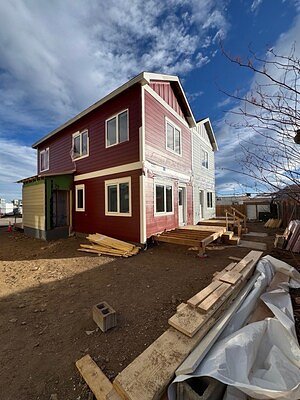
Rising on the site of a former mobile home park damaged in the 2013 floods, this ambitious initiative is a joint effort by Flatirons Habitat for Humanity, the City of Boulder, and the Boulder Valley School District (BVSD). Together, they are creating a community of highly energy-efficient, modular homes built in a state-of-the-art factory that doubles as a classroom for the next generation of construction professionals. The first of these homes is now open for public viewing, offering a tangible glimpse into a more equitable future.
A Blueprint for Affordability in a Crisis
The Ponderosa project stands in stark contrast to the daunting housing market realities of Boulder County and the nation. With the average two-bedroom apartment rent exceeding $2,400 per month, essential workers are increasingly priced out of the communities they serve. Nationally, the barrier to entry for homeownership has skyrocketed, with the minimum required income increasing by nearly 50 percent since 2020. Ponderosa aims to dismantle that barrier.
The project offers a path to ownership for the original, very low-income residents of the former mobile home park, a tight-knit community where nearly half the residents identify as Hispanic. Through a combination of sweat equity, affordable loans, and significant city subsidies—including over $3 million in zero-interest loans—the new homes are being made accessible to households earning around 50% of the area median income. This “people-first” approach, prioritizing current residents over swift redevelopment, sets a unique precedent.
“At Flatirons Habitat, we're not just building homes, we're transforming lives,” said Dan McColley, Executive Director of Flatirons Habitat for Humanity. “Every home we produce opens the door to stability, opportunity, and hope for a local family.”
The city's acquisition of the property in 2017, using Community Development Block Grant for Disaster Recovery (CDBG-DR) funds, was the critical first step. This was followed by a comprehensive replacement of underground infrastructure before any new homes were built, ensuring the community's long-term viability. The plan is to ultimately develop 74 new units, a mix of single-family homes, duplexes, and triplexes, replacing the original 68 mobile homes.
Building the Future at BoulderMOD
Central to this ambitious timeline is the BoulderMOD factory, a cutting-edge facility financed by the City of Boulder and managed by Flatirons Habitat. This factory dramatically scales up Habitat’s capacity, allowing for the production of 12 to 15 homes per year, with the potential for more. Constructing homes indoors mitigates weather delays, improves quality control, and reduces material waste, making the process more efficient and sustainable.
But the factory’s most innovative feature may be its occupants during school hours. It serves as the hands-on learning lab for BVSD's APEX program, the nation’s first high-performance building curriculum for high school students. At a time when the construction industry needs to attract an estimated 439,000 new workers in 2025 alone, the APEX program provides a direct career pipeline. Supported by the Construction Education Foundation (CEF), students gain real-world skills, industry credentials, and mentorship while building homes for their own community.
“The homes that we're working on are going to real families in Boulder who need affordable housing,” said Elan Castillo Veltman, an Apex student set to graduate this spring. “That gives the work more meaning. I'm not just learning how to build. I am learning how to build something that matters.”
The Technology of Sustainable Living
The homes rising in Ponderosa are not just affordable; they are designed to be affordable for generations. A key partner in this vision is Alpen High Performance Products, a local manufacturer supplying next-generation window technology. Each modular home features Alpen's thin triple-pane glass units, which earned the distinction of being Energy Star's highest-rated windows for 2024.
This focus on high-performance components is critical to the project's passive-house inspired design, which drastically reduces the energy needed for heating and cooling. “Windows only make up about 8% of a building's surface area, but account for roughly 45% of the energy loss or gain,” explained Alpen CEO Andrew Zech. “High performance windows can mitigate that energy loss, which adds up to big savings on monthly energy bills.”
For residents on tight budgets, these savings are transformative, reducing the long-term cost of homeownership and increasing financial stability. Furthermore, the superior insulation and airtight construction contribute to healthier indoor air quality and a more comfortable living environment, demonstrating that sustainable design and social equity can be mutually reinforcing goals.
From Disaster, a Resilient Community Rises
The journey of the Ponderosa community from the 2013 flood to today is a story of resilience. The disaster triggered the federal funding that made the city’s intervention possible, turning a moment of crisis into an opportunity for profound, positive change. The project has not been without its complexities, as residents have navigated years of uncertainty and the inevitable disruption of construction. Yet, the commitment to keeping the community intact has been the project's guiding principle.
This multi-layered collaboration—weaving together municipal government, a housing non-profit, the public school system, and a private technology firm—offers a powerful and replicable blueprint. It proves that by combining innovative financing, workforce development, and sustainable technology, communities can address the housing crisis head-on.
As more families move into their new, permanent homes, the Ponderosa project serves as a testament to what is possible when a community invests in its people. “Together, we're proving that sustainable construction and social impact go hand-in-hand,” McColley stated. “Together we're creating communities where families can thrive.”