
- $100,000 in unrestricted grant funding per founder, plus $150,000 in wraparound business services
- 10 businesses in the inaugural cohort, including The Little Cocoa Bean Company and Dorchester Art Project
- April 21, 2026 deadline for second cohort applications
Experts would likely conclude that the Boston Creator Accelerator's equity-free, community-focused model is a scalable and impactful solution for addressing systemic barriers to entrepreneurship, particularly for underrepresented founders.
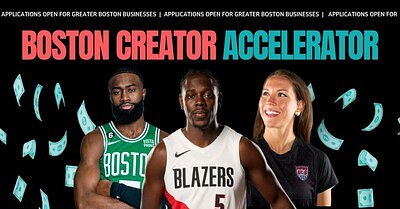
Boston Stars' Accelerator Expands, Fueling Local and National Change
BOSTON, MA – April 17, 2026 – As the NBA playoffs ignite the city's competitive spirit, two of its on-court leaders are making equally significant moves off the court. Jaylen Brown and Jrue Holiday, alongside social impact leader Lauren Holiday, have announced the expansion of the Boston Creator Accelerator (BCA), opening applications for a second cohort of community-driven entrepreneurs. The initiative, which provides substantial funding and deep-level support, is not only transforming local businesses but is also serving as a blueprint for national policy.
Launched by Brown's Boston XChange (BXC) and the Holidays' JLH Social Impact Fund, the BCA is a direct response to systemic barriers that have historically limited access to capital and resources for underrepresented founders. With applications for its second cohort now open, the program is doubling down on its mission to foster equitable pathways for sustainable, community-rooted businesses.
A New Playbook for Community Investment
Unlike traditional accelerator programs that often prioritize high-growth tech and take an equity stake, the BCA operates on a different playbook. The program offers founders up to $100,000 in unrestricted grant funding and an additional $150,000 in wraparound business services, including pro-bono legal support and access to dedicated workspaces. This model allows entrepreneurs to scale their vision without sacrificing ownership or control.
What truly sets the initiative apart is the hands-on involvement of its founders. Brown, Jrue, and Lauren Holiday are actively engaged in the selection process and provide ongoing mentorship, reinforcing a model centered on intentional investment and long-term relationships. This approach is rooted in a shared philosophy of empowerment.
"BCA was created to support founders who are already doing meaningful work but may not have access to the capital or infrastructure needed to scale," said Jaylen Brown in a statement. "This is about building systems that create lasting opportunity."
That sentiment is echoed by the Holidays, whose JLH Social Impact Fund was founded in 2020 after Jrue pledged his NBA salary to combat socioeconomic inequality. "When we built this program, we started with a simple belief: that excellence and community aren't competing priorities, they fuel each other," stated Jrue and Lauren Holiday. "The founders BCA is built for aren't waiting for permission. They're already building something beautiful for the people around them."
This deep engagement is bolstered by a powerful network of institutional partners, including MIT, Harvard Business School, and Suffolk University, giving founders access to world-class academic and mentorship resources.
Addressing Boston's Systemic Gaps
The BCA’s mission is particularly resonant in Greater Boston, an area marked by both immense wealth and significant economic disparity. The region's entrepreneurial ecosystem is heavily dominated by technology and biotech, leaving a notable void in support for creative, cultural, and community-focused businesses—sectors where diverse founders often thrive. Compounding this is a stark racial wealth gap, which makes accessing early-stage capital a formidable challenge for many Black and Latino entrepreneurs.
The accelerator directly confronts these issues. By targeting "community-focused, creative, or culturally driven businesses," it validates and invests in sectors often overlooked by traditional venture capital. Its equity-free grant model provides the critical, non-dilutive capital that can be transformative for businesses built on a foundation of community service rather than just rapid, scalable growth.
Tangible Results from the Inaugural Cohort
The impact of this unique model is already evident in the success of its inaugural cohort of ten businesses. These ventures, ranging from food and fashion to art and tech, have demonstrated measurable growth since joining the program.
- The Little Cocoa Bean Company, which creates culturally relevant meals for children, is now expanding its footprint by opening a new Tot Café inside the Boston Children's Museum.
- Uvida Shop, Boston’s first zero-waste store, is growing beyond its brick-and-mortar roots to develop its own private-label products and expand its e-commerce presence.
- Dorchester Art Project has successfully transitioned into a worker-owned creative cooperative, providing local artists with affordable studios and performance spaces to build sustainable careers.
- Crown Legends, a New Era-licensed hat boutique, is redefining headwear culture in New England, with its co-founder expressing gratitude for the high-profile backing that brings legitimacy and support.
Other cohort members, such as the streetwear-inspired running brand PYNRS and the film production company Anawan Studios, are creating new narratives and opportunities for Black and brown creatives, proving that business success and community uplift can go hand in hand.
From Local Impact to National Policy
The influence of the Boston Creator Accelerator now extends far beyond the city's limits. The program's innovative structure and demonstrated success have directly inspired the introduction of federal legislation. The Strengthening Place-based Access, Resources, and Knowledge (SPARK) Act, introduced in the Senate in February 2026 by a group including Senators Edward J. Markey and Cory Booker, aims to replicate the BCA's model on a national scale.
The SPARK Act proposes creating grant programs to fund community organizations that support small business accelerators and to provide direct, low-cost financing to underserved entrepreneurs. In announcing the legislation, Senator Markey explicitly referenced his collaboration with Jaylen Brown as a key inspiration, aiming to "supercharge existing infrastructure" and uplift the next generation of underinvested founders across the country.
This progression from a local, athlete-led initiative to the foundation for federal policy underscores the power and scalability of the BCA's vision. As applications open for its second cohort, closing April 21, the Boston Creator Accelerator is not just seeking new businesses to support; it is building a movement. It champions a future where an entrepreneur's success is measured not only by their balance sheet but by the strength and vitality of the community they serve.