
- $329,000: Bank of America's contribution to Greenville Tech Foundation over two decades.
- $67.8 million: Small business loans issued by Bank of America in South Carolina since 2020.
- 270 employees: Bank of America's local workforce across 20 Upstate SC locations.
Experts would likely conclude that Bank of America's strategic appointment of Chip McLeod reflects a calculated effort to deepen its community ties and expand market share in Upstate South Carolina's diversifying economy.
BofA's Upstate Pivot: New Leadership, Deeper Roots in SC's Economy
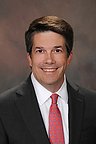
GREENVILLE, SC – June 05, 2026 – Bank of America has signaled a strategic deepening of its commitment to Upstate South Carolina, appointing veteran financial leader Chip McLeod as its new market president. The move, which follows the retirement of 39-year company stalwart Stacy Brandon, places a leader with extensive local roots and a wealth management background at the helm of one of the region's most significant financial institutions.
McLeod’s appointment is more than a simple leadership transition; it represents a calculated maneuver to expand market share in a region undergoing significant economic diversification. He is tasked with integrating the bank's eight lines of business—from commercial lending to wealth management—to capture growth across Anderson, Greenville, Laurens, Pickens, and Spartanburg counties.
A Legacy of Community-Centric Banking
Chip McLeod steps into a role shaped by Stacy Brandon, whose 39-year career with Bank of America and its predecessors culminated in over a decade as Upstate market president. A Greenville native, Brandon built a reputation for weaving the bank into the fabric of the community. Her career, rooted in commercial banking, saw her manage a significant portfolio of middle-market businesses that form the backbone of the region's economy.
Under her leadership, the institution’s local strategy was defined by a philosophy that the bank must "give back to the communities where we work." This principle was evident in the strong partnerships forged with local non-profits and educational institutions. During her tenure, Bank of America became a cornerstone supporter of the Greenville Tech Foundation, contributing over $329,000 over two decades to fund critical student needs and workforce development programs like "Quick Jobs with a Future."
Brandon’s influence extended across numerous boards, including the South Carolina Chamber of Commerce and the Upcountry History Museum. Her guidance helped direct corporate resources toward organizations aimed at fostering economic stability and mobility, such as Homes of Hope, a recipient of the bank's prestigious Neighborhood Builder award. This legacy of deeply integrated community partnership sets a high bar for her successor and establishes a framework of corporate citizenship that McLeod is now expected to build upon.
Charting a Course for 'Responsible Growth'
McLeod’s mandate, as articulated by Bank of America Chair and CEO Brian Moynihan, is to execute the company's "responsible growth strategy." In his statement, Moynihan noted, "Chip's established leadership and experience will ensure we're delivering on our responsible growth strategy to deepen relationships with clients, the community and teammates." This corporate directive emphasizes sustainable expansion, not just aggressive acquisition, focusing on deepening existing relationships and leveraging the full spectrum of the bank's services.
With over three decades in financial services, McLeod brings a different perspective to the presidency. His most recent role as a senior resident director for Merrill Lynch Wealth Management in Spartanburg saw him lead a team focused on growing and preserving the assets of affluent clients. This background is particularly relevant as Bank of America seeks to better integrate its vast capabilities. The challenge for market presidents like McLeod is to break down internal silos and present a unified front, offering a seamless experience whether a client needs a small business loan, a corporate line of credit, or sophisticated estate planning.
His success will be measured not only by loan-to-deposit ratios but by his ability to connect the bank's national power to local opportunities. This involves ensuring that the 270 local employees across 20 locations are equipped to identify and act on client needs that span multiple financial disciplines, a complex task that requires both strategic vision and on-the-ground execution.
Navigating a Dynamic Economic Landscape
The Upstate South Carolina that McLeod now oversees is a far cry from the textile-dominated economy of the past. It is a region in transition, marked by a burgeoning automotive manufacturing sector anchored by BMW, a growing healthcare industry, and an expanding logistics network. This diversification presents both immense opportunities and unique challenges for a financial institution of Bank of America’s scale.
Recent economic data paints a picture of a region with solid fundamentals but also areas of concern. While annual wages have seen a healthy 4.5% increase to an average of $57,843, the local unemployment rate of 5.2% sits above the national average, suggesting a potential skills gap or labor market friction. The region’s economic output is heavily reliant on manufacturing, which contributed $7.3 billion to GDP in 2024, making it sensitive to global supply chain and trade dynamics.
In this competitive environment, Bank of America is a formidable player but not the only one. The market for small business lending is particularly crowded, with community banks leveraging their local agility and the SBA providing significant loan guarantees. In fiscal year 2024 alone, South Carolina small businesses received over 1,000 SBA-backed loans totaling $453 million. Bank of America's contribution of $67.8 million in small business loans and $643 million in commercial loans since 2020 demonstrates its significant stake in fueling this growth. McLeod’s primary challenge will be to defend and expand this market share against nimble local competitors and other national banks that also view the Upstate as a key growth market.
Deep Roots, Broader Reach
Perhaps McLeod’s greatest asset in tackling this challenge is his personal history, which is deeply interwoven with the Upstate community. His extensive civic engagement is not a recent development for a new executive role but a long-standing pattern of involvement. His service on the state's Council of Advisors on Consumer Credit, a post he has held since a gubernatorial appointment in 2001, gives him a unique, long-term perspective on the financial health of South Carolina's residents.
His leadership roles as president of the Spartanburg Downtown Rotary and past president of the Spartanburg Philharmonic Board and the Spartanburg Estate Planning Council place him at the center of the region's business, cultural, and civic networks. This is not just a matter of public relations; these connections provide invaluable ground-level intelligence and build the trust necessary to forge complex financial partnerships.
This deep local integration is poised to amplify the impact of Bank of America's corporate social responsibility initiatives. The company reports investing $3.8 million in local philanthropic funding and over 26,000 employee volunteer hours since 2020. With McLeod at the helm, the strategic direction of these resources can be more finely tuned to the specific needs of the communities he has served for decades. His appointment represents the embodiment of Bank of America’s "high-tech, high-touch" strategy—leveraging global resources while relying on local leadership to build the relationships that ultimately drive sustainable growth and community impact.