
- Summit Location: Held at 3,440 meters in Namche Bazaar, gateway to Mount Everest, emphasizing frontline climate action.
- Action Plan Duration: 4-year "Namche Action Plan 2026–2030" targeting disaster preparedness, scientific monitoring, food/water security, and waste management.
- Community Focus: Plan integrates priorities from local adaptation plans, ensuring initiatives align with community-identified needs.
Experts would likely conclude that BLACKYAK's Himalayan-centric strategy represents a significant evolution in corporate climate action, combining geographic specificity, community collaboration, and measurable resilience-building initiatives.
BLACKYAK Takes Its Climate Fight to Everest's Doorstep
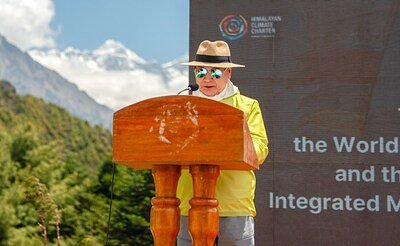
NAMCHE BAZAAR, Nepal – June 08, 2026 – At 3,440 meters, the air is thin and the jagged, snow-dusted peaks of the Himalayas dominate the horizon. This is not a typical venue for a corporate summit. Yet, it was here in Namche Bazaar, the historic Sherpa trading post and gateway to Mount Everest, that global outdoor brand BLACKYAK chose to make a definitive statement about its commitment to climate action. On June 1, the company convened the “Himalayan Climate Charter 2026: Namche Summit,” an event that consciously moved the conversation from conference halls to the very frontlines of the climate crisis.
More than a symbolic gesture, the summit marked a pivotal shift from principle to practice. Co-hosted with vital local partners—the Sagarmatha Pollution Control Committee (SPCC), the Nepal Mountaineering Association, and the Khumbu Pasang Lhamu Rural Municipality—the gathering culminated in the endorsement of the “Namche Action Plan 2026–2030.” This detailed roadmap signals a move beyond the general declarations of last year's charter, launched in Kathmandu, to a new phase of tangible, on-the-ground projects designed to build resilience in one of the world's most vulnerable ecosystems.
From Boardroom to Base Camp
The decision to relocate this year’s summit from Nepal's capital to the heart of the Khumbu region was a deliberate one. It was, as the company stated, a commitment to “experiencing the realities of the climate crisis firsthand and turning awareness into action.” For the international attendees, this meant leaving the comfort of the city to witness the receding glaciers, hear directly from the communities affected, and feel the urgency in a way no PowerPoint presentation could convey.
That urgency was given a stark, human face by BYN BLACKYAK Group's Chairman, Kang Tae Sun. In his keynote address, he pointed to a recent, local tragedy to underscore the global stakes. “The village of Thame, which suffered severe damage from a glacial lake outburst flood in 2024, clearly shows that the climate crisis in the Himalayas is already threatening people's lives,” Kang stated. “We can no longer view the Himalayan climate crisis as a distant issue. It is a shared challenge that requires all of us to think together and act together.”
This approach—embedding a corporate initiative within the community it aims to serve—represents a noteworthy evolution in corporate social responsibility. While many companies in the outdoor industry fund environmental causes, BLACKYAK, a brand founded in 1973 with its identity intrinsically linked to the Himalayas, is positioning itself as an active participant. It’s a strategy that seeks to replace distant philanthropy with direct, collaborative engagement, leveraging its resources and technical expertise in partnership with decades of local and indigenous knowledge.
The “Namche Action Plan”: A Blueprint for Resilience
Where last year’s inaugural charter laid out a vision, the Namche Action Plan provides a blueprint. Forged in collaboration with local leaders, the plan integrates priorities from the municipality's own Local Adaptation Plans of Action, ensuring that the initiatives are not imposed from the outside but are rooted in community-identified needs. Mingma Chirri Sherpa, Mayor of the Khumbu Pasang Lhamu Rural Municipality, spoke at the summit, emphasizing the importance of this alignment for creating genuine, locally-driven adaptation measures.
The four-year plan is comprehensive, targeting the interconnected challenges facing the region:
Disaster Preparedness: The plan calls for strengthening community-based disaster response systems and expanding Early Warning Systems for climate-related hazards like Glacial Lake Outburst Floods (GLOFs), a direct response to events like the one that devastated Thame.
Scientific Monitoring: It commits to promoting collaboration on glacier monitoring and cryosphere research, aiming to provide better data for risk reduction and long-term planning.
Food and Water Security: Recognizing the threat to local livelihoods, the plan includes support for local agricultural grants, with a focus on women, youth, and marginalized groups. It also prioritizes the protection and restoration of Himalayan water sources and watersheds, including reforestation with native species.
Waste Management: Tackling the persistent issue of waste in the popular trekking region, the plan will strengthen management systems, push for the reduction of single-use plastics, and encourage circular economy approaches.
Crucially, the plan formally recognizes the central role of Indigenous Peoples and Local Communities (IPLCs) in climate adaptation, aiming to strengthen their involvement and ensure their voices are central to conservation efforts. This framework moves the initiative from a corporate-led project to a multi-stakeholder platform for regional resilience.
Walking the Talk in the Outdoor Industry
This Himalayan-centric strategy sets BLACKYAK on a distinct path within the competitive outdoor industry. While brands like Patagonia and The North Face have long been leaders in sustainability through recycled materials, repair programs, and environmental advocacy, BLACKYAK’s intense geographic focus offers a different model of accountability. It ties the brand’s success directly to the health of the ecosystem that defines its identity.
This commitment to accountability is further detailed in the company's first-ever sustainability report, the “BYN BLACKYAK Responsibility Report 2025.” The report outlines a range of initiatives, from its ongoing sponsorship of the SPCC's famed “Icefall Doctors” who maintain the perilous route through the Khumbu Icefall each season, to environmental clean-up trekking campaigns. It also highlights the work of the BLACKYAK Alpine Club (BAC) in promoting a more mature and responsible hiking culture.
On the product side, the report details the company's efforts in sustainable product development and its pursuit of a circular economy model, aiming to minimize environmental impact across a product’s entire lifecycle. While the release of a first sustainability report is a foundational step, the true measure of its impact will be in the transparent reporting of progress against the ambitious goals laid out in the Namche Action Plan.
As Chairman Kang asserted, the time for talk is over. “BLACKYAK will move beyond discussion and declarations to expand practical support and solidarity that can drive real change on the ground in the Himalayas,” he pledged.
The summit in Namche Bazaar has concluded, and the delegates have descended from the high mountains. But for the communities of the Khumbu and the team at BLACKYAK, the real work is just beginning. The world, and particularly the global community of outdoor enthusiasts who draw inspiration from these peaks, will be watching closely to see if this unique partnership can forge a new path for protecting the roof of the world.