
- $32.3M recovered: Bitget's security teams recovered approximately $32.3 million for users affected by security incidents and fraud in 2025.
- 150M+ malicious attacks intercepted: Bitget's systems blocked over 150 million malicious attack requests in 2025.
- 1.5B+ DDoS attempts mitigated: The platform defended against more than 1.5 billion DDoS-related attack attempts annually.
Experts would likely conclude that Bitget's $32.3M recovery underscores the escalating security challenges in the multi-asset era, necessitating robust, multi-layered defenses to protect diverse financial assets.
Bitget’s $32.3M Recovery Signals a New Security Front in the Multi-Asset Era
VICTORIA, SEYCHELLES – June 09, 2026 – As the digital asset landscape broadens to include everything from cryptocurrencies to tokenized stocks and commodities, the battle for user security is entering a new, more complex phase. Underscoring this shift, the digital asset platform Bitget has launched its annual Anti-Scam Month, revealing that its security teams recovered approximately $32.3 million for users affected by security incidents and fraudulent activity in 2025. The announcement provides a stark measure of the threats facing investors and highlights the strategic evolution required to protect them in what the company calls the “multi-asset era.”
The initiative, themed “More Assets, Stronger Shield,” arrives as platforms globally are racing to become all-in-one financial hubs. The move beyond crypto-native assets introduces a host of new vulnerabilities, demanding a fundamental rethinking of security architecture. Bitget's disclosure offers a rare glimpse into the sheer scale of this defensive war, providing data points that illustrate a constant, high-volume siege on its ecosystem.
The Scale of the Digital Shield
The $32.3 million recovery figure is a headline grabber, but it represents the tip of a much larger iceberg of defensive activity. According to the company's 2025 performance data, its systems intercepted over 150 million malicious attack requests and mitigated more than 1.5 billion DDoS-related attack attempts. Furthermore, the platform's security team identified over 13,000 high-risk malicious IP addresses and handled 18,135 individual user protection cases throughout the year.
These figures paint a picture not of isolated incidents, but of an industrial-scale adversarial effort targeting digital finance. The challenge is not unique to one platform; it is an industry-wide crisis. A 2025 Interpol report estimated global losses from financial scams tied to burgeoning multi-asset markets at a staggering $442 billion, illustrating the systemic risk. Against this backdrop, proactive defense and asset recovery are becoming critical differentiators and core responsibilities for platforms that serve millions of users.
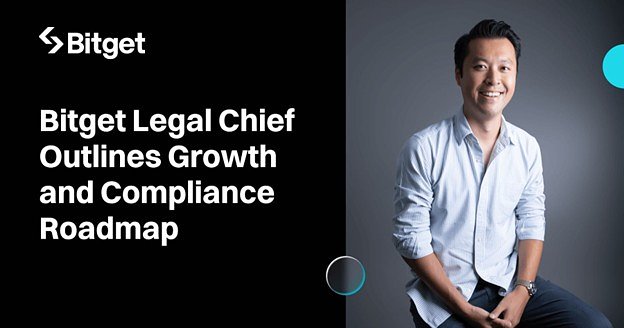
“The industry is entering a multi-asset era where users can access a wider range of products and markets through a single platform. As that access expands, security responsibilities increase too,” said Hon Ng, Chief Legal Officer at Bitget, in a statement accompanying the release. His comment pinpoints the central tension of the current market: innovation in access must be matched, if not preceded, by innovation in protection.
Redefining Risk in the ‘Universal Exchange’ Era
Bitget has been a vocal proponent of the “Universal Exchange” (UEX) model, a concept it has actively defined and champions. A UEX aims to integrate the features of centralized exchanges, decentralized finance, and traditional markets, allowing users to trade crypto, tokenized stocks, ETFs, and commodities from a single account. The company’s claim to be the “world’s largest UEX” is based on this expansive vision and a reported user base of over 125 million.
While industry data from sources like CoinGecko shows Bitget is a top-tier player but not the largest overall crypto exchange by trading volume—a title still held by giants like Binance—its leadership in the UEX category is significant. This pioneering role, however, comes with a unique set of security burdens. By unifying disparate asset classes, a UEX creates a vastly expanded attack surface. A vulnerability in one area, whether at the account, data, or permission layer, could theoretically have cascading consequences across a user’s entire portfolio, from Bitcoin to tokenized gold.
This convergence of traditional and digital finance on a single technological rail means security can no longer be asset-specific. It requires a system-level framework that manages risk holistically. This includes everything from verifiable solvency and multi-asset risk isolation to securing off-chain data feeds and building resilient infrastructure capable of withstanding sophisticated, multi-pronged attacks.
A Multi-Pronged Defense: Tech, Education, and Collaboration
In response to these evolving threats, Bitget’s strategy demonstrates a multi-layered approach that extends beyond simple firewalls. On the technology front, the platform has expanded its use of Passkey authentication based on FIDO2 and WebAuthn standards, offering users phishing-resistant login methods. It has also enhanced multi-factor authentication for high-risk actions and improved device management controls, giving users more power to monitor and restrict account access.
Recognizing that technology alone is insufficient, user education forms another critical pillar. The company’s security awareness campaigns reportedly reached 1.38 billion users globally in 2024 and 2025. More than just broadcasting information, interactive initiatives like the “Smarter Eyes Challenge” actively engaged nearly 50,000 participants in simulated phishing and scam detection exercises, a practical approach to building user resilience.
Perhaps most indicative of a maturing industry, the strategy heavily emphasizes collaboration. The exchange publicly partners with leading blockchain security firms like SlowMist and Elliptic for threat intelligence sharing. A deeper collaboration with the security firm BlockSec culminated in a February 2026 joint research report, “The UEX Security Standard: From Proof to Protection.” This document outlines a comprehensive security blueprint for multi-asset platforms, covering everything from real-time monitoring and incident response to AML screening and fund tracing. Publishing such a framework signals a move toward establishing transparent, industry-wide best practices.
Ultimately, these defensive measures are about more than just protecting assets; they are about building the trust necessary for the long-term viability of a tokenized global economy. The recovery of $32.3 million is a powerful tool for rebuilding confidence for those affected, but the billions of thwarted attacks are what allow the system to function daily. As financial worlds continue to converge, the strength of the shield will be just as important as the diversity of the assets it protects.