
- US$9.7 trillion: Projected global Islamic finance assets by 2029, growing at 10% annually
- 30 jurisdictions: Availability of Binance's Sharia Earn product
- Wakala agreement: Islamic contract framework ensuring compliance with Sharia principles
Experts view Binance's Sharia Earn as a strategic move to tap into the underserved Islamic finance market, aligning digital assets with religious principles while setting a precedent for responsible innovation in the crypto industry.
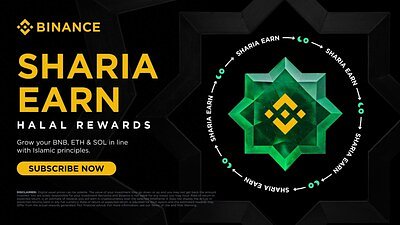
Binance Courts Trillion-Dollar Islamic Finance Market with Sharia Product
ISLAMABAD, Pakistan – February 23, 2026 – Global cryptocurrency giant Binance has made a significant move to bridge the worlds of digital assets and Islamic finance with the launch of 'Sharia Earn.' The new product offers a structured, faith-aligned investment pathway for the world's nearly two billion Muslims, a demographic that has largely remained on the sidelines of the crypto revolution due to religious compliance concerns.
The initiative marks a strategic pivot in the digital asset industry, particularly within the Middle East, North Africa, and Pakistan (MENAP) region. The conversation is shifting from mere access to cryptocurrencies towards how that access is structured to align with local values and regulatory frameworks. By offering a product certified as compliant with Islamic law, the exchange is tapping into a vast, underserved market and setting a potential blueprint for responsible innovation in a region wary of disruptive, unregulated finance.
"Financial freedom must be built on trust and clarity," said Tarik Erk, MENAT Lead & Senior Executive Officer, Abu Dhabi at Binance, in a statement. "In this region, inclusive growth in digital finance requires products that align with structured financial principles and transparent mechanisms. When innovation is built responsibly, participation expands."
A Multi-Trillion-Dollar Opportunity
The potential market for Sharia-compliant financial products is immense and growing rapidly. Projections indicate that global Islamic finance assets could surge to US$9.7 trillion by 2029, expanding at an average annual rate of 10%, according to industry reports cited by the company. This multi-trillion-dollar ecosystem has traditionally been cautious of decentralized finance (DeFi) and digital assets.
The core of this hesitancy lies in fundamental principles of Islamic jurisprudence, which strictly prohibit riba (interest), gharar (excessive uncertainty or speculation), and investment in sectors considered haram (forbidden), such as gambling, alcohol, and conventional interest-based banking. For many observant Muslims, the opaque nature of returns and the speculative frenzy often associated with cryptocurrencies have been insurmountable barriers. Binance's new offering aims to directly address these concerns by providing a transparent framework that has been vetted against these principles. The launch was reportedly driven by strong user demand voiced at global meetups, highlighting a significant and vocal desire for such faith-aligned products.
The Architecture of Trust: Deconstructing Sharia Earn
At the heart of Sharia Earn is a blend of existing blockchain technology and traditional Islamic financial contracts. The product, which launched with support for major digital assets including BNB, ETH, and SOL, is not a new technology from the ground up. Instead, it leverages the underlying mechanics of existing Binance Earn products, such as locked staking, but wraps them in a rigorously vetted, compliant structure.
The key to its Sharia compliance is the implementation of a Wakala agreement, a well-established Islamic contract for agency. Under this framework, the user appoints Binance to act as their agent (wakeel) to manage and invest their digital assets. The exchange is then obligated to channel these funds only into ventures and yield-generating activities that have been pre-screened and certified as halal.
This certification is provided by Amanie Advisors, a globally respected Sharia advisory firm. The firm, founded by renowned scholar Tan Sri Dr. Mohd Daud Bakar, has conducted a thorough review of the product's structure, from the underlying staking protocols to the flow of funds, ensuring it is free from non-compliant elements. Amanie Advisors' seal of approval lends significant credibility to the offering, as the firm is a leading authority in the niche but growing field of Islamic fintech. Their work also extends to foundational research on the Sharia compliance of core assets like Ethereum, underscoring their deep expertise in the space.
Navigating a Complex Regulatory and Competitive Landscape
The launch of Sharia Earn is as much a strategic regulatory play as it is a product release. In the MENAP region, where financial systems are characterized by strong governance, innovation must be inclusive and compliant by design, not disruptive. By proactively building a product that adheres to a strict ethical and financial framework, Binance is positioning itself as a responsible partner to regulators in key hubs like the UAE, which aims to become a global center for virtual assets.
This structured approach could serve as a model for how crypto platforms can achieve mainstream adoption in culturally and regulatorily complex markets. However, the exchange is not operating in a vacuum. The race to cater to the Islamic finance market is heating up. Competitor exchange Luno, for example, also offers Sharia-compliant staking for assets like Ethereum, similarly certified by Amanie Advisors, and for Solana and Cardano, certified by another recognized firm. Furthermore, new specialized platforms like the DFSA-licensed Cusp Wealth are emerging in the UAE, offering sophisticated, AI-powered Sharia-compliant investment portfolios.
Despite the growing competition, Binance's formidable scale, deep liquidity, and integrated ecosystem provide a powerful advantage. Sharia Earn is available in over 30 jurisdictions, offering a global platform that smaller, regional players may struggle to match. The ability to offer a multi-token solution within a single, trusted user interface is a key differentiator.
More Than a Product: A Push for Financial Inclusion
Ultimately, the significance of Sharia Earn may extend beyond its immediate commercial success. The initiative represents a broader push toward making digital finance more inclusive and meaningful for diverse communities worldwide. By bridging the gap between cutting-edge technology and long-standing values, it demonstrates that financial innovation can respect cultural and religious principles.
The company is spotlighting the product as part of its Ramadan campaign, a period of reflection and intentionality that naturally aligns with the principles of responsible finance. The bigger story, however, is the long-term direction. As the digital asset industry matures, the focus is shifting from speculative hype to sustainable, value-based utility.
For millions of potential users, financial freedom is not about having more products; it is about having more meaningful choices built with the safeguards and transparency they require. By embedding Islamic finance principles into its core offerings, Binance is making a calculated bet that the future of finance is not only digital but also deeply personal and values-driven. This approach could unlock a new wave of adoption, proving that the most successful financial innovations are those that meet users where they are, both technologically and ethically.
Topics & Related
Generative AI
Large Language Models
Revenue
Fintech
Software & SaaS
Bitcoin
Ethereum
Stablecoins
NFTs
Related Company Pulse