
- Q1 Net Loss: $2.8 million (vs. $0.7 million profit in Q1 2025)
- Net Sales Decline: 9.1% to $30.7 million
- Gross Margin: Tightened to 41.4%
Experts would likely conclude that Virco’s Q1 loss reflects a broader market realignment in the U.S. education furniture sector, driven by post-pandemic budget adjustments and shifting demand toward flexible, service-integrated solutions.
Beyond the Red Ink: Virco’s Q1 Loss Reveals a New Blueprint for American Industry
TORRANCE, CA – June 03, 2026 – At first glance, the financial report from Virco Mfg. Corporation paints a challenging picture. The nation’s largest manufacturer of educational furniture reported a $2.8 million net loss for its first fiscal quarter, a stark reversal from the $0.7 million profit recorded in the same period last year. Net sales dipped 9.1% to $30.7 million, and gross margins tightened. On the surface, it’s a story of slowing demand and a difficult year-over-year comparison now that the lingering backlogs of the pandemic era have been cleared. But to dismiss this as just another company hitting a post-stimulus speed bump is to miss the larger, more fascinating story unfolding within Virco’s factories and strategy. The company’s Q1 results are less a sign of distress and more a clear signal of a broader market realignment—and a case study in how a legacy American manufacturer is adapting to the complex systems of a new economic reality.
Deconstructing Education's 'New Normal'
The slowdown Virco is experiencing is not happening in a vacuum. It reflects a fundamental reset across the entire U.S. education landscape. The massive injection of federal COVID-19 relief funds, totaling some $190 billion, is tapering off. School districts that enjoyed a period of robust spending are now facing a “fiscal cliff” as this one-time aid sunsets, forcing a return to more traditional, and often tighter, budget cycles. This recalibration is what Virco’s management refers to as the market seeking a “new baseline.”
While the term “slowing demand” might suggest a shrinking market, industry projections tell a more nuanced story. The U.S. school furniture market is still projected to grow at a healthy clip, with estimates suggesting a compound annual growth rate of over 6% through 2030. The demand isn’t vanishing; it’s changing. The drivers are shifting from reactive, pandemic-driven purchases to more strategic investments. Schools are increasingly focused on creating dynamic, flexible learning environments that can adapt to modern teaching methods and address the lingering effects of pandemic-related learning loss. This translates into demand for ergonomic, mobile, and modular furniture that supports collaborative work and technology integration. Furthermore, with school construction and renovation projects described as “rampant” across the country, the need for new equipment remains strong. Virco’s Q1 performance, therefore, reflects not a market collapse, but a return to the historic seasonality and project-based purchasing that has long defined the industry, albeit with new priorities.
Building a Moat with Services and Domestic Steel
Confronted with this evolving market, Virco is not simply waiting for orders to rebound. The company is actively fortifying its position by doubling down on a strategy that is difficult for its import-reliant competitors to replicate: full-service integration. More than three-quarters of the company’s current backlog now consists of orders that include comprehensive design, planning, and installation services. This shift transforms Virco from a mere product supplier into an integrated project partner.
As schools manage their own expenses and operational complexities, the appeal of a single-source solution that handles the entire furniture deployment process is a powerful value proposition. This service-heavy model creates what the company calls a “moat” around its business. While competitors can often compete on the price of an individual chair or desk, providing localized, short-term design and installation services on a national scale is a logistical challenge that favors a vertically integrated, domestic operator. This strategy also provides Virco with greater visibility into the project pipeline, allowing it to better manage production and delivery within what is becoming a compressed seven-week window, a timeline influenced by schools extending instructional calendars to combat learning loss.
The American Factory Advantage in a Fractured World
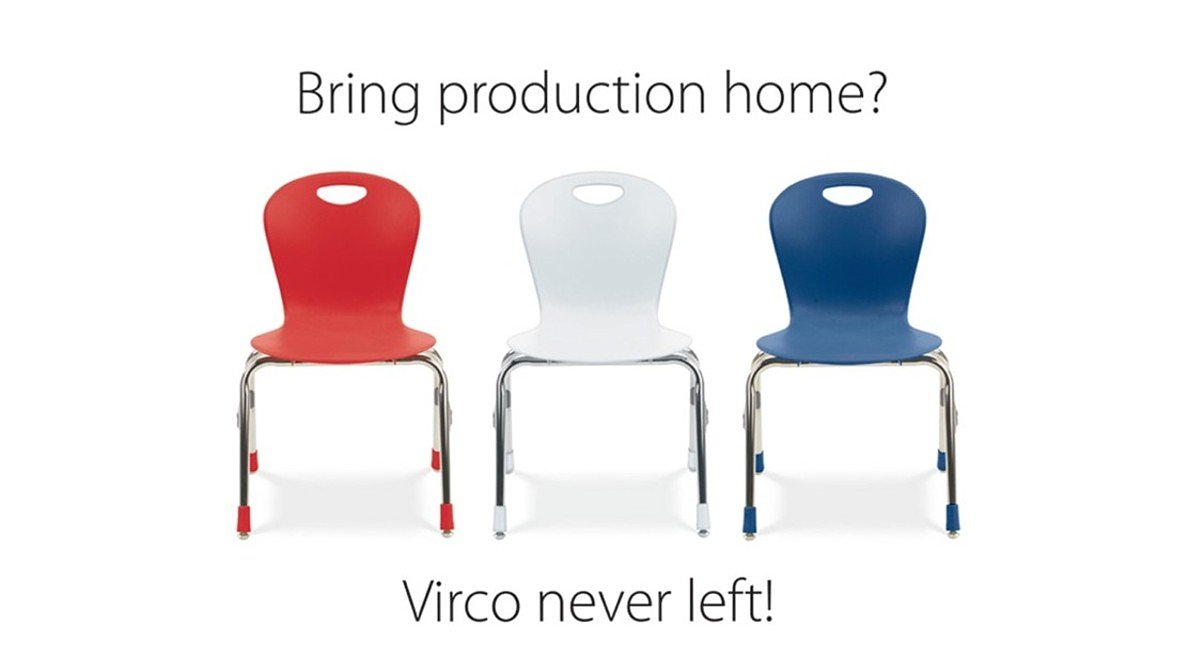
Underpinning Virco’s service-oriented pivot is its foundational commitment to domestic manufacturing. With its factories in California and Arkansas, the company operates entirely within the United States, a strategic choice that has become a significant competitive advantage in an era of volatile global supply chains. This domestic footprint largely insulates the company from the direct impact of tariffs on its margins and provides a level of supply chain resilience that is increasingly valuable.
This operational model directly supports the company’s ability to deliver on its service promises. Shorter lead times, reliable delivery schedules, and the ability to respond quickly to customer needs are all byproducts of a domestic supply chain. In his comments, Chairman and CEO Robert Virtue framed this approach as a form of “holistic sustainability” that extends beyond environmental metrics. By combining AI, robotics, and skilled human labor in its U.S. factories, Virco not only remains globally competitive but also invests in the economic and social health of its local communities. This philosophy, which links product lifecycle and raw material use with the stability of good-paying jobs, presents a compelling model for modern American industry. It’s a pragmatic vision that views healthy communities as the foundation for both environmental stewardship and economic strength.
Navigating Financial Headwinds with an Eye on the Future
Despite the headline loss, a closer look at Virco’s balance sheet reveals a company managing the present with a clear focus on the future. The decline in gross margin to 41.4% is a direct result of lower factory output and the resulting weaker absorption of fixed overhead costs—a classic challenge in a seasonal, manufacturing-heavy business during a down quarter. However, management has responded with disciplined financial stewardship. Inventories have been trimmed by 7.7% compared to the prior year, and the company’s cash position has strengthened significantly, rising to $3.7 million from just $0.9 million a year ago.
Critically, the company is continuing to return value to shareholders, declaring another quarterly dividend of $0.025 per share and repurchasing $0.2 million of its own stock. At the same time, it is funneling capital into major “platform processes” for its factories, investments designed to expand its operational capabilities and bridge product lines for both schools and other public spaces. This dual approach—maintaining shareholder returns while investing in core factory technology—demonstrates confidence in its long-term strategy. The quarterly loss, seen in this context, is not an endpoint but a waypoint in a larger journey of transformation, reflecting a realistic adaptation to a market that is, as Virtue notes, starting to look a lot like the old normal, but with higher expectations.