
- APAC pharmaceutical excipients market: Valued in the billions, projected to grow at a CAGR of over 7%
- Roquette's local manufacturing: Producing key products like PEARLITOL® mannitol in China to ensure supply chain resilience
- China's regulatory framework: New GMP requirements fully effective by end of 2025
Experts would likely conclude that Roquette's strategic focus on localized manufacturing and integrated solutions in Asia positions it as a critical partner in overcoming pharmaceutical supply chain challenges and scaling advanced therapies.
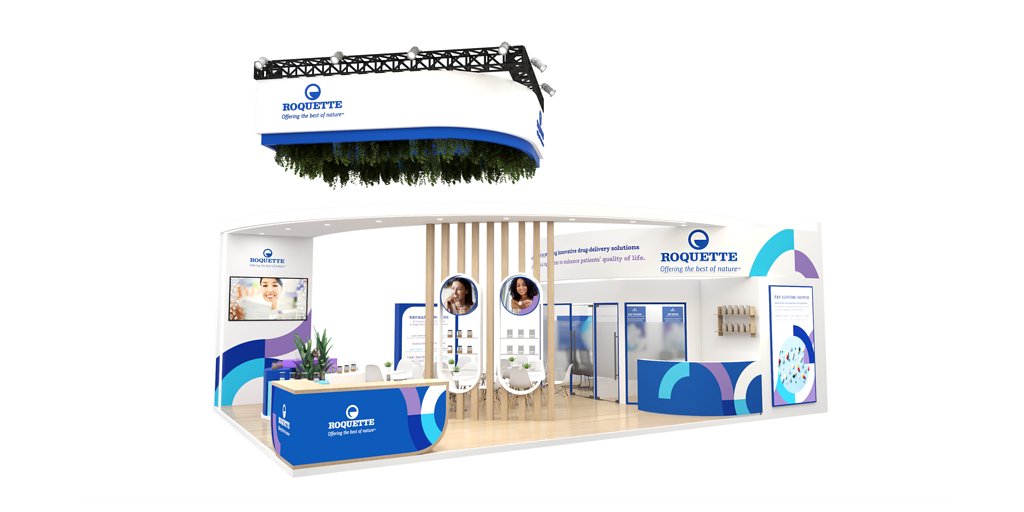
Beyond the Pill: How Roquette Is Building Pharma's Future in Asia
SHANGHAI, China – June 10, 2026
The sprawling halls of the Shanghai New International Expo Centre are once again a global crossroads for the pharmaceutical industry. At CPHI China 2026, the air hums with conversations about breakthrough molecules and next-generation therapies. Yet, beneath the surface of drug discovery, a more fundamental challenge is taking center stage: how to actually manufacture and deliver these complex medicines reliably, consistently, and at a global scale. It’s a question of systems, trust, and industrial architecture—and it’s where companies like Roquette are placing their biggest bets.
The French plant-based ingredient leader is here not merely to showcase products, but to broadcast a strategic vision. Under the banner of “One Roquette for Innovations,” the company is signaling a deep commitment to solving the pharmaceutical industry’s most pressing manufacturing bottlenecks, particularly within the booming Asian market. This isn't just about selling ingredients; it's about building the foundational infrastructure upon which the future of medicine will depend.
The High-Stakes Bet on Asian Growth
Roquette’s focus on China and the wider Asia-Pacific (APAC) region is no accident. The APAC pharmaceutical excipients market, valued in the billions and projected to grow at a compound annual growth rate of over 7%, represents one of the most dynamic economic stories in global health. This expansion is fueled by a perfect storm of factors: rising healthcare expenditures, an aging population demanding more effective treatments, and significant government investment in domestic pharmaceutical innovation.
China, in particular, is a market of immense scale and complexity. Its pharmaceutical sector is rapidly evolving from a generics-focused industry to a hub of genuine innovation. This shift has created an insatiable demand for high-quality, functional ingredients that can support the development of everything from oral solid drugs to complex biologics. As pharmaceutical companies race to meet this demand, the pressure on their supply chains is immense.
“As the pharmaceutical industry accelerates innovation, from GLP-1 therapies to complex biologics, the pressure to deliver manufacturing reliability, consistent supply, and robust formulations at scale has never been greater,” said Angela Strzelecki, Senior Vice President of the Roquette Group and CEO of its Health & Pharma Solutions Business Unit, in a statement ahead of the conference. The company, she noted, is positioning itself as a trusted partner to power this next generation of drug delivery in the region.
From Global Blueprint to Local Bedrock
For any global company, success in China hinges on navigating its unique regulatory landscape and insulating its supply chain from geopolitical volatility. Roquette’s strategy addresses this head-on through localized manufacturing. The company’s decision to produce key products like PEARLITOL® mannitol in China is a move that speaks volumes beyond simple logistics.
By manufacturing locally, the company not only shortens delivery times to regional customers but also builds critical resilience. In a world still reeling from pandemic-era supply chain disruptions, the ability to promise and deliver a consistent supply is a powerful currency. This is especially true in China, where the National Medical Products Administration (NMPA) enforces a stringent regulatory framework, including a Drug Master File (DMF) registration system and new Good Manufacturing Practice (GMP) requirements set to take full effect by the end of 2025. “Having manufacturing on the ground in China is no longer just a cost-saving measure; it's a strategic necessity for market access and supply security,” noted one industry analyst. “It demonstrates a long-term commitment and an understanding of the local ecosystem.”
This on-the-ground presence allows Roquette to work more closely with local pharmaceutical partners, embedding its expertise directly into their development processes and fostering a level of trust that is difficult to achieve from afar. By aligning its operations with China’s rigorous quality standards, the company is not just a supplier but an integral part of the regional healthcare infrastructure.
Solving the Scalability Puzzle for Modern Medicine
The promise of modern medicine—embodied by revolutionary treatments like GLP-1 agonists for diabetes and obesity, and complex monoclonal antibodies for cancer—carries a hidden challenge. These large, delicate molecules are notoriously difficult to formulate and manufacture. They require a precise and stable environment to maintain their efficacy from the factory to the patient. This is where the quiet science of pharmaceutical excipients becomes critical.
Excipients are often misunderstood as inert “fillers.” In reality, they are highly functional ingredients that act as the workhorses of drug delivery. They ensure a tablet doesn't crumble, a protein doesn't degrade, and an active ingredient is released in the body at the correct rate. For today’s most advanced therapies, the choice of excipient can make or break a drug’s commercial viability.
Roquette is tackling this challenge by showcasing a portfolio designed for these specific hurdles. Its KLEPTOSE® cyclodextrins, for instance, are used to stabilize proteins and improve the solubility of poorly soluble drug compounds. Its PEARLITOL® mannitol offers the versatility and consistency needed for a wide range of formulations, from high-dose tablets to sensitive biologics. By providing the essential scaffolding for these advanced medicines, Roquette is helping to solve the scalability puzzle, ensuring that a breakthrough discovery in the lab can become a reliable treatment for millions.
The 'One Roquette' Vision: A System for Simplicity
In an industry defined by staggering complexity, simplicity is a radical proposition. Roquette's “One Roquette” theme is a direct appeal to pharmaceutical companies drowning in supply chain intricacies. The drug development process is a long and fragmented journey, often involving dozens of suppliers for different components—excipients, active ingredients, formulation technologies, and final dosage forms like capsules.
Roquette’s integrated model aims to collapse this complexity. By offering a comprehensive portfolio that spans high-performance excipients, biopharmaceutical solutions for cell culture, and even the final hard capsules through its Qualicaps division, the company presents itself as an end-to-end partner. For a pharmaceutical project manager, this is a powerful proposition. “The complexity of our supply chain is one of our biggest risks,” explained a senior R&D leader at a multinational pharmaceutical firm. “An integrated partner who can de-risk that process from formulation to final dosage is immensely valuable.”
This holistic approach streamlines procurement, simplifies regulatory filings, and, most importantly, accelerates the timeline from lab to market. It represents a shift from a transactional supplier relationship to a deep, strategic partnership. By building a system that manages complexity on behalf of its clients, Roquette is allowing drug developers to focus on their core mission: science and innovation.
As CPHI China continues, the discussions will undoubtedly be dominated by the promise of new cures. But the quiet, foundational work of companies like Roquette provides a crucial reminder that the promise of a therapy is only as strong as the system built to deliver it. The true test of public trust in modern medicine lies not only in the brilliance of a discovery but in the unwavering reliability of its arrival.