
- 77% slowing in functional decline and 76% reduction in cognitive decline in OVERTURE trial participants using Spectris™ compared to sham control.
- 69% reduction in whole-brain atrophy observed in MRI scans of treated patients.
- $423 million raised in total funding, including a $196 million Series C round in March 2025.
Experts view Cognito’s Spectris™ device as a promising, non-invasive approach to Alzheimer’s treatment, with compelling biomarker and clinical data suggesting it may slow disease progression through neuroprotective mechanisms.
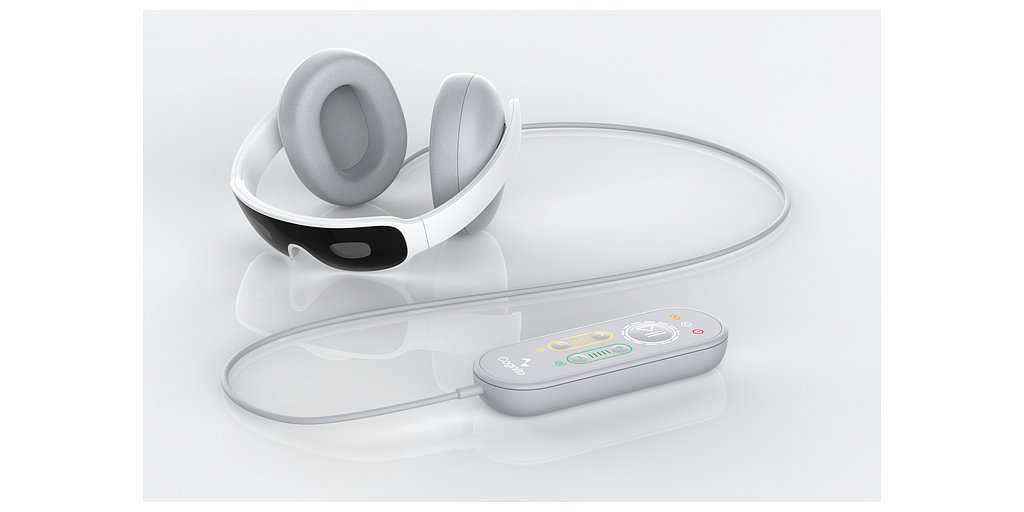
Beyond the Pill: Cognito’s Device Targets Alzheimer’s Biology at Home
CAMBRIDGE, Mass. – December 03, 2025
A Cambridge-based medical device company is making waves in the Alzheimer's treatment landscape, not with a new pill, but with light and sound. Cognito Therapeutics this week presented compelling new biomarker data at the Clinical Trials on Alzheimer’s Disease (CTAD) conference, suggesting its non-invasive Spectris™ therapy can influence the fundamental biology of the disease. The findings provide a deeper scientific rationale for previously reported clinical benefits, positioning the at-home device as a potential disruptor in a market grappling with the complexities of neurodegeneration.
Decoding the Biomarkers: A Glimpse into Brain Resilience
The late-breaker presentations in San Diego offered a look under the hood of Spectris™'s mechanism. The data, drawn from the company's FLICKER and OVERTURE trials, moves beyond clinical outcomes to the molecular and electrical signatures of Alzheimer's itself.
A key finding came from a cerebrospinal fluid (CSF) analysis of patients using Spectris™. The therapy prompted a statistically significant increase (p<0.01) in Neuritin-1, a neurotrophic factor critical for synaptic plasticity—the brain's ability to remodel and strengthen connections. This isn't just an arbitrary protein; research has increasingly identified Neuritin-1 as a cornerstone of cognitive resilience. Its abundance is lower in Alzheimer's patients and correlates with cognitive decline, while higher levels are found in individuals who maintain cognition despite having Alzheimer's pathology. By elevating this key protein, Spectris™ appears to be directly engaging in the maintenance and repair of the brain's essential wiring.
Further analysis revealed coordinated changes in a suite of other proteins (all p<0.01) involved in immune regulation, oxidative stress, and extracellular matrix remodeling. This suggests the device may trigger a multi-pronged neuroprotective response rather than targeting a single pathway, a holistic approach that stands in contrast to many single-target pharmaceuticals.
A second presentation focused on the brain's electrical activity. Using resting-state electroencephalography (EEG) from the OVERTURE trial, Cognito showed that six months of treatment with Spectris™ reduced the progression of EEG patterns characteristic of Alzheimer's, such as the theta/alpha ratio. This electrical "slowing" of the brain is a well-documented marker of disease advancement. The data suggests that the therapy may help preserve healthier brain rhythm dynamics, complementing earlier findings of preserved brain volume and function in treated patients.
From Lab Bench to Living Room: The Science of Spectris™
The technology behind these biological shifts is deceptively simple in its application: a headset delivering synchronized 40Hz light and sound stimuli. The patient wears the device for an hour a day in the comfort of their own home. This sensory input is designed to evoke gamma frequency brain activity, a natural rhythm associated with higher-order cognitive functions that becomes disrupted in Alzheimer's disease.
The approach, pioneered in research from MIT, is grounded in the idea that restoring these gamma oscillations can trigger a cascade of beneficial downstream effects. Preclinical studies have shown that 40Hz stimulation can mobilize microglia, the brain's immune cells, to clear amyloid plaques and tau tangles—the hallmark pathologies of Alzheimer's. It has also been linked to improved function of the glymphatic system, the brain's waste-clearance network.
By using physics to modulate brain activity, Cognito is pursuing a fundamentally different therapeutic class. It sidesteps the systemic exposure and potential off-target effects of pharmacological agents, offering a targeted, non-invasive intervention. This "physics-as-medicine" strategy represents a significant paradigm shift, one that could open new frontiers for treating a range of central nervous system disorders.
“The data presented at CTAD strengthen the biological foundation behind Spectris™ and show that a non-invasive, at-home therapy can engage pathways central to brain resilience and health,” said Christian Howell, CEO, Cognito Therapeutics, in a statement. “The increase in Neuritin-1 and coordinated shifts in proteins related to synaptic stability and neuroprotection give us growing confidence that Spectris™ may be influencing mechanisms relevant to slowing the progression of Alzheimer’s.”
Building the Clinical and Commercial Case
These new biomarker findings add crucial context to the impressive clinical results Cognito has already reported. Data from its 76-participant OVERTURE study showed that after six months, patients using Spectris™ experienced a 77% slowing in functional decline and a 76% reduction in cognitive decline compared to a sham control group. Perhaps most strikingly, MRI scans revealed a 69% reduction in whole-brain atrophy, suggesting the therapy helps preserve the brain's physical structure.
The company is now deep into its pivotal HOPE trial, a large-scale, 670-participant study designed to provide the definitive evidence required for regulatory approval. The study, which received FDA Breakthrough Device Designation to expedite its review, completed enrollment in July 2025. Its results, expected in mid-to-late 2026, are among the most anticipated events in the medical device sector.
This clear clinical and regulatory pathway is backed by substantial capital. Cognito has raised a total of $423 million, including a recent $196 million Series C round in March 2025. This war chest gives the company a solid runway to complete the HOPE trial and build out the commercial infrastructure needed to launch Spectris™, should it gain FDA approval.
Navigating a Crowded and Complex Market
Spectris™ is poised to enter a dynamic but challenging Alzheimer's market. The landscape is currently dominated by the recent approvals of anti-amyloid antibody therapies like Lecanemab and Donanemab. While these drugs represent the first true disease-modifying treatments, their rollout has been complicated by the need for regular intravenous infusions, high costs, and the risk of serious side effects like amyloid-related imaging abnormalities (ARIA), which requires careful monitoring.
This is where Cognito's value proposition becomes sharpest. Spectris™ offers the potential for disease modification with a vastly different profile: at-home administration, high adherence rates (over 80% in trials), and a strong safety record with no observed ARIA risk to date. For patients, caregivers, and healthcare systems, this combination of efficacy, safety, and accessibility could be transformative, reducing the immense burden of care associated with current advanced therapies.
While other non-invasive brain stimulation technologies like transcranial magnetic stimulation (rTMS) are also being explored for Alzheimer's, they typically require frequent clinic visits. Spectris™'s at-home model and unique gamma-stimulation mechanism give it a distinct edge. The convergence of compelling biological data, strong clinical outcomes, and a patient-centric delivery model places Cognito Therapeutics in a powerful strategic position. The next 18 months will be critical as the world watches for the results of the HOPE trial, which could validate this novel approach and usher in a new era of accessible, at-home care for millions living with Alzheimer's disease.