
- 1.1 million kilometers: Distance traveled by Colonel Hansen during his Artemis II mission.
- 12,000 jobs: Number of high-quality positions supported by Canada's space sector.
- 85,000 young Canadians: Reached by CSA's STEM initiatives in the past year.
Experts would likely conclude that this event is a strategic convergence of public engagement, institutional branding, and national workforce development, leveraging Hansen's historic mission to inspire the next generation of Canadian space professionals.
Beyond the Orbit: The Strategy Behind Hansen's Homecoming Tour
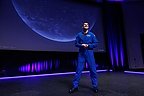
TORONTO, ON – June 05, 2026 – On its surface, the announcement is a straightforward piece of good news: the Ontario Science Centre, in partnership with the Canadian Space Agency (CSA), will host a free evening with Colonel Jeremy Hansen, the first Canadian to orbit the Moon. The event, held at Toronto's Elgin Theatre on June 11, promises a Q&A with a national hero, offering firsthand accounts of his historic Artemis II mission. It is, by all measures, a public relations coup and a feel-good story.
But to view this event as merely a celebratory homecoming is to miss the deeper strategic currents at play. For both the Ontario Science Centre—an institution navigating a profound and public transition—and for Canada's burgeoning space ambitions, this single evening represents a critical convergence of public engagement, institutional strategy, and national industrial policy. It’s a masterclass in leveraging a moment of immense national pride to address complex, long-term objectives.
A Lunar Leap and a Hero's Return
Colonel Hansen's achievement cannot be overstated. His nearly 10-day mission aboard NASA's Orion spacecraft in April 2026 was not just a personal milestone but a pivotal moment for Canada's role in global space exploration. As a mission specialist on Artemis II, Hansen became the first non-American to venture beyond low Earth orbit, traveling over 1.1 million kilometers and cementing Canada's status as a key partner in humanity's return to the Moon. The mission successfully tested the Orion spacecraft’s critical systems, paving the way for future lunar landings.
The public fascination is palpable. An event offering direct access to an astronaut who has seen the Earth from deep space is an easy sell. The quotes from organizers reflect this sentiment. "We are honoured to present this special event with Colonel Hansen, who continues to inspire millions across the globe," said Paul Kortenaar, CEO of the Ontario Science Centre. Stan Cho, Minister of Tourism, Culture and Gaming, echoed this, stating, "Jeremy Hansen's historic mission sparked Canadian pride across the nation, and hearing firsthand from him will help ignite the next generation of explorers."
These statements, while accurate, point to the foundational layer of the strategy: inspiration. The Artemis program isn't just about planting flags; it's about building a sustainable presence in space, and that requires a continuous pipeline of talent. Hansen's tour is the human face of that recruitment drive.
The Science Centre's Strategic Orbit
For the Ontario Science Centre, the timing and nature of this event are particularly strategic. The institution is in a state of significant flux. Its original, iconic building on Don Mills Road was abruptly closed in June 2024 due to structural concerns, a move that sparked considerable public debate. The Centre now operates from interim locations, including the KidSpark space at Harbourfront Centre, while awaiting the construction of its new, smaller home at Ontario Place, slated to open as early as 2029.
In this context, the Hansen event is far more than a simple programming choice. It is a powerful demonstration of continued relevance and a reaffirmation of its core mission. By securing a high-profile national hero for a free, accessible event, the Science Centre asserts its value to the public at a time when its physical identity is in question. It’s a move to bridge the gap between its past and future, reminding stakeholders and the public that its purpose—to spark curiosity and make science accessible—transcends any single building. The fact that the event will be recorded and shared on YouTube further extends its reach, transforming a local event into a national digital asset.
This is a classic case of an organization adapting to disruption. While its physical infrastructure is being rebuilt, the Science Centre is leveraging partnerships and high-impact content to maintain its brand and fulfill its mandate. It’s a soft-power play that builds goodwill and keeps the institution at the center of the public conversation about science and innovation.
Fueling Canada's Space-Age Economy
Zooming out from the institutional level reveals the event's alignment with Canada's broader national strategy. Hansen's seat on Artemis II was not a gift; it was earned through tangible technological contributions. Canada's commitment to building the Canadarm3 for the Lunar Gateway—a small space station that will orbit the Moon—is the cornerstone of its partnership with NASA. This multi-billion dollar investment in advanced robotics secured two astronaut flights, positioning Canada as an indispensable partner in the next era of space exploration.
This model—trading technological expertise for a seat at the table—is the foundation of Canada's modern space policy. However, building advanced robotics and communication systems requires a highly skilled workforce. Canada's space sector already supports over 12,000 high-quality jobs, yet industry reports indicate that a majority of Canadian space companies struggle to hire qualified personnel. The pipeline is leaking.
This is where inspiration becomes industrial policy. Events like "To the Moon and Back" are a direct investment in future human capital. By putting a real-life astronaut in front of children and families, the CSA and its partners are actively cultivating the next generation of engineers, scientists, and technicians needed to build the next Canadarm and fulfill the country's ambitious space goals. The CSA’s own data shows it reached over 85,000 young Canadians with STEM initiatives last year, a number this high-profile tour will surely bolster. This single evening in Toronto is a microcosm of that larger mission: leveraging a historic achievement to build the foundation for Canada's next leap.