
- 85% of new energy capacity added last year was from renewable sources
- Battery costs plummeted to a record low of $70/kWh
- LSH-6 hybrid storage inverter offers 97.6% peak efficiency and <4ms switchover time
Experts would likely conclude that the shift toward distributed, intelligent energy systems is accelerating due to technological advancements, economic viability, and increasing grid pressures, marking a pivotal transition from centralized to decentralized energy resilience.
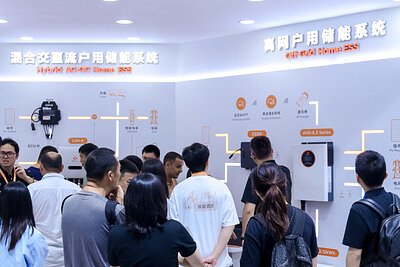
Beyond the Grid: A New Blueprint for Energy Resilience Emerges
SHANGHAI, China – June 03, 2026 – The sprawling halls of the SNEC solar conference this week were abuzz with the usual talk of gigawatts and efficiency gains. But beneath the surface of industry metrics, a more profound transformation is taking shape. It’s a quiet revolution, moving from centralized power plants to a distributed network of intelligent energy hubs located in our homes, businesses, and even the most remote corners of the globe. A case in point is the latest suite of solutions from APsystems, a company whose recent announcements offer a clear blueprint for this emerging era of energy independence and resilience.
While the launch of seven new product lines might seem like standard corporate fare, it represents a direct response to the systemic pressures on our aging energy infrastructure. With global electricity demand rising, driven by everything from data centers to electric vehicles, and the grid increasingly strained by climate-induced weather events, the paradigm of a one-way flow of power is becoming untenable. APsystems, and the industry it represents, is betting on a future where power generation and management are as local as the rooftop above your head.
The New Arsenal for Energy Independence
At the heart of this shift is a new generation of hardware designed not just to generate power, but to intelligently manage, store, and deploy it. APsystems, recently ranked the world's most bankable inverter manufacturer by Sinovoltaics for its financial stability, unveiled a range of products that address nearly every facet of this new ecosystem.
For the modern home, the flagship LSH-6 hybrid storage inverter stands out. It’s an all-in-one unit that seamlessly integrates solar generation, battery storage, and smart energy management. The specifications are impressive—a 6000VA output and 97.6% peak efficiency mean less wasted energy. But the real story lies in its design for human-centric resilience. Its fan-less cooling system keeps operational noise below 30dB, making it an unobtrusive addition to a home environment. More critically, its UPS-grade switchover of less than four milliseconds ensures that when the grid fails, the lights, home office, and refrigerators stay on without a flicker. This is no longer a niche luxury but a foundational requirement for life in an age of grid instability.
The system's design also prioritizes safety and future-proofing. It’s compatible with safer, low-voltage 48V batteries and can handle up to 12kW of solar input, allowing homeowners to oversize their solar arrays to maximize energy capture even on cloudy days. This technical prowess is packaged in a unit 20% more compact than its peers, simplifying installation—a key factor in accelerating adoption.
From Passive Consumer to Active Producer
Perhaps the most transformative feature of the LSH-6 inverter is its readiness for Virtual Power Plants (VPPs). This capability signals a fundamental change in our relationship with energy, shifting homeowners from passive consumers into active, and potentially compensated, participants in the grid. A VPP aggregates thousands of distributed resources like home batteries into a single, coordinated entity that can provide critical services to the grid.
As the Distributed Energy Resources (DER) market matures, moving from isolated hardware pilots to sophisticated, software-driven platforms, the economic case for homeowners becomes compelling. A VPP-ready system can be instructed by a grid operator or utility to store energy when it’s cheap and plentiful—like midday on a sunny day—and sell it back to the grid during peak demand hours when prices are high. This not only helps stabilize the grid and integrate more renewables but also creates a new revenue stream for the system owner. The built-in AI model further optimizes these charge-and-discharge strategies to maximize a household's self-consumption first, ensuring the owner's needs are met before exporting power for profit. It’s a powerful intersection of innovation and economics, turning a home energy system into a dynamic financial asset.
Bridging the Global Energy Divide
While smart homes in developed nations grab headlines, the greater challenge—and opportunity—lies in powering the billions who live with unreliable or nonexistent grid access. APsystems’ expanded portfolio of off-grid solutions directly confronts this energy divide with a focus on flexibility and durability.
The AHS Series Solar Battery Hybrid Controller is a workhorse for rural households or remote communication base stations. Built on an advanced Silicon Carbide (SiC) platform for higher efficiency, it intelligently manages power from solar panels, batteries, and the grid, if available. Crucially, it supports battery-free operation, a game-changer in areas where the upfront cost or logistical challenge of maintaining batteries is a major barrier to electrification. It can also work with a wide range of lead-acid and lithium batteries at various voltages, giving installers the flexibility to use locally available and cost-effective components.
For more integrated needs, the stackable AHS-6.3H unit combines an inverter with a long-lasting 5.12kWh LiFePO₄ battery. Its C4 corrosion resistance rating makes it suitable for harsh coastal and industrial environments, while its modular design allows capacity to be scaled as a community’s or business's needs grow. For smaller, more mobile applications like remote cabins or field work, the portable EZOG D Series offers a rugged, all-weather power source with an IP66 rating, ensuring reliability in dust, rain, and extreme temperatures. These products are not just about convenience; they are critical infrastructure, enabling access to education, healthcare, and economic opportunity where it was previously impossible.
A Systemic Shift in a Sea of Change
The innovations showcased by APsystems at SNEC 2026 are not happening in a vacuum. They are a microcosm of a tectonic shift across the global energy landscape. With renewable sources accounting for over 85% of new energy capacity added last year and battery costs plummeting to a record low of $70/kWh, the economics of energy have been fundamentally rewritten. The old, centralized model is giving way to a more distributed, resilient, and intelligent system.
This transition is being accelerated by the immense pressure new technologies are placing on the grid. The global proliferation of electric vehicles and the exponential growth of energy-hungry data centers are creating demand spikes that traditional power plants struggle to meet. Onsite solar and storage are no longer just a green alternative but a pragmatic necessity for ensuring stable, cost-effective power for these critical loads. APsystems' focus on a complete ecosystem of solutions, from residential to commercial to off-grid, demonstrates a deep understanding of this new reality. By providing the tools for decentralized power generation and management, the company is helping build a more robust and equitable energy future, one intelligent system at a time.