
- $55.2% market share: Hisense dominates the global ultra-large TV segment (100+ inches) in Q1 2026.
- First to market: Launched the first consumer RGB MiniLED TV in 2025.
- Billion-dollar investment: FIFA World Cup sponsorship for massive brand visibility.
Experts would likely conclude that Hisense's aggressive, multi-layered strategy—combining high-profile sponsorships with technological innovation and smart ecosystem expansion—positions it as a serious contender in the global tech race.
Beyond the Goal Line: Hisense's Pitch for Global Tech Dominance
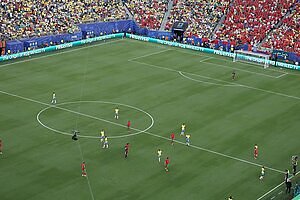
QINGDAO, China – June 22, 2026 – As billions of eyes follow the action on the pitch during the FIFA World Cup 2026™, the periphery is alive with a different kind of competition. Flashing across the pitch-side LED boards, a simple message appears between plays: “Hisense, Innovating a Brighter Life.” It’s a message beamed into stadiums and living rooms, a seemingly straightforward piece of advertising from the Chinese electronics giant.
But to dismiss this as just another sponsorship is to miss the plot. This is not merely an advertising campaign; it is the public face of a deeply ambitious, multi-layered strategy to move beyond the company’s manufacturing roots and cement its position as a global technology powerhouse. The press release details the products, from next-generation televisions to smart refrigerators. Yet, the real story lies in how Hisense is leveraging the world’s most-watched sporting event to execute a complex playbook for market domination, one that intertwines massive brand visibility with a sophisticated push into the connected home and a credible claim to technological leadership.
The Billion-Dollar Billboard
Sponsoring the FIFA World Cup is one of the most expensive marketing moves a brand can make, an investment that demands a return far greater than a temporary sales bump. For Hisense, this is a calculated play for global mindshare. In a world saturated with digital advertising, the shared, live experience of a World Cup match offers an unparalleled platform for building brand recognition and trust on a global scale.
This strategy aligns with a broader trend observed among leading Chinese technology firms: prioritizing long-term market share and brand visibility, sometimes even over short-term profitability. The goal is not just to be a participant in the global market but to become an indispensable, household name. By associating itself with a globally beloved event, Hisense aims to embed its brand in the cultural consciousness, building an aura of quality and permanence.
This isn't a new tactic for the company, which has a history of major sports partnerships. However, the scale of the World Cup provides a unique opportunity. The pitch-side messages, like “The Origin of RGB MiniLED TV,” are not just slogans; they are strategic declarations of intent, broadcast to a captive audience of billions. It’s a brute-force method of building a brand, but an undeniably effective one.
A Conquest Beyond the Screen
The most revealing part of Hisense's World Cup messaging isn't about the TVs—it's about everything else. While the flagship UXS RGB MiniLED TV is the star, the supporting cast includes the “PureFlat Smart Series Refrigerator” and the “Air Master Air Conditioner.” This is where the true scope of the company's ambition becomes clear. Hisense isn't just selling screens; it's selling an ecosystem.
The concept of the 'smart living ecosystem' is the current holy grail for tech companies. The vision is a seamlessly integrated home where your television, refrigerator, air conditioner, and other devices communicate and work in concert, managed by a central AI. It’s a fiercely competitive space, dominated by giants like Samsung with its SmartThings platform, LG with ThinQ, and the overarching influence of Google and Amazon.
Hisense is making a bold entry into this arena. By showcasing its smart appliances alongside its televisions, the company is signaling that its vision extends to the entire home. The smart refrigerator, with its large display and connectivity features, is positioned as a potential hub for the kitchen, just as the TV is the hub for the living room. The strategy is to leverage its established strength in the display market as a Trojan horse to introduce its broader portfolio of connected devices into consumers’ homes. It's a move from being a product manufacturer to a platform provider, a far more lucrative and powerful position in the modern economy.
The Arsenal of Innovation
Of course, grand ambitions must be built on a solid foundation. A brand can’t simply buy its way to the top without credible products. This is where Hisense’s claims of technological leadership come into play. The company’s assertion of being “The Origin of RGB MiniLED” is a direct challenge to its competitors.
Research validates that Hisense has indeed been a pioneer in this specific area, introducing the first consumer RGB MiniLED TV in 2025. Unlike traditional MiniLED backlights that use white LEDs, the RGB version uses individual red, green, and blue LEDs. This allows for a purer color spectrum and higher brightness levels—a tangible benefit for viewers, especially for watching the vibrant green pitches and colorful jerseys of a World Cup match.
This technological push is supported by a strong market position. Independent data from Omdia confirms Hisense’s dominance in the ultra-large screen segment, holding a commanding 55.2% global market share for TVs 100 inches and larger in the first quarter of 2026. Similarly, it has held a multi-year leadership position in the Laser TV market. These are not just marketing claims; they are verifiable market realities that lend weight to the brand's broader narrative. By focusing its innovation on the premium, large-screen experience—the very format best suited for major sporting events—Hisense creates a powerful, self-reinforcing loop between its products and its marketing.
The flashing LEDs at the World Cup are, therefore, more than just advertisements. They are the visible manifestation of a meticulously crafted corporate strategy: use a massive global stage to build an unassailable brand, leverage that brand to push a comprehensive smart home ecosystem, and underpin the entire effort with demonstrable leadership in key technologies. It is a bold, aggressive, and incredibly expensive gambit, but it’s how empires in the technology sector are built in the 21st century.