
- $59 billion: Total damages from Hurricane Helene across North Carolina.
- $600 million: Economic loss in Buncombe County alone in late 2024.
- 20-30%: Revenue drops for small businesses in Western NC well into 2025.
Experts would likely conclude that 'Open // Air' and the PAVE program represent a innovative model for leveraging digital infrastructure to drive economic recovery and cultural preservation in disaster-affected regions.
Beyond the Gallery: How Digital Infrastructure is Rebuilding a Local Economy
ASHEVILLE, NC – June 03, 2026 – In the world of energy and finance, we often talk about building resilient, decentralized systems to withstand shocks and secure future prosperity. Today, a compelling model for this very principle is emerging not from a power plant or a trading floor, but from the art-drenched mountains of Western North Carolina. ArtsvilleUSA, a local nonprofit, has launched 'Open // Air,' a virtual exhibition that does more than showcase regional art; it provides a sophisticated blueprint for leveraging digital infrastructure to drive economic recovery and cultural preservation in an era of profound disruption.
The context for this initiative is critical. The "post-Helene era" is a phrase that carries immense weight in this region. Hurricane Helene, which struck in September 2024, was not merely a weather event; it was an economic cataclysm. The storm inflicted over $59 billion in damages across North Carolina and resulted in a devastating loss of life. For Western North Carolina's tourism-dependent economy, the impact was catastrophic, with Buncombe County alone facing a $600 million hit in the final quarter of 2024. Well into 2025, small businesses reported revenue drops of 20-30%, a lingering wound from the disaster. It is against this backdrop of fragility and recovery that 'Open // Air' must be understood—not as a simple art show, but as a strategic deployment of cultural assets to rebuild a regional powerhouse.
The PAVE Program: A New Grid for Cultural Assets
At the core of this initiative is ArtsvilleUSA's inaugural PAVE (Partner Archival Virtual Exhibition) program. On the surface, it's a platform for creating enduring digital versions of live shows. But looking deeper, PAVE represents a fundamental shift in how cultural assets are managed, distributed, and preserved. It is, in essence, a decentralized grid for art.
Traditionally, the reach of a physical exhibition is constrained by geography, time, and physical access. Artworks, especially large-scale outdoor sculptures like those featured in 'Open // Air,' are often seen only by those who can travel to them. PAVE dismantles these limitations. By creating a permanent, high-fidelity digital archive, the program ensures that the works of artists like Melissa Borrell, Robert Burch, and Dale McEntire are not just seen, but are accessible indefinitely to a global audience. This is more than exposure; it's a form of asset security. The digital archive protects the legacy of these works against the ephemerality of physical installations and the risks of time.
This digital infrastructure offers tangible benefits that mirror those of decentralized energy systems. For the artists, it provides unprecedented reach, creating new avenues for recognition and sales far beyond the WNC region. For the public, it democratizes access, allowing anyone with an internet connection to explore the creative spirit of the mountains. “This initiative ensures art shows remain accessible and impactful long after their physical run ends,” a statement from the organization notes, highlighting the goal of creating a new form of longevity and value for cultural producers. This approach transforms a temporary exhibition into a permanent, accessible asset class.
Art as Economic Engine: Fueling Recovery Tourism
While the PAVE program builds digital resilience, the 'Open // Air' exhibition is also designed to have a direct, tangible impact on the ground. The project is a deliberate strategy to stimulate what is being called "recovery tourism." The economic data from the post-Helene period is stark, with lodging and vacation rental revenues plummeting. Restoring visitor confidence and spending is paramount for the region's survival.
ArtsvilleUSA’s plan is two-pronged. First, the virtual gallery acts as a powerful marketing tool, showcasing the beauty and resilience of WNC to a world that may still associate the region with disaster footage. It sends a clear message: the mountains are open, and their cultural heart is beating stronger than ever. Second, and more directly, the organization will release a travelogue on June 10. This guide will map the physical locations of the featured artworks, creating a curated trail for cultural tourists.
This isn't just a map; it's an economic stimulus package disguised as a travel guide. It encourages visitors to move beyond the urban hub of Asheville and explore the wider 25-county region, directing tourist dollars to rural communities in downtown Waynesville, Burnsville Town Square, and other highlighted sites. By leading visitors to installations at the NC Arboretum or the Anvil Arts Sculpture Garden, the initiative creates a distributed network of economic activity. This strategy leverages the region’s unique cultural identity—its deep roots in craft and contemporary making—as the primary engine for rebuilding a more diversified and resilient tourism economy.
The Arterial Model: Strategic Investment in Storytelling
This sophisticated interplay of technology and economic strategy is no accident. ArtsvilleUSA is owned and operated by Arterial, Inc., a Los Angeles-based 501(c)(3) nonprofit with a clear, strategic mission: to fund and sponsor arts-related mass media storytelling projects. Arterial’s involvement elevates the 'Open // Air' project from a local endeavor to a case study in a broader, national strategy.
Arterial functions like a venture capital fund for the arts, identifying and backing projects that can amplify artistic voices through scalable media platforms. Its portfolio includes grants for documentaries, support for Emmy-winning PBS shows, and even syndicating arts content to incarcerated populations. By acquiring and operating ArtsvilleUSA, Arterial is investing in a platform dedicated to telling the story of an entire creative region.
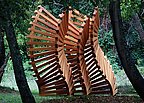
The 'Open // Air' exhibition, with its PAVE digital backbone, is a perfect embodiment of Arterial's mission. It uses technology not just to display art, but to weave a larger narrative about place, resilience, and creativity. This model, where a national nonprofit provides the strategic framework and funding for a hyper-local platform, demonstrates a powerful way to channel resources effectively. It ensures that the stories of artists like Robert Winkler, whose "Look Homeward Angles" combines Western red cedar and steel, or Julie Guy, whose "Quilt Garden" is literally woven from living plants, reach an audience far beyond their physical location. This is not just patronage; it is a calculated investment in the power of cultural capital to effect real-world change.