
- Detection Range: AI-powered thermal cameras can detect fire hazards from over 15 kilometers away.
- Monitoring Capacity: Systems patrol 1,000 square kilometers (140,000 football fields) in 15 minutes.
- Temperature Resilience: Cameras operate in ambient temperatures up to 220°C and measure surfaces up to 2000°C.
Experts would likely conclude that AI-powered thermal vision represents a transformative leap in fire prevention, offering unparalleled early detection capabilities that could significantly reduce fire-related risks and costs.
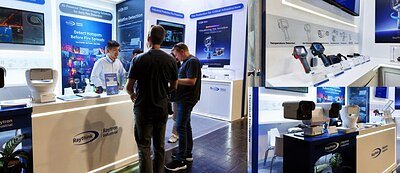
Beyond the Flame: How AI-Powered Thermal Vision Is Redefining Fire Safety
HANNOVER, Germany – June 02, 2026 – In a world grappling with escalating fire risks, from sprawling urban centers to parched wildlands, the paradigm of fire safety is undergoing a radical transformation. The focus is shifting from the heroic, often desperate, act of fighting flames to the quiet, intelligent work of preventing them entirely. At the heart of this evolution is a new generation of technology that sees the invisible, and this week at INTERSCHUTZ Hannover 2026, the industry is taking notice.
Here, amidst the world's leading emergency response fair, Raythink Technology is presenting a compelling vision of the future under the banner "Detect Hotspots Before Fire Spreads." It’s more than a slogan; it’s a mission statement for a technology that combines thermal imaging with artificial intelligence to identify the ghost of a fire—its heat signature—long before smoke or flames ever appear. This isn't just an incremental upgrade; it represents a fundamental change in how we protect our industries, infrastructure, and ecosystems.
The Sentinel's Eye: AI Meets Thermal Imaging
For decades, fire detection has relied on the byproducts of combustion: smoke particles or intense heat. Thermal imaging operates on a different principle entirely. It visualizes the infrared radiation that all objects emit, creating a thermal map of the environment. A potential fire, whether a smoldering ember in a forest or an overheating battery cell in a warehouse, reveals itself as a nascent hotspot, a digital anomaly that AI can flag for immediate attention.
Raythink's showcase highlights a suite of tools designed to weaponize this principle. Its PC5 series multi-spectrum cameras, for instance, are engineered for the vast, challenging terrain of wildlands. Combining thermal and visible light imaging, these systems can detect smoke and potential fire sources from over 15 kilometers away. The system's AI is so refined, the company claims, that its algorithms can identify a fire hazard from a thermal signature as small as 1.5 pixels on the sensor, offering an unprecedented level of early warning.
For industrial environments, where conditions can be extreme, the TN460U-XT series cameras offer a different kind of resilience. Capable of operating in ambient temperatures up to 220°C and measuring surface temperatures soaring to 2000°C, these devices can monitor everything from foundry equipment to chemical processes, spotting dangerous thermal deviations in real-time. Tying this hardware together is the VIS Patrol platform, a software brain that provides continuous temperature monitoring and sophisticated fire risk analysis. While competitors like FLIR and Hikvision are also pushing the boundaries of thermal prevention, Raythink's emphasis on long-range, multi-spectrum AI analysis carves out a powerful niche in large-scale and high-temperature applications.
From Digital Embers to Real-World Defense
The true measure of this technology lies not in its specifications, but in its impact on the ground. Raythink's systems are already deployed across dozens of forest protection projects, providing 24/7 automated patrols over 1,000 square kilometers—an area equivalent to 140,000 football fields. In one project near Wenzhou, China, a network of high-resolution PTZ cameras scans rugged mountain terrain, detecting potential fires up to 12 kilometers out and feeding data into a central command hub. This digital forestry service can complete a patrol of a vast area in just 15 minutes, a task that would take human rangers days, drastically reducing both cost and risk.
This proactive defense extends into the heart of modern industry. The applications are diverse, ranging from monitoring warehouses for overheating electrical cabinets to detecting gas leaks that are invisible to the naked eye. Perhaps most critically, the technology is being aimed at one of the most pressing safety challenges of the energy transition: the thermal management of EV lithium-ion batteries. Thermal runaway in battery packs can lead to explosive, difficult-to-extinguish fires. As detailed in a white paper released by the company earlier this year, its thermal systems provide the constant, non-contact monitoring needed to catch the subtle temperature increases that precede catastrophic failure, offering a vital safeguard for manufacturing, storage, and charging facilities.
The Economics of Early Warning
The theme of INTERSCHUTZ 2026, "Safeguarding Tomorrow," is not just an ethical imperative but also an economic one. The cost of a single major industrial fire or a devastating wildfire can run into the billions, dwarfing the investment required for preventative technologies. This stark financial reality is driving a market shift, as businesses and governments recognize that paying for prevention is far more sustainable than paying for recovery.
Insurance companies are increasingly incentivizing the adoption of advanced monitoring systems, and tightening regulatory frameworks, influenced by bodies like the National Fire Protection Association (NFPA), are making robust prevention a matter of compliance. Raythink’s presence at a major trade fair like INTERSCHUTZ is a clear strategic maneuver to capitalize on this growing demand. The company is not just selling cameras; it is selling risk mitigation, business continuity, and a quantifiable return on investment. For facility managers, public safety officials, and corporate CFOs, the question is evolving from "Can we afford this technology?" to "Can we afford to be without it?"
A Planet on Fire: The Climate Change Catalyst
Underpinning this entire technological and economic shift is the unavoidable reality of climate change. A warming planet is creating hotter, drier conditions that lengthen fire seasons and increase the frequency and intensity of wildfires, a trend confirmed by a recent UN report projecting a global surge in extreme fires. The blazes that have ravaged Australia, California, and the Mediterranean in recent years are not anomalies but a preview of the new normal.
In this context, technologies like AI-powered thermal imaging become more than just an industrial tool; they become an essential instrument of climate adaptation. The ability to automatically scan vast, remote landscapes and pinpoint a threat before it erupts is a critical force multiplier for under-resourced firefighting agencies. By enabling a faster, more targeted, and safer response, these systems help preserve not only ecosystems and property but also the lives of the first responders who stand on the front lines. As we navigate the complex challenges of the 21st century, the ability to see danger before it materializes may be our most powerful defense.