
- $100 billion: Projected global edge AI market size within the next decade
- 30%: Forecasted compound annual growth rate for edge AI
- 275 TOPS: Performance of the X6a-AGX model, enabling real-time processing at the edge
Experts agree that the shift to edge AI represents a critical evolution in infrastructure, enabling real-time, reliable AI applications in diverse environments, though it demands rigorous trust and reliability standards.
Beyond the Data Center: The Rugged AI Building Our Future Infrastructure
TAIPEI, Taiwan – June 02, 2026 – For the past decade, the story of artificial intelligence has been a story of the cloud. Vast, centralized data centers crunched massive datasets, learning to identify images, translate languages, and power the apps on our phones. But a quiet and profound shift is underway. AI is moving out of these digital fortresses and into the physical world: onto factory floors, into our vehicles, and atop traffic poles. This migration, known as “edge computing,” is not just a technical evolution; it’s the foundation for the next generation of our civic and industrial infrastructure. Here at the COMPUTEX 2026 technology expo, that future is taking tangible form.
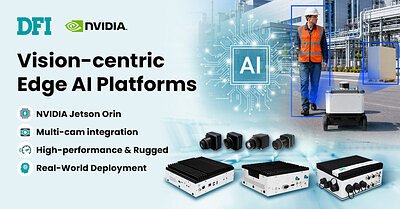
Industrial computing firm DFI just unveiled a new series of edge AI platforms, the X6 series, built around NVIDIA’s powerful Jetson Orin processors. While the product names—X6-ORN-GMSL, X6X-ORN, and X6a-AGX—are a mouthful of technical jargon, their purpose is disarmingly simple: to serve as the tough, reliable brains for AI operating in the wild, far from the pristine, climate-controlled environment of a data center.
The Great Migration to the Edge
The push to decentralize AI is driven by necessity. As our world becomes saturated with sensors, cameras, and IoT devices, the sheer volume of data generated is overwhelming. Sending it all to the cloud for analysis is slow, expensive, and in many cases, impractical. For an autonomous vehicle detecting a pedestrian or a factory robot spotting a critical defect, a decision delayed by even a fraction of a second is a failure. The solution is to process data where it is created—at the edge.
This isn’t a niche trend; it’s a market explosion. Market analyses project the global edge AI market to swell into a more than $100 billion industry within the next decade, with some forecasts predicting a compound annual growth rate of nearly 30%. The demand is for hardware that can deliver real-time processing, operate with minimal latency, and ensure data privacy by keeping sensitive information local. NVIDIA has strategically positioned its Jetson platform as the engine for this movement, and companies like DFI are building the chassis around it.
These new devices are the silent workhorses of our future smart cities and automated industries. They represent a fundamental rewiring of our digital infrastructure, one that promises greater efficiency and autonomy but also demands an unprecedented level of trust in the machines that will manage our world.
Building Trust in a Decentralized World
When AI operates a city’s traffic grid or guides a surgical robot, reliability is not a feature; it is the entire premise. This is where the specifics of DFI’s announcement become so significant. The company, with its four-decade history in industrial-grade hardware, isn't just making small computers; it's building systems designed to withstand the chaos of the real world.
Take the X6X-ORN model. It boasts an IP67 rating, a standard that designates it as completely dust-tight and capable of withstanding immersion in water. This isn’t for poolside computing. It’s for a traffic analytics unit bolted to a light pole, enduring rain, snow, and summer heat while flawlessly managing traffic flow to reduce congestion and improve emergency vehicle response times. It's for a sensor hub in a vast agricultural field, monitoring crop health and water levels day in and day out.
Another model, the X6-ORN-GMSL, is optimized for multi-camera integration using a specialized interface called GMSL2. This technology allows multiple high-resolution cameras to be connected over long distances, a critical capability for creating a complete, 360-degree perception system for an autonomous robot navigating a busy warehouse or for a public transit system monitoring passenger safety across multiple train cars. The most powerful of the new lineup, the X6a-AGX, delivers up to 275 Trillion Operations Per Second (TOPS)—a level of performance once conceivable only in a server rack, now available in a compact box that can be mounted anywhere.
This is the technology that builds trust. It’s the fusion of sophisticated AI with rugged, dependable hardware, creating a system that can be counted on to perform its function without fail. The inclusion of optional out-of-band management, allowing administrators to remotely diagnose and fix a device even if it’s offline, further underscores this commitment to unwavering reliability in mission-critical deployments.
A Crowded Field with a Clear Vision
DFI is not alone in recognizing this opportunity. The NVIDIA Jetson ecosystem is a bustling space, with established industrial computing giants like Advantech, Aetina, and Axiomtek all producing their own Orin-based platforms. The competition is fierce, driving innovation in a race to create smaller, faster, and tougher edge devices. DFI is carving out its niche by focusing intently on “vision-centric” AI, doubling down on the features that matter most for applications that see and interpret the world.
The strategic partnership between DFI and NVIDIA is a perfect example of modern technological synergy. NVIDIA provides the world-class AI engine and a vast software ecosystem, while DFI provides the hardened, industrial-grade armor and specialized connectivity to deploy that engine in the most demanding environments. It’s a collaboration that allows each to do what it does best, accelerating the journey from concept to real-world deployment.
This specialization is key. While one competitor might focus on networking appliances and another on medical imaging, DFI’s emphasis on rugged, multi-camera systems directly addresses the foundational needs of autonomous machines and intelligent infrastructure—two of the most transformative applications of edge AI.
The Human Impact of Invisible Intelligence
Ultimately, the significance of these technologies is measured by their impact on our lives. The goal of a smarter traffic grid is a less stressful, faster, and safer commute for everyone. In public safety, edge AI promises proactive threat detection that can prevent incidents before they occur, shifting surveillance from a reactive tool to a protective one. In manufacturing, intelligent robots performing quality control can lead to better, more reliable products while freeing human workers from repetitive and strenuous tasks.
This transition to a world embedded with decentralized intelligence will be gradual, often invisible. We won’t see the rugged computer inside the traffic light or the autonomous mobile robot in the warehouse, but we will experience their effects. This technology is creating a new layer of infrastructure that is more responsive, efficient, and attuned to its immediate environment. As companies like DFI continue to build the robust and trustworthy hardware that underpins this shift, they are not just selling computer systems; they are laying the groundwork for a world that works just a little bit better, one intelligent edge at a time.