
- 22 home models introduced in Boxabl's Phase 2, spanning ADUs to multi-story buildings.
- $99/PSF developer pricing for standardized housing system.
- 500+ Casita units produced, proving initial concept viability.
Experts would likely conclude that Boxabl's ambitious pivot to industrialized housing could disrupt the market if it successfully scales production and navigates regulatory hurdles, though significant financial and operational challenges remain.
Beyond the Casita: Boxabl's Gamble to Industrialize the Housing Market
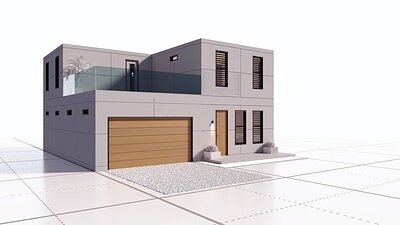
LAS VEGAS, NV – June 02, 2026 – Boxabl, the company that captured viral attention with its foldable, 361-square-foot Casita, has just made a move that dramatically expands its ambitions beyond the backyard. The Las Vegas-based firm today unveiled its Phase 2 growth strategy: a beta online catalog featuring over 20 home models, ranging from accessory dwelling units (ADUs) to multi-story apartment buildings and sprawling single-family homes. It’s a pivot from a singular, clever product to a comprehensive housing system, all built on a deceptively simple premise: using just three standardized building box sizes to construct almost anything.
This isn't just about adding new floor plans. It's a calculated attempt to industrialize homebuilding on a scale few have attempted. The company's vision is to create a 'kit-of-parts' for developers and builders, streamlining a construction process notoriously plagued by delays, cost overruns, and labor shortages. As Founder and CEO Paolo Tiramani stated, "Phase 1 was about proving that housing could be manufactured differently. The Casita demonstrated the viability of our technology... Phase 2 is about expanding that platform to address a much larger portion of the housing market."
From Niche Product to Platform Play
The initial success of the Casita, with over 500 units produced, served as a powerful proof of concept. It demonstrated that a high-quality, factory-built home could be shipped efficiently—folding to an 8.5-foot-wide package for standard transport—and unfolded on-site in under an hour. This innovation attracted massive public interest and, more importantly, laid the groundwork for this much larger play.
The new beta catalog, currently aimed at developers, showcases the true breadth of the system. The 22 initial models span eight categories, including three-story garden apartments, townhomes, ranch-style residences, and even luxury estates. This isn't just scaling up; it's scaling out, targeting nearly every segment of the residential market. By offering a standardized system, Boxabl is signaling to developers that it's no longer just an ADU provider but a potential partner for building entire communities.
The developer-focused pricing, advertised as "Starting $99 / PSF," is a strategic lure. It aims to translate the abstract benefits of factory production—speed, consistency, and reduced waste—into a tangible financial metric that developers understand. The pitch is clear: predictable costs and faster build times, which can fundamentally alter the economics of a housing project.
The Engine Room: Capital, Capacity, and a SPAC
Announcing a catalog of 20+ home models is one thing; having the industrial capacity to produce them is another. The press release is peppered with forward-looking statements and caveats about "manufacturing readiness" and "regulatory approvals" for good reason. Scaling production from a single, proven model to a diverse portfolio is a monumental undertaking, and it requires a massive injection of capital. This is the story behind the announcement.
Boxabl is in the final stages of a merger with FG Merger II Corp., a special purpose acquisition company (SPAC). The deal, if approved by shareholders in a vote scheduled for June 9, is designed to take Boxabl public on the NASDAQ under the ticker symbol "BXBL." The SEC declared the S-4 registration statement effective in mid-May, clearing a major hurdle. This public listing is not just a financial event; it's the engine intended to fund the entire Phase 2 strategy. The capital raised will be critical for expanding factory operations in Las Vegas, refining the manufacturing process for the new modules, and navigating the complex logistics of a national rollout.
This move reveals the dual nature of modern disruption. Boxabl’s innovation isn't just its folding steel-and-concrete panels; it's the corporate maneuvering required to finance such a capital-intensive vision. Success hinges not only on engineering prowess but also on the successful execution of this high-stakes financial transaction.
The Real-World Blueprint: Cost vs. Reality and the Regulatory Maze
A central pillar of Boxabl's mission is tackling housing affordability. While a base price of $60,000 for a Casita sounds revolutionary compared to the median U.S. home price, the reality on the ground is more complex. The final, move-in-ready cost for a Casita, after factoring in land, site preparation, foundation, utility hookups, and shipping, often lands between $110,000 and $160,000. While still a compelling figure in many markets, it highlights the gap between a factory price and the total cost of homeownership.
This challenge will only scale with the new, larger models. A 2,400-square-foot single-family home will require a more substantial foundation, more complex site work, and higher logistical costs. While the per-square-foot factory price may be competitive, the total project cost will remain a significant investment subject to local market conditions.
Beyond cost, the most formidable obstacle is the labyrinth of local and state building regulations. Boxabl's press release notes that commercial availability is subject to "regulatory approvals," a phrase that papers over a mountain of complexity. Each state, county, and city has its own set of codes and permitting processes. While the company has made progress, gaining approval to sell units in states like New Mexico, achieving nationwide compliance for a catalog of 22 different models—including multi-story structures—is a Herculean task. The company’s inclusion of "HUD-compliant homes" in its new lineup suggests a strategic effort to navigate this maze by targeting specific, federally regulated standards, but the path for its other models remains a jurisdiction-by-jurisdiction battle.
A New Foundation for American Housing?
Despite the hurdles, the potential impact of Boxabl's strategy cannot be dismissed. For decades, the construction industry has been stubbornly resistant to the kind of productivity gains seen in other manufacturing sectors. Boxabl's approach—standardizing the core components while allowing for architectural variety—is a direct challenge to the traditional, one-off nature of homebuilding.
If successful, this platform could offer developers a powerful tool to accelerate projects and control costs, potentially unlocking new inventory for workforce housing, infill development, and master-planned communities. The system's flexibility, from a 120-square-foot "Baby Box" built to RV code to a multi-unit apartment complex, demonstrates a thoughtful approach to meeting diverse housing needs. The company has laid out its architectural drawings; now it must prove it can build the financial and operational structure to support them.